War in Middle East raises stagflation fears in Europe and beyond / Photo: © AFP

 Antonelli 'mad' about crash in Azerbaijan qualifying

 'Perfect lap' gives Russell pole for Azerbaijan GP as Antonelli crashes out

 UN Security Council condemns Houthi attacks on Saudi Arabia
 China swimmer makes Asian Games history as Thai wins 100m sprint

 Top French literary prize drops best-selling novel over AI claims

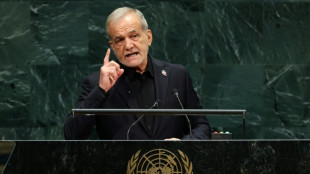 US 'must choose' whether to end war: Iran president
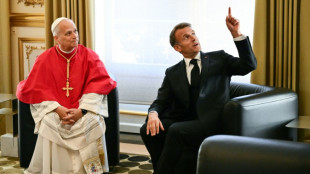 Pope warns against losing humanity in AI-driven 'paradise of machines'

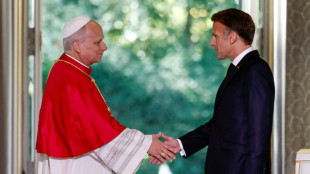 Pope warns against losing humanity in 'paradise of machines'

 From FBI warning to literary acclaim: the Russian journalist who took on Putin
 China swimmer in Asian Games first as North Korea lifters reign
 French literary prize removes novel from longlist after AI claims
 China's Zhang wins record seventh Asian Games swimming gold

 Verstappen edges Russell in final practice in Azerbaijan

 English, Spanish, Italian, German football leagues call for FIFA reform

 Pope arrives in France on first official visit in 18 years

 Pope arrives in France on first state visit in 18 years
 Heavy fighting, internet disruption as Ethiopia conflict rages

 From transit to consumption: drug use surges in Mozambique
 Chicago teams, Guardians and Padres all book MLB playoff berths
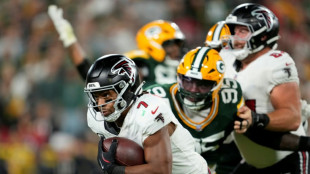 Bijan Robinson destroys Packers in 35-14 win for Falcons
 Harimoto hails new era as Japan dethrone table tennis kings China

 India rape cases turn focus back onto women's safety

 Rebellious Afghan taxi drivers defy ban on music

 Brazil candidates mount digital armies for fierce online campaign
 Nepal PM says floods 'a warning to the world' about climate change

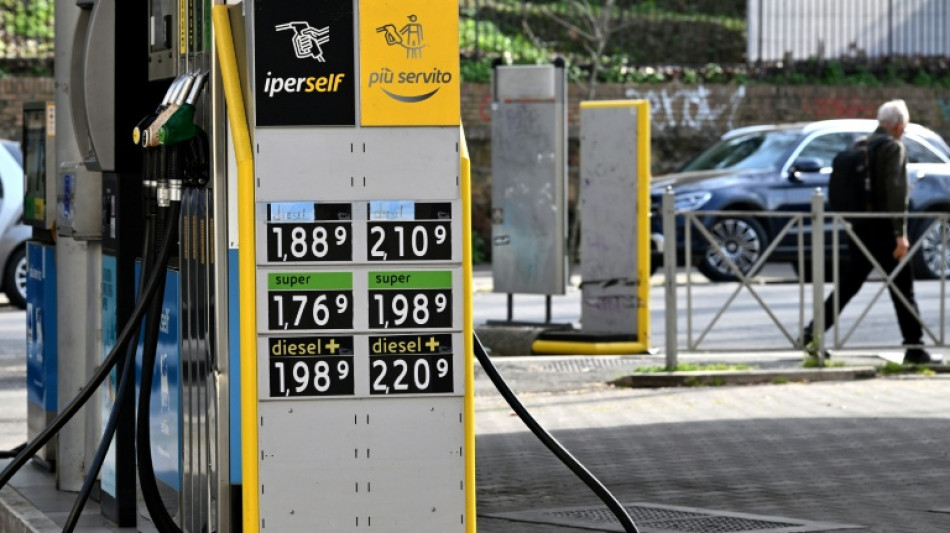
Global energy prices have shot upwards after the US and Israel unleashed war in the Middle East, but just how far those shocks will ripple across the economy remains unclear.
Still, the spectre of "stagflation" -- high inflation coupled with stagnant economic growth -- once again looms over the global economy in the event of a prolonged conflict.
- What is the global risk of inflation? -
The risks are still highly uncertain at this stage, as they largely depend on how long conflict lasts.
"It is still too soon to determine whether the current crisis will translate into sustained global inflation," said economist Paola Subacchi of the University of Bologna and Sciences Po in Paris.
"Much depends on how far and how long oil and gas prices rise, and whether those increases feed through broadly into production and transport costs," she added.
Bank of America economists wrote that their baseline scenario was a shorter conflict, which would limit how much further oil prices might rise and see "the shock fading in the next few weeks".
Paul Chollet, chief economist at the French banking group Credit Mutuel Arkea, said a short conflict -- such as a four- or five-week war, as US President Donald Trump has suggested -- would mean that "prices, particularly energy prices, will return to their pre-bombing levels within two months".
"That doesn't mean that you won't see inflation in the short term," he added, noting that price increases are already evident for fuels such as petrol.
But "if the conflict drags on," Chollet added, then "we could see stagflation" in Europe.
That risk would rise "if production facilities" such as oil and gas installations in the Middle East "were permanently damaged" in the fighting.
"Overall, I am concerned about low-income countries, countries with high level of debt, in this environment," International Monetary Fund (IMF) Managing Director Kristalina Georgieva said Thursday in Bangkok. "It will become so much harder for them."
- Echoes of Russia's 2022 invasion of Ukraine? -
For now, at least, most economists do not see strong parallels to 2022, when Russia's full-scale invasion of Ukraine sent gas prices surging, plunged much of Europe into an energy crisis and spiked inflation.
"2026 is not 2022," said the governor of the Bank of France, Francois Villeroy de Galhau.
"It is difficult to make direct comparisons," Subacchi said. "However, while Ukraine mainly affected Europe, a Middle East crisis could affect both Europe and Asia."
Within Europe, however, the risks are not nearly as concentrated as in 2022, when Russia oil and gas imports were a dominant source of energy in many markets.
"What made us very vulnerable in 2022 was our dependence on Russia," Chollet said. Today, much of the continent has "diversified our supply sources", he added.
Chollet also noted that energy price increases had been more modest at this stage, with the benchmark Brent crude oil price at around $90 per barrel compared to nearly $140 in 2022.
For natural gas, Dutch TTF futures contract -- the main European benchmark -- have increased notably to around 50 euros ($58) per megawatt-hour, compared to around 30 euros last week.
But prices are still much lower than in 2022, Chollet said, when "they reached as high as 340 euros per megawatt-hour".
- Which economies are most vulnerable? -
Different parts of the world will likely feel the effects of the Middle East crisis more acutely.
"When it comes to oil shocks, the US is more sensitive on inflation while Europe is more sensitive on growth. However, the sharp rise in European natural gas prices does increase its exposure," wrote Luke Templeman, a Deutsche Bank analyst.
Subacchi said that the countries most vulnerable to inflation "are those heavily dependent on oil and gas imports from the Middle East, particularly in Europe and Asia".
"The United States," she added, "is relatively shielded thanks to strong domestic energy production and the strength of the dollar".
L.Maurer--VB