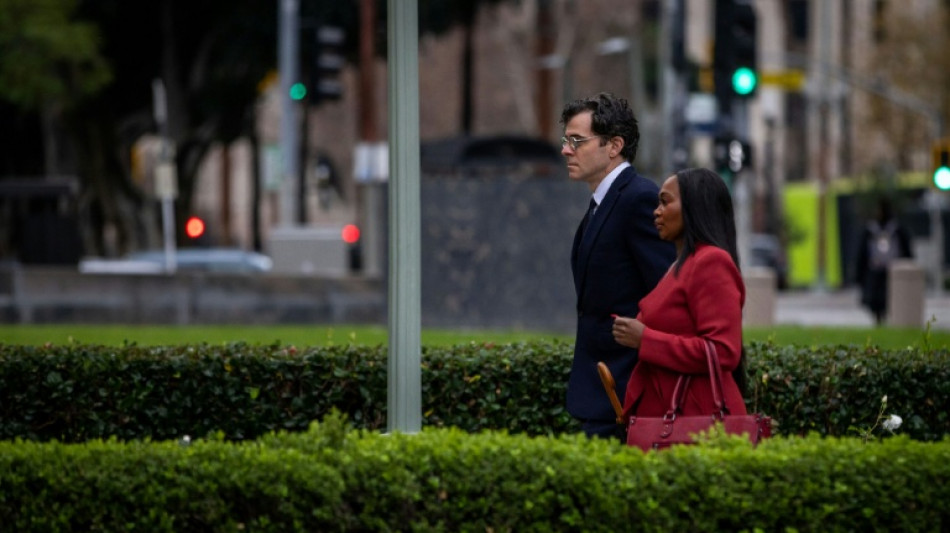
Instagram CEO denies addiction claims in landmark US trial / Photo: © GETTY IMAGES NORTH AMERICA/AFP

 Mancini finds positives in Italy loss, accepts fans' jeers

 Alcaraz helps Europe into Laver Cup lead

 Six missing after building collapses in historic Athens district

 Mbappe scores but suffers knee injury as Zidane gets debut France win

 Mancini's Italy return spoiled by Belgium defeat

 Rodri confident in Man City innocence despite reported charges

 Jay-Z rape accuser says she made 'false accusations'

 Senegal draw first match under Vieira and Nigeria survive scare

 Trump, Xi end summit long on pomp, but short on progress

 Russia not preparing for conflict with Europe, Putin says

 Trump's photo of Xi greeting carries signs of AI

 Six missing after building blast in historic Athens district

 Millions in US northeast brace for powerful storm

 Assefa seeks 'better than my best' at Berlin marathon
 US court refuses to overturn Pentagon ban on Anthropic

 Verstappen and Norris blame slow cars as Mercedes tops qualifying

 Crowds cheer pope in Paris after AI 'paradise of machines' warning

 Teen swimmer makes Games history as Thai, Chinese sprinters win gold

 Man City found guilty of 114 Premier League charges - reports

 Concerns over 'missing' UK explorer Ranulph Fiennes

 Suspected Paris killer of Argentine rugby star begs forgiveness

 Oil prices fall on cautious hopes for US-Iran progress

 Noskova, Muchova take Czech Republic into BJK Cup final

 Thai sprinter Puripol breaks own Asian Games record to win 100m gold

 Russell takes pole for Azerbaijan GP, Antonelli crashes out

Instagram CEO Adam Mosseri on Wednesday rejected the notion that users could be clinically addicted to social media, as he testified in a landmark California trial over whether his company knowingly hooked children on its platform for profit.
Meta -- the parent company of Instagram and Facebook -- and Google-owned YouTube are defendants in the blockbuster trial, which could set a legal precedent regarding whether social media giants deliberately designed their platforms to be addictive to children.
"I think it's important to differentiate between clinical addiction and problematic use," Mosseri said as he was grilled by plaintiff attorney Mark Lanier.
"I'm sure I said that I've been addicted to a Netflix show when I binged it really late one night, but I don't think it's the same thing as clinical addiction," he added.
Addiction is at the heart of the civil trial, which centers on allegations that a 20-year-old woman, identified as Kaley G.M., suffered severe mental harm after becoming addicted to social media as a young child.
She started using YouTube at six and joined Instagram at 11, before moving on to Snapchat and TikTok two or three years later.
Mosseri was the first major Silicon Valley figure to appear before the jury to defend himself against accusations that Instagram functions as little more than a dopamine "slot machine" for vulnerable young people.
In front of the jury of six men and women, Mosseri also pushed back against the idea that Meta was motivated by a "move fast and break things" ethos that valued profit over safety.
"Protecting minors over the long run is even good for the business and for profit," he said.
Mosseri's testimony precedes the highly anticipated appearance of his boss, Mark Zuckerberg, currently scheduled for February 18, with YouTube CEO Neil Mohan the following day.
In opening remarks this week, plaintiffs' attorney Lanier told the jury that YouTube and Meta both engineer addiction in young people's brains to gain users and profits.
Meta and Google "don't only build apps; they build traps," Lanier said.
Meta's attorney said that the suffering encountered by the plaintiff was due to her family context and could not be attributed to her use of Instagram or other social media.
The attorney for YouTube insisted that the video platform was neither intentionally addictive nor technically social media.
YouTube is selling "the ability to watch something essentially for free on your computer, on your phone, on your iPad," the attorney insisted, comparing the service to Netflix or traditional TV.
- 'Gateway drug' -
Stanford University School of Medicine professor Anna Lembke, the first witness called by the plaintiffs, testified Tuesday that she views social media, broadly speaking, as a drug.
She also said young people's brains were underdeveloped, which is why they "often take risks that they shouldn't," comparing YouTube to a gateway drug for kids.
The trial is currently scheduled to run until March 20.
Social media firms face more than a thousand lawsuits accusing them of leading young users to become addicted to content and suffer from depression, eating disorders, psychiatric hospitalization, and even suicide.
Kaley G.M.'s case is being treated as a bellwether proceeding whose outcome could set the tone for a wave of similar litigation across the United States.
Two further test trials are planned in Los Angeles between now and the summer, while a nationwide lawsuit will be heard by a federal judge in Oakland, California.
In New Mexico, a separate lawsuit accusing Meta of prioritizing profit over protecting minors from sexual predators began on Monday.
H.Gerber--VB