
-
 Lula bans sports betting days ahead of Brazil's election
-
Internationals take 7-3 Presidents Cup lead after foursomes sweep

-
 Guatemala ensures survival of vulnerable 'fossil' fish
-
Brazil team returns to Colombian site of doomed jet crash

-
 Mancini finds positives in Italy loss, accepts fans' jeers
-
Mbappe injured as Zidane wins on France debut, Italy lose on Mancini return

-
 Alcaraz helps Europe into Laver Cup lead
-
Senegal draw in Vieira debut, Nigeria survive scare as Cape Verde crash

-
 Six missing after building collapses in historic Athens district
-
U2 performs surprise 50th anniversary gigs in Dublin

-
 Mbappe scores but suffers knee injury as Zidane gets debut France win
-
Pope calls worshippers 'saints of France' after AI warning

-
 Mancini's Italy return spoiled by Belgium defeat
-
US court sides with Pentagon in Anthropic AI ban

-
 Rodri confident in Man City innocence despite reported charges
-
Wall Street stocks rise, greeting optimism over possible US-Iran deal

-
 Jay-Z rape accuser says she made 'false accusations'
-
NFL players chief raises concerns over pitch for Maracana game

-
 Senegal draw first match under Vieira and Nigeria survive scare
-
Daytime Russian attacks kill seven in Kyiv

-
 Trump, Xi end summit long on pomp, but short on progress
-
Spotting AI writing: how reliable are the detectors?

-
 Russia not preparing for conflict with Europe, Putin says
-
French youth await pope after AI 'paradise of machines' warning

-
 Trump's photo of Xi greeting carries signs of AI
-
Man City found guilty of Premier League charges, set to appeal: reports

-
 Six missing after building blast in historic Athens district
-
Embolo follows Xhaka out of Swiss squad over fake Covid documents

-
 Millions in US northeast brace for powerful storm
-
Trump, Xi inspect founding documents of US democracy to close summit

-
 Assefa seeks 'better than my best' at Berlin marathon
-
'Bottle Claus': Kipchoge's 'hero' helping runners chase Berlin marathon glory

-
 US court refuses to overturn Pentagon ban on Anthropic
-
Olympic medallist Samba-Mayela handed provisional doping ban

-
 Verstappen and Norris blame slow cars as Mercedes tops qualifying
-
First US trial against TikTok to open Monday

-
 Crowds cheer pope in Paris after AI 'paradise of machines' warning
-
Palmer misses 'too many' England games, says Tuchel

-
 Teen swimmer makes Games history as Thai, Chinese sprinters win gold
-
UN refugees chief warns conditions in W.Sahara 'deteriorating'

-
 Man City found guilty of 114 Premier League charges - reports
-
Antonelli 'mad' about crash in Azerbaijan qualifying

-
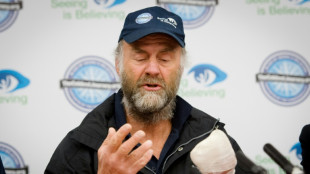 Concerns over 'missing' UK explorer Ranulph Fiennes
-
'Perfect lap' gives Russell pole for Azerbaijan GP as Antonelli crashes out

-
 Suspected Paris killer of Argentine rugby star begs forgiveness
-
UN Security Council condemns Houthi attacks on Saudi Arabia

-
 Oil prices fall on cautious hopes for US-Iran progress
-
China swimmer makes Asian Games history as Thai wins 100m sprint

-
 Noskova, Muchova take Czech Republic into BJK Cup final
-
Top French literary prize drops best-selling novel over AI claims

Jury told that Meta, Google 'engineered addiction' at landmark US trial
Meta and Google-owned YouTube were accused Monday of pushing highly addictive apps on children as a landmark social media trial began in earnest in a California court.
The blockbuster trial in front of a Los Angeles jury could establish a legal precedent on whether the social media juggernauts deliberately designed their platforms to lead to addiction in children.
The proceedings are expected to see Meta chief Mark Zuckerberg on the stand next week and Instagram boss Adam Mosseri in the courtroom as early as Wednesday. In addition to Instagram, Meta's platforms include Facebook and WhatsApp.
"This case is about two of the richest corporations in history who have engineered addiction in children's brains," plaintiffs' attorney Mark Lanier told the jury in his opening statement.
"This case is as easy as A-B-C," Lanier said as he stacked children's toy blocks bearing the letters.
He contended the A was for addicting, the B for brains and the C for children.
"They don't only build apps; they build traps," Lanier said, saying Meta and YouTube pursued "addiction by design," making his arguments using props like a toy Ferrari and a mini slot machine.
Meta attorney Paul Schmidt countered in opening remarks to the jury that evidence will show problems with the plaintiff's family and real-world bullying took a toll on her self-esteem, body image and happiness rather than Instagram.
"If you took Instagram away and everything else was the same in Kaley's life, would her life be completely different, or would she still be struggling with the same things she is today?" Schmidt asked, pointing out an Instagram addiction is never mentioned in medical records included in the evidence.
The trial before Judge Carolyn Kuhl focuses on allegations that a 20-year-old woman identified as Kaley G.M. suffered severe mental harm because she became addicted to social media as a child.
The case is being treated as a bellwether proceeding because its outcome could set the tone, and the level of payouts to successful plaintiffs, for a tidal wave of similar litigation across the United States.
Social media firms are accused in hundreds of lawsuits of leading young users to become addicted to content and suffer from depression, eating disorders, psychiatric hospitalization and even suicide.
Lawyers for the plaintiffs are borrowing strategies used in the 1990s and 2000s against the tobacco industry, which faced a similar onslaught of lawsuits arguing that companies knowingly sold a harmful product.
Lanier told the jurors that Kaley began watching YouTube at six years old because the company never told her mother "the goal was viewer addiction," or that toddlers as young as two were being targeted despite "critical" risk of addiction.
"This is the first time that a social media company has ever had to face a jury for harming kids," Social Media Victims Law Center founder Matthew Bergman, whose team is involved in more than 1,000 such cases, told AFP.
- 'Strongly disagree' -
Internet titans have argued that they are shielded by Section 230 of the US Communications Decency Act, which frees them from responsibility for what social media users post.
However, this case argues that those firms are culpable for business models designed to hold people's attention and to promote content that can harm their mental health.
The plaintiffs said they would call expert witnesses that will argue that young people's brains are not yet developed to withstand the powers of the algorithms being flung at them on Instagram and YouTube.
The company pointed to recent efforts to provide more safeguards for young people, adding that "we're always working to do better."
Jose Castaneda, a YouTube spokesperson, said "the allegations in these complaints are simply not true."
Lawyers for YouTube are to present opening remarks to the jury on Tuesday.
Snapchat and TikTok were named as defendants in the suit, but struck settlement deals before the start of the trial. The terms were not disclosed.
Lawsuits, including some brought by school districts, accusing social media platforms of practices endangering young users are making their way through federal court in northern California and state courts across the country.
A separate lawsuit accusing Meta of putting profit over the wellbeing of young users was also getting under way in New Mexico on Monday.
T.Egger--VB