
-
 Lula bans sports betting days ahead of Brazil's election
-
Internationals take 7-3 Presidents Cup lead after foursomes sweep

-
 Guatemala ensures survival of vulnerable 'fossil' fish
-
Brazil team returns to Colombian site of doomed jet crash

-
 Mancini finds positives in Italy loss, accepts fans' jeers
-
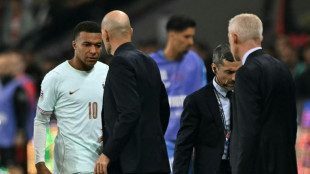
Mbappe injured as Zidane wins on France debut, Italy lose on Mancini return
-
 Alcaraz helps Europe into Laver Cup lead
-
Senegal draw in Vieira debut, Nigeria survive scare as Cape Verde crash

-
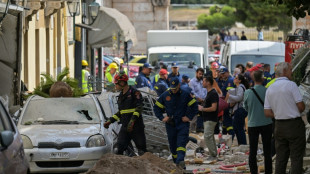 Six missing after building collapses in historic Athens district
-
U2 performs surprise 50th anniversary gigs in Dublin

-
 Mbappe scores but suffers knee injury as Zidane gets debut France win
-
Pope calls worshippers 'saints of France' after AI warning

-
 Mancini's Italy return spoiled by Belgium defeat
-
US court sides with Pentagon in Anthropic AI ban

-
 Rodri confident in Man City innocence despite reported charges
-
Wall Street stocks rise, greeting optimism over possible US-Iran deal

-
 Jay-Z rape accuser says she made 'false accusations'
-
NFL players chief raises concerns over pitch for Maracana game

-
 Senegal draw first match under Vieira and Nigeria survive scare
-
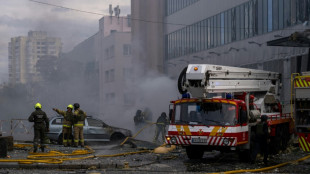
Daytime Russian attacks kill seven in Kyiv
-
 Trump, Xi end summit long on pomp, but short on progress
-
Spotting AI writing: how reliable are the detectors?

-
 Russia not preparing for conflict with Europe, Putin says
-
French youth await pope after AI 'paradise of machines' warning

-
 Trump's photo of Xi greeting carries signs of AI
-
Man City found guilty of Premier League charges, set to appeal: reports

-
 Six missing after building blast in historic Athens district
-
Embolo follows Xhaka out of Swiss squad over fake Covid documents
-
 Millions in US northeast brace for powerful storm
-
Trump, Xi inspect founding documents of US democracy to close summit

-
 Assefa seeks 'better than my best' at Berlin marathon
-
'Bottle Claus': Kipchoge's 'hero' helping runners chase Berlin marathon glory
-
 US court refuses to overturn Pentagon ban on Anthropic
-
Olympic medallist Samba-Mayela handed provisional doping ban

-
 Verstappen and Norris blame slow cars as Mercedes tops qualifying
-
First US trial against TikTok to open Monday

-
 Crowds cheer pope in Paris after AI 'paradise of machines' warning
-
Palmer misses 'too many' England games, says Tuchel

-
 Teen swimmer makes Games history as Thai, Chinese sprinters win gold
-
UN refugees chief warns conditions in W.Sahara 'deteriorating'
-
 Man City found guilty of 114 Premier League charges - reports
-
Antonelli 'mad' about crash in Azerbaijan qualifying

-
 Concerns over 'missing' UK explorer Ranulph Fiennes
-
'Perfect lap' gives Russell pole for Azerbaijan GP as Antonelli crashes out

-
 Suspected Paris killer of Argentine rugby star begs forgiveness
-
UN Security Council condemns Houthi attacks on Saudi Arabia
-
 Oil prices fall on cautious hopes for US-Iran progress
-
China swimmer makes Asian Games history as Thai wins 100m sprint

-
 Noskova, Muchova take Czech Republic into BJK Cup final
-
Top French literary prize drops best-selling novel over AI claims
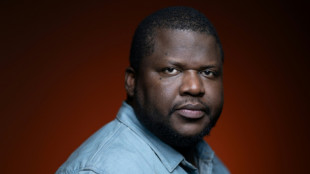
Lies, horror, trauma: Kenyans recount forced Russian recruitment
The scars on Victor's forearm remind him constantly of the day a Ukrainian drone attacked him after he was forcibly conscripted, like hundreds of young Kenyans, into the Russian army.
It was a war that had nothing to do with him and which he was exceptionally lucky to survive.
Four Kenyans -- Victor, Mark, Erik and Moses -- recounted to AFP the web of deception that took them to the killing fields of Ukraine. Their names have been changed for fear of reprisals.
It began with promises of well-paying jobs in Russia from a Nairobi recruitment agency.
Victor, 28, was supposed to be a salesman.
Mark, 32, and Moses, 27, were told they would be security guards.
Erik, 37, thought he had a ticket to high-end sports.
They were all to be paid between $1,000 and $3,000 a month -- a fortune in Kenya where jobs are scarce and the government encourages emigration to boost remittances.
Victor, Mark, Erik and Moses were included in WhatsApp groups where fellow Kenyans reassured them in Swahili that they were heading for good salaries and exciting new lives.
Instead, Victor's first day was in an abandoned house three hours outside Saint-Petersburg.
The next day, he was taken to a Russian military base where soldiers presented him with a contract in Russian that he could not read.
"They told us: 'If you don't sign, you're dead'," Victor told AFP, showing his Russian military service record and combat medallion.
- 'Exciting opportunities' -
Victor would later meet some of the Kenyans from the WhatsApp group in a military hospital.
"Some had no legs. Some were missing an arm... They told me they were threatened with death if they wrote a negative message on the group," he said.
Mark said new recruits were offered the chance to pay their way home for around $4,000 -- an impossible sum.
"We had no option but signing the contract," he said.
Erik's first day was training with a basketball team and he signed a contract he believed would land him with a professional club.
He did not know it was actually a military contract.
The next day he was in an army camp.
Mark and Moses say they were paid very little for their year of service. Victor and Erik say they received nothing.
The four men left for Russia through a Kenyan recruitment agency, Global Face Human Resources, which boasts on its website: "Let our HR wizards connect you to exciting opportunities".
AFP was unable to speak to the agency, which has relocated several times within the Kenyan capital, Nairobi, in recent months.
One of its employees, Edward Gituku, is being prosecuted for "human trafficking" after a police raid in September on an apartment he rented on the outskirts of the city.
Twenty-one young men, who were about to fly to Russia, were rescued in the raid.
Gituku, released on bail, denies the charges, his lawyer Alex Kubu told AFP.
- Clinics -
Victor, Mark, Erik and Moses all say they met Gituku and that he was a key player in the scam.
Erik and Moses even say Gituku drove them to Nairobi airport.
Gituku's previous lawyer, Dunston Omari, told Citizen TV in September that Global Face Human Resources had sent "more than 1,000 people" to Russia but all were former Kenyan soldiers who had "voluntarily" joined the Russian army.
Around that time, Mikhail Lyapin, a Russian citizen implicated in the case, was expelled from Kenya "to stand trial in Russia" at the request of the Russian authorities, Kenyan Foreign Secretary Abraham Korir Sing'Oei told AFP.
The Russian embassy in Kenya stated in a press release that Lyapin had left Kenya voluntarily and had "never been an employee of Russian governmental bodies". It did not respond to emailed questions from AFP.
In December, Kenyan authorities said around 200 citizens had been sent to fight in Ukraine, with 23 since repatriated.
This is an underestimate, said the four recruits who spoke to AFP.
Potential migrants to Russia had to undergo a medical examination before leaving and just one of multiple Nairobi clinics told AFP they saw 157 in little over one month last year.
"The majority were former Kenyan soldiers" who knew what awaited them in Russia, said a worker at the clinic.
There have been reports of genuine Kenyan mercenaries fighting for Russia in Ukraine but Mark and Erik, who were examined at the clinic, said they were never informed of their future military service.
- 'Cannon fodder' -
Victor and Moses went through another Nairobi clinic, Universal Trends Medical and Diagnostic Centre, which declined to tell AFP the number of individuals referred by Global Face Human Resources.
AFP was able to identify two other recruitment agencies sending Kenyans to Russia but was unable to contact them.
The founder of Global Face Human Resources, Festus Omwamba, visited the Russian embassy in neighbouring Uganda several times last year, a source close to the embassy told AFP.
Omwamba blocked calls from AFP.
In the early days of its invasion of Ukraine, Russia was accused of using its own ethnic minorities as expendable forces: Chechens, Dagestanis and others.
Its tactic was to throw vast numbers at Ukrainian defences in a bid to overwhelm them.
But the human cost has been huge. Western intelligence services say Russia has suffered more than 1.2 million casualties, twice as many as Ukraine.
That has pushed Moscow to seek recruits further afield.
Ukraine's ambassador to Kenya, Yurii Tokar, says Russia first targeted former Soviet republics in Central Asia, then India and Nepal, before turning to Africa.
The four returnees interviewed by AFP said they encountered dozens of Africans in training camps and battlefields, including from Nigeria, Cameroon, Egypt and South Africa.
Russia exploits the "economic desperation" of young Africans, said Tokar.
"They are looking for people for cannon fodder everywhere it is possible," he said.
- Frontline horrors -
Victor recounts apocalyptic scenes at the front near Vovchansk in the Donbas.
"We had to cross two rivers, with many dead bodies floating. Then there was a big field, which was covered with hundreds of bodies. We had to run to cross it. With drones everywhere," he said.
"The commander tells you: 'Don't try to escape or we shoot you'," he said.
Of the 27 in his unit, two made it across the field.
Victor survived by hiding under a corpse but was hit in the right forearm by drone fire.
After two more weeks of missions, during which he was unable to carry his weapon and maggots were crawling in his wound, he was allowed to receive treatment behind the lines.
A few weeks later, despite the heavy losses already suffered, the Russian army sent Erik to the same location without changing its strategy.
Of the 24 men in his operation, only three made it across the field -- a Pakistani who ended up with "both legs broken", a Russian with "his stomach ripped open", and Erik.
Miraculously escaping this ordeal unscathed, the 37-year-old says he was then hit in the arm and leg by drones.
- 'Destroyed my life' -
Mark's shoulder is covered in scars from a grenade launched by a Ukrainian drone while he was heading to the front in September. He doesn't know where he was.
All three eventually found themselves in a Moscow hospital and escaped to the Kenyan embassy, which helped them return home.
Moses managed to escape his unit in December and make contact with Kenyan officials.
Though physically unscathed, he is as traumatised as the others. A flying bird is enough to trigger his anxiety now, he says.
They know many Kenyan families are dealing with worse.
Grace Gathoni, now a single mother of four, learned in November that her husband, Martin, who had planned to become a driver in Russia, died in combat.
Moscow has "destroyed my life", she told AFP through tears.
Charles Ojiambo Mutoka, 72, learned in January that his son, Oscar, was killed in August. His remains rest in Rostov-on-Don.
The Russian authorities "should be ashamed", he said, angrily.
"We only fight our own wars and we never bring Russians to fight for us... so why take our people?"
P.Staeheli--VB