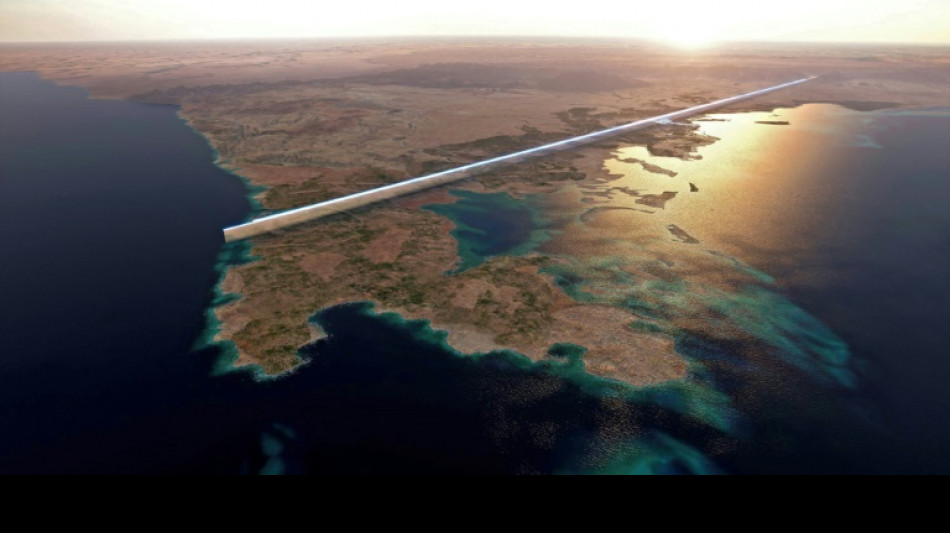
Eye-popping: Saudi prince unveils mirrored skyscraper eco-city / Photo: © NEOM/AFP

 Central Bank of Malta Links Energy Subsidies to Middle East Conflict and Price Volatility

 Shomari Figures Defies Redistricting in Alabama Amid Disaster Relief Crisis

 BYD Dolphin G Leasing Deal: Plug-in Hybrid Supermini Available from £174 a Month

 Egypt Opens Registration for 2027 Total Solar Eclipse Viewing Packages

 French Economy Shrinks 0.1% as Consumer Confidence Slumps

 Wall Street Ends Turbulent Week Higher Despite Inflation and AI Jitters

 Kansas City Fed Chief Says Inflation Is Still Running Too Hot

 Asian Markets Slide as AI Concerns Hit Chip Stocks
 Tom Brady’s Viral Reaction to Deebo Samuel’s Trick-Play Touchdown
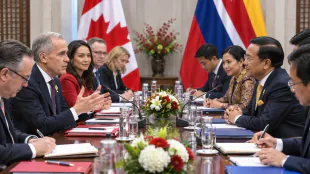 Canada Expands Asian Trade Push as US Negotiations Resume
 US Jobless Claims Rise to 200,000 but Layoffs Remain Historically Low

 Italy Raises 2026 Growth View but Warns Energy Will Keep Inflation High

 Euro-Area Growth Slows to 0.4% While Employment Stalls
 US Wholesale Inflation Eases Monthly but Hits a Four-Year Annual High
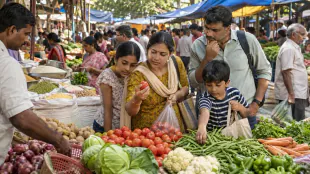
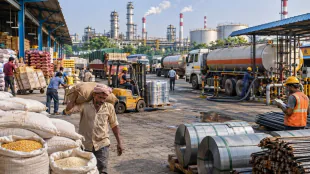 India's Wholesale Inflation Jumps to 12.29% as Fuel Costs Surge
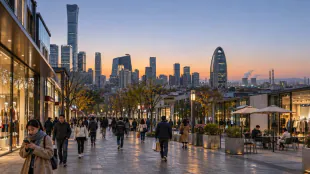
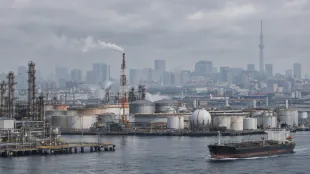 Japan's Economy Edges Into Contraction as Costly Oil Weighs on Demand

 Colin Farrell and Emma Fogarty on Friendship, Disability, and 'The Slightest Touch'
A futuristic Saudi megacity is to feature two skyscrapers extending across a swathe of desert and mountain terrain, according to the latest disclosures on the project by the kingdom's de facto ruler.
The parallel structures of mirror-encased skyscrapers extending over 170 kilometres (more than 100 miles), known collectively as The Line, form the heart of the Red Sea megacity NEOM, a plank of Crown Prince Mohammed bin Salman's bid to diversify the Gulf state's oil-dependent economy.
First announced in 2017, NEOM has consistently raised eyebrows for proposed flourishes like flying taxis and robot maids, even as architects and economists have questioned its feasibility.
In a presentation Monday night, Prince Mohammed sketched out an even more ambitious vision, describing a car-free utopia that would become the planet's most liveable city "by far".
Analysts noted, though, that plans for NEOM have changed course over the years, fuelling doubts about whether The Line will ever become reality.
NEOM, a biotech and digital hub spread over 26,500 square kilometres (10,000 square miles), was once touted as a regional "Silicon Valley".
Now it's a vehicle for reimagining urban life on a footprint of just 34 square kilometres, and addressing what Prince Mohammed describes as "liveability and environmental crises".
"The concept has morphed so much from its early conception that it's sometimes hard to determine its direction: scaling down, scaling up, or making an aggressive turn sideways," said Robert Mogielnicki of the Arab Gulf States Institute in Washington.
- Population boom -
Officials had earlier said NEOM's population would top one million, but Prince Mohammed said the number would actually hit 1.2 million by 2030 before climbing to nine million by 2045.
The eye-popping total is part of a hoped-for nationwide population boom that Prince Mohammed said would be necessary to make Saudi Arabia, the world's biggest crude exporter, an economic powerhouse.
The goal for 2030 is to have 50 million people -- half Saudis and half foreigners -- living in the kingdom, up from roughly 34 million today.
By 2040 the target is 100 million people, he said.
"That's the main purpose of building NEOM, to raise the capacity of Saudi Arabia, get more citizens and more people in Saudi Arabia. And since we are doing it from nothing, why should we copy normal cities?"
The site will be powered by 100 percent renewable energy and feature "a year-round temperate micro-climate with natural ventilation", a promotional video released Monday said.
Past environmental pledges by the kingdom, such as a vow to achieve net zero carbon emissions by 2060, have sparked scepticism from environmentalists.
NEOM is well-positioned to harness solar and wind energy, and plans are also afoot for the city to host the world's largest green hydrogen plant, said Torbjorn Soltvedt of risk intelligence company Verisk Maplecroft.
"But the feasibility of NEOM as a whole is still unclear given the unprecedented scale and cost of the project," he said.
- Finding funds -
At just 200 metres (yards) wide, The Line is intended to be Saudi Arabia's answer to unchecked and wasteful urban sprawl, layering homes, schools and parks on top of each other in what planners term "Zero Gravity Urbanism".
Residents will have "all daily needs" reachable within a five-minute walk, while also having access to other perks like outdoor skiing facilities and "a high-speed rail with an end-to-end transit of 20 minutes", according to a statement.
Though NEOM will operate under its own founding law, which is still being prepared, Saudi officials say they have no plans to waive the kingdom's alcohol ban.
An airport is already operational at NEOM, and authorities announced in May it would begin receiving regular flights from Dubai, but it is unclear whether major construction of the megacity itself has commenced.
The "first phase" of the project, lasting until 2030, will cost 1.2 trillion Saudi riyals (roughly $319 billion), Prince Mohammed said.
Besides government subsidies, potential sources of funding include the private sector and an initial public offering for NEOM expected in 2024, he said.
Securing the necessary financing remains a potential challenge, though the current climate is more favourable than during the coronavirus pandemic that lowered oil prices.
"But funding is only part of the equation... demand is harder to buy, especially when you're asking people to be part of an experiment on living and working in the future," Mogielnicki said.
C.Meier--BTB