
-
 Japan organisers 'not satisfied' as empty seats blight Asian Games
-
Austria 'ghetto' language classes leave children to repeat school
-
 Canals full, roads submerged as Bangkok declares flood disaster
-
S.African women runners arm themselves after string of killings

-
 China, US to open AI 'communication channel' after summit
-
'I felt embarrassed': Japan eSports whizz-kid, 11, wins Games gold
-
 Nepal tunnel survivor wants to help post-flood rebuild
-
Indonesia fires threatens critically-endangered orangutan: IUCN
-
 New China sprint star, 17, vows 'no limits' after Asian Games gold
-
Bangkok declares flood disaster across city
-
 Japanese 11-year-old wins Asian Games eSports gold
-
'World records not enough': North Korea weightlifters target Olympic gold rush

-
 TikTok agrees to teen limits in US settlement following Meta
-
Iran proposes Hormuz plan, Trump reportedly refuses
-
 Venezuela's oil cradle pins hopes on US energy deals
-
El Nino rewrites the menu in the world's top restaurants

-
 US, China buy time with trade truce as pressure builds
-
Pope to hold giant mass on Champs-Elysees

-
 'Leo, Leo': Young Catholics give pope rockstar welcome in France
-
TikTok to pay Alabama $100 mn under pre-trial settlement

-
 Lula bans sports betting days ahead of Brazil's election
-
Internationals take 7-3 Presidents Cup lead after foursomes sweep

-
 Guatemala ensures survival of vulnerable 'fossil' fish
-
Brazil team returns to Colombian site of doomed jet crash
-
 Mancini finds positives in Italy loss, accepts fans' jeers
-
Mbappe injured as Zidane wins on France debut, Italy lose on Mancini return
-
 Alcaraz helps Europe into Laver Cup lead
-
Senegal draw in Vieira debut, Nigeria survive scare as Cape Verde crash
-
 Six missing after building collapses in historic Athens district
-
U2 performs surprise 50th anniversary gigs in Dublin

-
 Mbappe scores but suffers knee injury as Zidane gets debut France win
-
Pope calls worshippers 'saints of France' after AI warning

-
 Mancini's Italy return spoiled by Belgium defeat
-
US court sides with Pentagon in Anthropic AI ban

-
 Rodri confident in Man City innocence despite reported charges
-
Wall Street stocks rise, greeting optimism over possible US-Iran deal

-
 Jay-Z rape accuser says she made 'false accusations'
-
NFL players chief raises concerns over pitch for Maracana game
-
 Senegal draw first match under Vieira and Nigeria survive scare
-
Daytime Russian attacks kill seven in Kyiv
-
 Trump, Xi end summit long on pomp, but short on progress
-
Spotting AI writing: how reliable are the detectors?
-
 Russia not preparing for conflict with Europe, Putin says
-
French youth await pope after AI 'paradise of machines' warning

-
 Trump's photo of Xi greeting carries signs of AI
-
Man City found guilty of Premier League charges, set to appeal: reports
-
 Six missing after building blast in historic Athens district
-
Embolo follows Xhaka out of Swiss squad over fake Covid documents

-
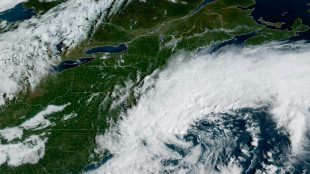 Millions in US northeast brace for powerful storm
-
Trump, Xi inspect founding documents of US democracy to close summit
Japan restarts world's biggest nuclear plant
The world's biggest nuclear power plant was restarted Wednesday for the first time since the 2011 Fukushima disaster, its Japanese operator said, despite persistent safety concerns among residents.
The plant was "started at 19:02" (1002 GMT), Tokyo Electric Power Company (TEPCO) spokesman Tatsuya Matoba told AFP of the Kashiwazaki-Kariwa plant in Niigata prefecture.
The regional governor approved the resumption last month, although public opinion remains sharply divided.
On Tuesday, a few dozen protesters -- mostly elderly -- braved freezing temperatures to demonstrate in the snow near the plant's entrance, whose buildings line the Sea of Japan coast.
"It's Tokyo's electricity that is produced in Kashiwazaki, so why should the people here be put at risk? That makes no sense," Yumiko Abe, a 73-year-old resident, told AFP.
Around 60 percent of residents oppose the restart, while 37 percent support it, according to a survey conducted in September.
TEPCO said Wednesday it would "proceed with careful verification of each plant facility's integrity" and address any issues appropriately and transparently.
Kashiwazaki-Kariwa is the world's biggest nuclear power plant by potential capacity, although just one reactor of seven was restarted.
The facility was taken offline when Japan pulled the plug on nuclear power after a colossal earthquake and tsunami sent three reactors at the Fukushima atomic plant into meltdown in 2011.
However, resource-poor Japan now wants to revive atomic energy to reduce its reliance on fossil fuels, achieve carbon neutrality by 2050 and meet growing energy needs from artificial intelligence.
Prime Minister Sanae Takaichi has voiced support for the energy source.
Fourteen reactors, mostly in western and southern Japan, have resumed operation since the post-Fukushima shutdown under strict safety rules, with 13 running as of mid January.
Kashiwazaki-Kariwa is the first TEPCO-run unit to restart since 2011. The company also operates the stricken Fukushima Daiichi plant, now being decommissioned.
Nearly 15 years after the disaster, "the situation is still not under control in Fukushima, and TEPCO wants to revive a plant? For me, that's absolutely unacceptable", said Keisuke Abe, an 81-year-old demonstrator.
- 'Anxious and fearful' -
The vast Kashiwazaki-Kariwa complex has been fitted with a 15-metre-high (50-foot) tsunami wall, elevated emergency power systems and other safety upgrades.
However, residents raised concerns about the risk of a serious accident, citing frequent cover-up scandals, minor accidents and evacuation plans they say are inadequate.
"I think it's impossible to evacuate in an emergency," Chie Takakuwa, a 79-year-old resident of Kariwa, told AFP.
On January 8, seven groups opposing the restart submitted a petition signed by nearly 40,000 people to TEPCO and Japan's Nuclear Regulation Authority.
The petition said the plant sits on an active seismic fault zone and noted it was struck by a strong quake in 2007.
"We can't remove the fear of being hit by another unforeseen earthquake," it said.
"Making many people anxious and fearful so as to send electricity to Tokyo... is intolerable."
Before the 2011 disaster -- which killed around 18,000 people -- nuclear power generated about a third of Japan's electricity.
- String of scandals -
Japan's nuclear industry has also faced a string of scandals and incidents in recent weeks, including data falsification by Chubu Electric Power to underestimate seismic risks.
At Kashiwazaki-Kariwa, TEPCO said Saturday that an alarm system failed during a test.
"Safety is an ongoing process, which means operators involved in nuclear power must never be arrogant or overconfident," TEPCO President Tomoaki Kobayakawa said in an interview with the Asahi daily newspaper.
Japan is the world's fifth-largest single-country emitter of carbon dioxide after China, the United States, India and Russia, and is heavily dependent on imported fossil fuels.
Nearly 70 percent of its electricity in 2023 came from coal, gas and oil -- a share Tokyo wants to slash to 30-40 percent over the next 15 years as it expands renewable energy and nuclear power.
Under a plan approved by the government in February, nuclear power will account for around a fifth of Japan's energy supply by 2040 -- up from around 8.5 percent in the fiscal year 2023-24.
Meanwhile Japan still faces the daunting task of decommissioning the Fukushima plant, a project expected to take decades.
D.Schlegel--VB