
-
 Fernandez fights back to reach Singapore Open final
-
Russell finds himself again and prepares to heap pressure on Antonelli

-
 Giant statue of Pope Leo XIV takes shape in Peru workshop
-
South Korea hold nerve to win Asian Games basketball gold

-
 Ukraine crush holders Italy to reach first BJK Cup final
-
Russell holds off Verstappen to claim imperious victory in Baku

-
 Pope celebrates giant Paris mass in landmark visit
-
Russell holds off Verstappen to win Azerbaijan Grand Prix

-
 Germany selects Munich for Olympics host bid
-
India's Kohli says 2027 ODI World Cup will be his last

-
 Sagnol sacked as Georgia boss after Nations League upset
-
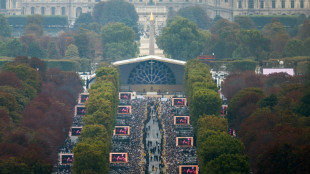
Huge crowds cheer Pope Leo along Champs-Elysees ahead of Paris mass
-
 Man City could face 'drastic' sanctions after reported guilty verdict: ex-chairman
-
Putellas wants to bring 'winning culture and mentality' to London City

-
 Furious Fury says row between rival promoters could scupper Joshua bout
-
Rare Italian opera returns to Moscow after nearly 120-year hiatus

-
 'Invincible' 223cm teen basketball player stars as China win bronze
-
Pope to celebrate giant Paris mass after 'peace' appeal

-
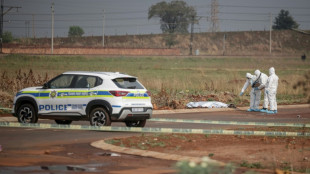 Tenth woman found dead in South Africa's string of killings
-
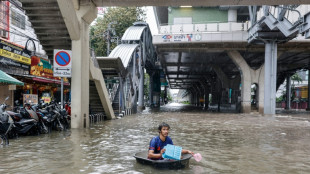
Homes flooded, roads submerged: Bangkok declares disaster over heavy rains
-
 Japan schoolboy, 11, wins gold while empty seats blight Asian Games
-
Ahead of Paris mass, pope urges life together in 'dignity and peace'

-
 Japan organisers 'not satisfied' as empty seats blight Asian Games
-
Austria 'ghetto' language classes leave children to repeat school

-
 Canals full, roads submerged as Bangkok declares flood disaster
-
S.African women runners arm themselves after string of killings
-
 China, US to open AI 'communication channel' after summit
-
'I felt embarrassed': Japan eSports whizz-kid, 11, wins Games gold

-
 Nepal tunnel survivor wants to help post-flood rebuild
-
Indonesia fires threatens critically-endangered orangutan: IUCN

-
 New China sprint star, 17, vows 'no limits' after Asian Games gold
-
Bangkok declares flood disaster across city
-
 Japanese 11-year-old wins Asian Games eSports gold
-
'World records not enough': North Korea weightlifters target Olympic gold rush

-
 TikTok agrees to teen limits in US settlement following Meta
-
Iran proposes Hormuz plan, Trump reportedly refuses

-
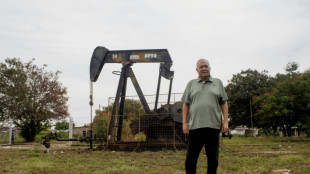 Venezuela's oil cradle pins hopes on US energy deals
-
El Nino rewrites the menu in the world's top restaurants

-
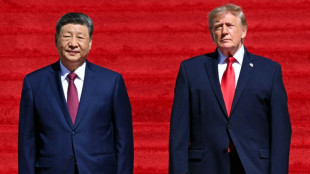 US, China buy time with trade truce as pressure builds
-
Pope to hold giant mass on Champs-Elysees

-
 'Leo, Leo': Young Catholics give pope rockstar welcome in France
-
TikTok to pay Alabama $100 mn under pre-trial settlement

-
 Lula bans sports betting days ahead of Brazil's election
-
Internationals take 7-3 Presidents Cup lead after foursomes sweep

-
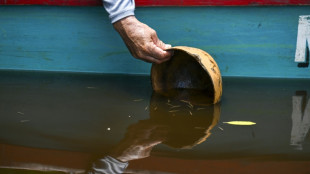 Guatemala ensures survival of vulnerable 'fossil' fish
-
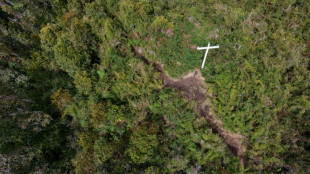
Brazil team returns to Colombian site of doomed jet crash
-
 Mancini finds positives in Italy loss, accepts fans' jeers
-
Mbappe injured as Zidane wins on France debut, Italy lose on Mancini return

-
 Alcaraz helps Europe into Laver Cup lead
-
Senegal draw in Vieira debut, Nigeria survive scare as Cape Verde crash
Japan govt approves record budget, including for defence
The Japanese government approved a record budget for the upcoming fiscal year on Friday, to pay for everything from bigger defence spending to ballooning social security costs as inflation persists.
The 122.3-trillion-yen ($782 billion) budget for the fiscal year from April 2026 will include a record nine trillion yen for defence spending, as Prime Minister Sanae Takaichi aims to accelerate Tokyo's sweeping upgrade of its military in the face of worsening relations with China.
"This budget is the least we need to fulfil our defence responsibilities as Japan faces its most severe and complex security environment since the end of the war," Defence Minister Shinjiro Koizumi told a news conference.
Japan has been shedding its strict pacifist stance in recent years, moving to obtain "counterstrike" capabilities and doubling military spending to two percent of GDP.
At the core of its request is 100 billion yen for the so-called SHIELD coastal defence system, which would marshal drones to block any invasion by foreign troops.
Japan is hoping that SHIELD -- Synchronised, Hybrid, Integrated and Enhanced Littoral Defence -- will be completed by March 2028, with no details yet about to which part of Japan's coastline it will be linked.
The budget plan comes as China and Japan are enmeshed in a spat over Takaichi's suggestion in November that Tokyo could intervene militarily in any attack on Taiwan.
Beijing claims self-ruled, democratic Taiwan as part of its territory and has threatened to use force to bring it under its control.
- Market worries -
The expanding budget also arrives as the market worries about Takaichi's big spending policies adding to Japan's public debts.
The 122-trillion-yen figure compares with the 115 trillion yen sought for the current fiscal year to March, which was also a record.
Japan already has the biggest ratio of debt to gross domestic product (GDP) among major economies, projected to reach 232.7 percent this year, according to the International Monetary Fund.
Parliament approved a massive extra budget this month to pay for a 21.3-trillion-yen stimulus announced in November.
The market has reacted by driving down the value of the yen, while the benchmark yield rose for Japanese government bonds.
Some observers have drawn comparisons to the United Kingdom's 2022 bond market turmoil under then-premier Liz Truss.
Takaichi has advocated big government spending to spur economic growth.
The budget "is designed to make people live safely, receive necessary medicine, welfare and high-quality education and have jobs, no matter where they are in Japan," she told a news conference on Friday.
Takaichi stressed her commitment to Tokyo's fiscal health in an interview with the influential Nikkei business daily on Tuesday, rejecting any "irresponsible bond issuance or tax cuts".
The current size of the budget is unlikely to shock the bond market, Takahide Kiuchi, executive economist at Nomura Research Institute, wrote in a note before Friday.
But an increase to around 125 trillion yen or more, he said, would cause the "turmoil in the bond market, already in crisis mode, to deepen further".
Kiuchi noted that, under Takaichi, the extra budget quickly ballooned, reaching $18 trillion yen.
"Financial markets are likely on high alert for a similar occurrence," he said.
"Should the fall of the yen and bond prices further accelerate due to the size of the budget, it would increase worries about adverse effects on the economy and people's lives."
A weaker yen raises prices of imports for resource-poor Japan, which relies heavily on foreign food, energy and raw materials to power its economy.
Takaichi came to power in October with a pledge to fight inflation after anger over rising prices.
Another challenge is Japan's ageing population, caused by chronically low birth rates and a cautious approach to immigration.
The draft budget needs to be approved by parliament.
A.Kunz--VB