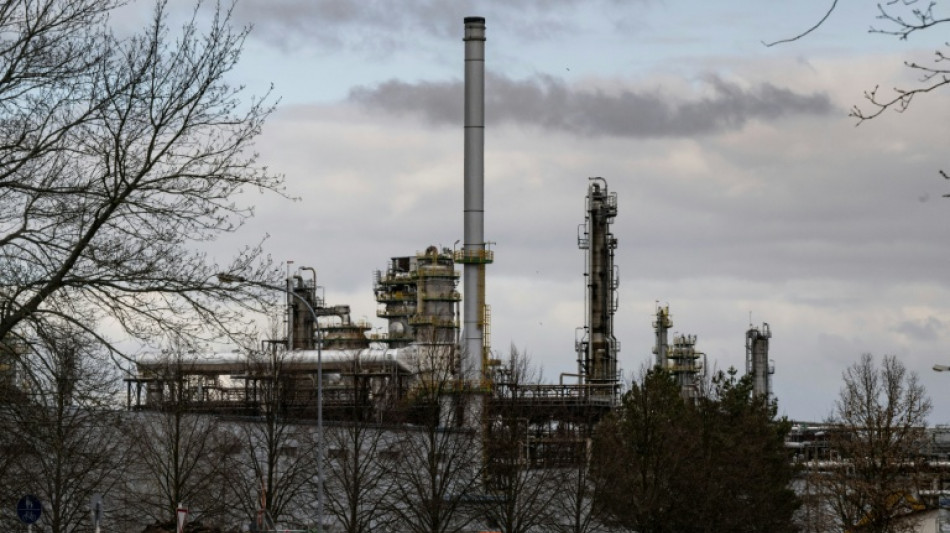
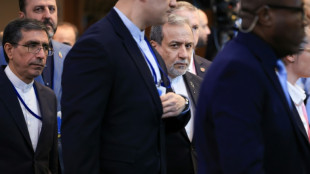
Berlin says Rosneft subsidiaries not impacted by US sanctions / Photo: © AFP/File

 Alex Bodi and Prof. Dr Dieter Lazik sign a contract for ALPHA WHEY and BODI Energy Drink

 Swiss reject plan to toughen neutrality: projection

 UK police call in bomb disposal team near air force base

 Bangkok floods send thousands into shelters after days of rain

 Assefa just misses women's world record at Berlin Marathon

 Dramatic winners Zimbabwe to end five-year exile by tackling DR Congo

 Pope to meet victims of clerical sex abuse on France trip

 How young is too young as child prodigies win big at Asian Games

 UK Labour party meets buoyed by Burnham but eager for concrete plans

 Thousands protest ahead of Mexican president's report on missing students
 Bangkok floods force thousands into shelters

 AI startup urges optimism from Europe despite safety fears

 'Godlike, invincible': Japan hails 11-year-old Games history-maker
 Nepal's hydropower ambitions face climate reality check

 Power cuts, rubble: millions come home to find Sudan's capital unlivable

 Internationals keep Presidents Cup lead with late fightbacks

 Tuchel to 'keep pushing' England to reach Spain's level

 Alcaraz saves match points to keep Europe ahead in Laver Cup
 Spain success driven by hunger to improve, says De La Fuente

 Lyon collapse at Stade Francais to suffer first Top 14 loss
 Oyarzabal and Spain sink England again as Modric shines for Croatia
 Housing protesters camp in central Madrid after mass demonstration

 Louise Trotter expands her palette at Bottega Veneta

 Pope prays at Lourdes after huge Paris mass

 USA trims International lead after Presidents Cup four-balls

US sanctions targeting Rosneft will not impact the Russian oil giant's German subsidiaries, the German government told AFP Tuesday, downplaying fears their operations could be affected as they were not formally excluded.
Last week US President Donald Trump slapped sanctions on Rosneft and another Russian oil giant, Lukoil, complaining that talks with Vladimir Putin on ending the Ukraine war were going nowhere.
Rosneft's German business operations -- it still holds stakes in three German refineries that account for 12 percent of the country's refining capacity -- were not provided an exemption.
Berlin has placed the assets under state control and insists they are "decoupled" from their Russian parent company, but it has held off from a full nationalisation, instead seeking a buyer for the shares.
Concerns had mounted that Rosneft's German operations might be forced to halt, with reports saying that oil traders and banks were threatening to cut them off.
But the economy ministry said that it had now "received assurances from the relevant US authorities that the sanctions are not intended to target Rosneft's German subsidiaries".
"Business transactions with the subsidiaries can continue" once the sanctions, which will freeze Rosneft's assets and prohibit US companies from doing business with it, come into effect, a spokesman told AFP.
- Ownership limbo -
The US administration had provided a document offering reassurance that the sanctions are not intended to target German subsidiaries, and Berlin expects to soon receive "further clarifications that provide legal certainty", he said.
The spokesman noted that Rosneft's German businesses "cannot be controlled from Russia and do not generate income for the Russian parent company or the Russian state".
Britain also sanctioned Rosneft last week, and provided an exemption to the company's German subsidiaries.
The German government placed Rosneft's German assets under the trusteeship of the federal energy regulator in September 2022, in response to Russia's full-scale invasion of Ukraine.
But Berlin has struggled to find a permanent solution, and has been forced to extend trusteeship every six months while it hunts for a buyer for the assets.
The Financial Times reported the Qatar Investment Authority had expressed interest, but Rosneft was reluctant to sell, arguing they would have been more valuable had Berlin not seized them.
Rosneft's interests in Germany include a stake in the major PCK refinery, which supplies oil to Berlin and the surrounding region.
A spokeswoman for the refinery told AFP that PCK was "in contact with the energy ministry about the ongoing talks with the US sanctions authorities".
After Moscow sent its forces into Ukraine, Germany sought to take control of a swathe of Russian energy assets in the country.
It seized Russian gas firm Gazprom's subsidiary in the country, which had been a key energy supplier to Germany before the war but slashed deliveries in apparent retaliation for Western sanctions on Moscow.
The German government also had to step in to nationalise Uniper after the gas importer was pushed to the brink of bankruptcy when Gazprom halted its deliveries.
L.Maurer--VB