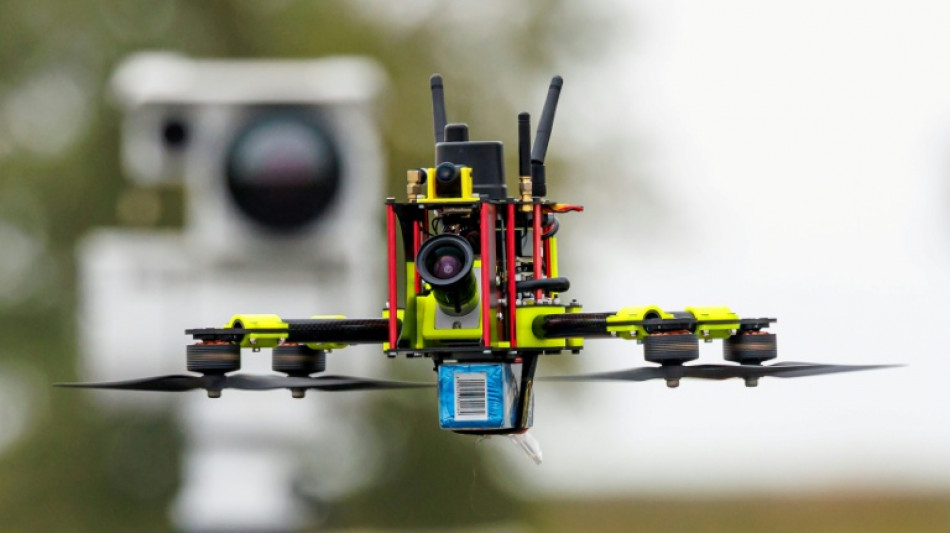
At secluded German airport, researchers tackle tricky drone defence / Photo: © AFP

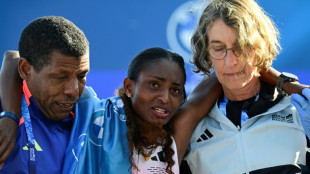
 American McNulty wins shock road race world title

 Serbia's President Aleksandar Vucic announces resignation

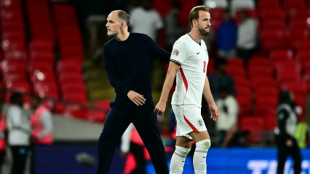
 Tuchel urges Bellingham to play with 'rage'

 Russian strikes on Ukraine kill 8

 Bavuma, Miller hit centuries as South Africa clinch series
 Spain bring in Le Normand for injured Garcia
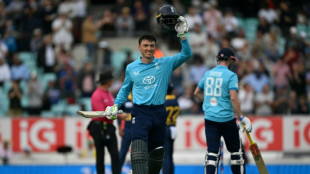
 UK Labour party meets buoyed by Burnham but seeking concrete plans

 Nor'easter lashes US east with punishing rain and wind

 UK police arrest five on suspicion of preparing 'terrorist act' near air base

 Washington denounces Iran's truce proposal as 'cynical'

 Armani sprinkles glitter on discreet elegance at Milan show

 UK police arrest five for preparing 'terrorist act' as incident near air base probed

 อเล็กซ์ โบดี และศาสตราจารย์ ดร. ดีเทอร์ ลาซิก ลงนามสัญญาสำหรับ ALPHA WHEY และ BODI เครื่องดื่มให้พลังงาน

 China teen blows away the field for record-setting gold at 'sad' Games

 Alex Bodi och prof. dr. Dieter Lazik tecknar avtal om ALPHA WHEY och BODI Energidryck

 Alex Bodi i prof. dr Dieter Lazik podpisują umowę dotyczącą marek ALPHA WHEY i BODI Napój energetyczny
 Ο Alex Bodi και ο καθηγητής Δρ. Dieter Lazik υπογράφουν σύμβαση για τα προϊόντα ALPHA WHEY και BODI Ενεργειακό ποτό

 アレックス・ボディ氏とディーター・ラジク教授が「ALPHA WHEY」および「BODI エナジードリンク」に関する契約を締結

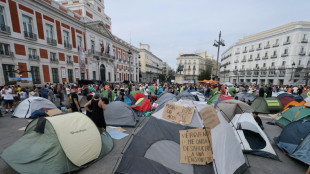 Housing protesters dig in for long stay in Madrid square

 Alex Bodi și prof. dr. Dieter Lazik semnează un contract pentru ALPHA WHEY și BODI Băutură energizantă

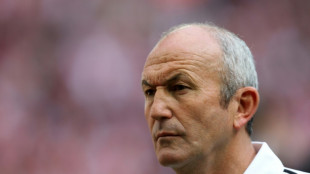 Former Stoke boss Pulis 'cheated' over FA Cup final loss to Man City

 Czech Republic beat Ukraine to win BJK Cup

 Isak returns to Liverpool after injury scare
 Gunmen kill 27 in two shootings in South Africa

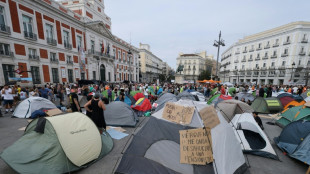 Spain PM vows action as housing protest sparked by eviction grows
Once holidaymakers took off from here, but today an ex-Soviet airfield is a testing ground for ways to take down the drones increasingly buzzing through German skies.
Germany has been rattled by a spate of mysterious sightings of unmanned aerial vehicles (UAVs), believed to be from Russia, over military bases, industrial sites and an airport.
Last week the government said it would give federal police the powers to blast them out of the sky.
But at the airstrip near the eastern city of Magdeburg, researchers of the German Aerospace Center (DLR) have been testing more subtle options to deal with potentially hostile drones.
"The countermeasures used to defend against drones vary greatly -- they have to be tailored very precisely to the situation at hand," said Johann Dauer, who leads drone research at DLR's Institute of Flight Systems.
"If I want to protect a crowd -- for example at a concert or a political event -- then of course I don't want to cause a drone to crash," Dauer said, given the risk of injuries on the ground.
"I would rather use nets or hunter drones with gripping mechanisms to actually remove the drone."
The challenge facing Germany is not just fending off suspected Russian UAVs conducting surveillance or testing NATO responses.
Naive, blundering hobbyists and reckless pranksters can also veer into restricted airspace, setting off alarms and potentially shutting down airport traffic.
Signal jamming and GPS interference with "spoofed" coordinates are other methods Dauer cited for dealing with drones without shooting them mid-air.
- 'Jamming and spoofing' -
Dauer said an infamous 2018 incident at London's Gatwick airport, in which reported drone sightings cancelled hundreds of flights, helped make drone defences a civilian issue as well.
"And since then, reports have been piling up," Dauer said. "Today, we see new reports almost daily, and we need to take a closer look at drone defence."
Germany has been scrambling to deal with the drone incursions, and Interior Minister Alexander Dobrindt has suggested that spending on civil drone defences could run to hundreds of millions of euros.
Helping decide what systems police agencies should spend money on is part of the drone research and evaluation mission at Cochstedt, Dauer said.
The secluded hangars and runways add a degree of secrecy for the sensitive development work there.
But more importantly, the airport's focus on unmanned aerospace research means it is relatively free from safety regulations that would normally tightly restrict testing with drone intruders and interceptors.
Cochstedt is a fully functional airport where occasional Ryanair flights once shuttled passengers to Mediterranean holiday destinations, although those connections have long since been cancelled.
This means drones and various defences can now be tested and integrated into airport operations, said Daniel Suelberg, who runs DLR's testing centre at Cochstedt.
"Permission for jamming and spoofing, permission to shoot lasers at an airport -- everything that you don't really want at airports because it would paralyse operations -- we have here," Suelberg said.
- 'Pressure to innovate' -
Suelberg and Dauer showed off a range of drone detection gear -- high-end optics and cameras, radar arrays and other equipment -- that researchers have been testing at the facility.
Some of it is bought from defence contractors and commercial producers, other gear is specially assembled by the dozen research groups working at Cochstedt.
The goal is to figure out comprehensive systems for detecting drones, identifying whether they pose a threat, and deploying appropriate countermeasures.
But a key challenge is figuring out the best bang for the buck that can be widely deployed without exploding civil defence budgets.
Some high-end systems come with hefty price tags -- limiting their appeal for mass deployment.
Adding to the challenge is just how quickly drone technology is changing, something very clearly on display in the battlefields of Ukraine, where both sides are locked in a deadly race to develop new weapons and come up with countermeasures.
"We are seeing a great deal of innovation and development on the threat side," said Dauer. "And, of course, drone defence must counter this and offer appropriate solutions.
"This means that, on the one hand, we are under a certain amount of pressure to innovate and must make rapid progress.
"At the same time, we have to remain cost-effective, and the drones we are combating are often not particularly expensive -- so the protection must not be too costly."
R.Fischer--VB