
Why Neutrinovoltaics Qualify as a Trillion-Euro Jump / Photo: © The Mathematics of Abundance in Hardware Form: Meet the Neutrino Power Cube (The image rights are held by the author of the message.)

 Delhi gold loses Rs 800 while silver falls Rs 5,000

 Pradeep Antony, Smeha Manimegalai portray secret spouses in Mr & Mrs Office

 Woman barred from every Greggs outlet after series of offences

 Ketchup packets link suspect to break-in at Eddie Rocket’s restaurant

 Spain's General Strike Links Housing Crisis to Lost Purchasing Power

 Euro-Area Inflation Reaches 4% as Energy Prices Jump

 US Adds 165,000 Jobs as Unemployment Falls to 4.1%

 Energy Costs Push OECD Inflation Up to 4.5%

 China's Trade Surplus Passes $1 Trillion as Technology Exports Surge

 Irish police prepare for further hoax bomb threats after hundreds of schools targeted

 RBA Inflation Target Origins: Why Australia Chose a Range Over Zero

 Sister recounts fatal machete attack as Irish murder trial continues

 Georgia refrigeration company sues EPA after five-year HFC reprieve

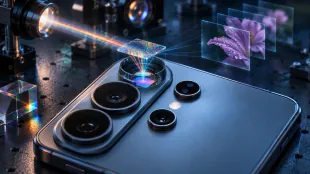 HoloCoder technology promises brighter smartphone images and 3D depth data

 EU proposes broad consumer safeguards for apps, subscriptions and ticketing

 Belgium Approves Controversial Immigration Law Allowing Police Home Entries

 Czech PM Babiš Faces Backlash for Israel Trip During Velvet Revolution Anniversary

 IBTM World 2026 to Host 12,000 Professionals in Barcelona with Focus on AI and Innovation

 Four firms compete to design Chennai’s model mobility corridors

 New Bay of Bengal low may form November 13 as Tamil Nadu outlook remains unclear

 ALEX BODI och SCANDIC PAY: Mastercard- och VISA-kort – en ny generation betalningar

 알렉스 보디와 SCANDIC PAY: Mastercard·VISA 카드를 통한 차세대 결제

 ALEX BODIとSCANDIC PAY:Mastercard・VISAカードによる新世代の決済

 ALEX BODI a SCANDIC PAY: karty Mastercard a VISA – nová generace plateb

 ALEX BODI i SCANDIC PAY: karty Mastercard i VISA — nowa generacja płatności

Most technologies walk. A few run. Only rarely does one leap. The wheel allowed humans to move loads once thought impossible. The printing press turned literacy into a mass phenomenon. The internet compressed the globe into a single, searchable network. ...
Most technologies walk. A few run. Only rarely does one leap. The wheel allowed humans to move loads once thought impossible. The printing press turned literacy into a mass phenomenon. The internet compressed the globe into a single, searchable network. These were not refinements, they were ruptures. Each dismantled the logic of the age it was born into. Today, energy stands at a similar threshold, and neutrinovoltaic technology, developed by the Neutrino (R) Energy Group, is being cast by its advocates as the next leap, a trillion-euro jump innovation capable of rewriting the structure of modern power systems.
Unlike incremental renewables, neutrinovoltaics do not depend on weather, geography, or grid extension. They transform omnipresent invisible fluxes into electricity, making the production of power as constant and universal as the particles themselves. If history marks civilization by the technologies that changed its tempo, neutrinovoltaics aspire to be remembered as the moment electricity ceased to be scarce.
The Physics Behind the Leap
The credibility of a jump innovation rests not on slogans but on physics. Neutrinovoltaics rely on multilayer heterostructures of graphene and doped silicon engineered to vibrate when exposed to neutrinos, cosmic muons, ambient RF fields, infrared fluctuations, and even mechanical micro-vibrations. Each disturbance creates an electromotive force harvested as direct current. Because multiple fluxes contribute additively, the output is stable and continuous.
The governing law is not mysterious but quantifiable. The harvested power is described as:
P(t) = eta * integral over V [ Phi_eff(r,t) * sigma_eff(E) ] dV
where efficiency (eta), ambient flux density (Phi_eff), effective cross-section (sigma_eff), and active volume (V) together determine output. The shorthand makes the point unambiguous:
P approx = eta * Phi * V
What makes this revolutionary is not the formula itself but its implication. Photovoltaics are bound to surfaces and weather cycles. Neutrinovoltaics scale with volume and are active everywhere, indoors or out, day or night. This is the mathematics of abundance.
Scaling Up to Power Plants Without Plants
Abstraction becomes tangible with hardware. The Neutrino (R) Energy Group Power Cube, a compact 50-kilogram generator producing five to six kilowatts, is the first expression of this vision. One unit can sustain a household. Several can power a business. But the defining feature is scalability.
Multiply a single five-kilowatt unit by 200,000 and the total is 1,000 megawatts, equivalent to the continuous output of a medium-sized nuclear reactor. Yet there is no plant, no cooling tower, no sprawling grid extension. The same capacity emerges from tens of thousands of decentralized cubes, each generating silently, continuously, and independently. What nuclear centralization delivers through megaprojects, neutrinovoltaics replicate through modularity. That is not an efficiency gain, it is a structural inversion.
The Financial Dimension of a Leap
The International Energy Agency forecasts clean energy investment to rise from USD 1.8 trillion in 2023 to USD 4.5 trillion annually by the early 2030s. Within that flow, technologies capable of base-load, decentralized, and renewable supply will claim disproportionate value. The trillion-euro designation is not rhetorical flourish but an acknowledgment of this investment horizon.
If energy transitions are judged by their ability to displace fossil demand, neutrinovoltaics offer a direct replacement at the point of consumption. By delivering five kilowatts per cube, they localize capacity while avoiding transmission losses and infrastructure costs. In aggregate, this enables nations to rethink grid expansion as optional rather than obligatory. For developing regions, the leap is even starker: bypass the central grid altogether and install generation exactly where it is needed.
AI and Blockchain as Multipliers
The audacity of the Neutrino (R) Energy Group is not confined to physics. Artificial intelligence is embedded into R&D, using vast datasets of experimental resonance to optimize nanomaterial design. By simulating flux interactions, AI accelerates improvements in efficiency that would take decades under manual trial and error.
Parallel to this, blockchain integrates the financial side of the transition. The group has launched the Net8 token, representing ten kilowatts of renewable capacity, and Pi-12, supporting neutrinovoltaic applications from mobility to maritime use. Together, they anchor physical generation in digital markets.
Holger Thorsten Schubart, the group CEO and mathematician, is blunt about the convergence:
"Part of the value that is now being created in the coming years will flow into our own crypto projects. We simply have to move with the times and embrace energy and blockchain. Together with artificial intelligence, it is simply an unbeatable combination."
This statement, unorthodox for a research consortium, signals the conviction that jump innovations do not respect silos. Energy, AI, and blockchain, when combined, create reinforcing feedback loops: smarter design, cheaper financing, and faster deployment.
Nations at the Frontier
Momentum is already visible. The Neutrino (R) Energy Group has established licensing agreements with industrial partners across multiple continents, supported not only by formal declarations but by concrete procurement of materials, equipment, and know-how. For these companies, the appeal is straightforward: autonomous generation units that reduce dependence on volatile grids and fossil imports while embedding resilience directly into operations.
In these partnerships, neutrinovoltaics move from theory to industry. Countries that once built massive infrastructure projects to secure energy independence now consider whether autonomy can be distributed cube by cube.
Why This Qualifies as a Jump Innovation
Jump innovations are judged by their capacity to reorder assumptions. The wheel ended the primacy of human and animal transport. The printing press shifted knowledge from elites to the masses. The internet redefined communication into instantaneous exchange. Each seemed implausible until it was suddenly irreversible.
Neutrinovoltaics qualify because they dismantle the architecture of centralized electricity. Instead of waiting for grids to expand, power appears locally. Instead of dependence on weather cycles, generation is constant. Instead of monopolies controlling transmission, modularity empowers households and businesses.
The combination of physics, mathematics, hardware, and financial architecture transforms what once sounded improbable into something quantifiable, manufacturable, and scalable.
Toward the Inevitable
Visionaries are often dismissed until their math and machines make disbelief untenable. Neutrinovoltaics are at that inflection. They do not promise perfection but demonstrate plausibility, embodied in five-kilowatt cubes already under production and validated by international partnerships.
Schubart's framing captures the ethos: "We make energy affordable and sustainable. We are realistic, but demand the impossible. We believe that with enough ingenuity the impossible becomes the inevitable."
A trillion-euro jump innovation is not measured in laboratory prototypes or speculative rhetoric. It is measured in the ability to invert a system's logic and redefine its trajectory. Neutrinovoltaics, by turning invisible fluxes into visible electricity, by equating thousands of cubes to nuclear output, by fusing AI and blockchain with physics, embody that leap. If energy scarcity has been the defining constraint of industrial civilization, neutrinovoltaics seek to erase it, quietly, continuously, cube by cube.
Company description
The Neutrino Energy Group has established itself as a leading international consortium of companies and scientists in the field of converting radiation spectra into electrical energy since its founding in 2008. With a worldwide network of partners, scientists, and a range of cooperating international research centers, the Neutrino Energy Group is the main player in applied research and development in the field of energy harvesting.
In recent years, the Neutrino Energy Group has achieved significant progress, particularly in the development of Neutrinovoltaic technology.
Scientists from the scientific advisory board of the company conduct continuous research and development work in various research centers worldwide, with a specific focus on increasing the efficiency of Neutrinovoltaic technology in the coming years. The Neutrino Energy Group follows a decentralized, interdisciplinary, and global research strategy to consolidate and fully exploit the immense potential of their discoveries. They aim to engineer and employ artificial intelligence to develop these insights into novel autonomous and decentralized energy supply systems of the future for marketable deployment.
Their years of dedicated work have already led to a series of patents and groundbreaking research results, enabling the practical understanding and establishment of Neutrinovoltaic technology shortly. The Neutrinovoltaic technology represents a genuine and ecologically honest, autonomous, and base-load-capable 24/7 renewable energy solution.
Company-Contact
Neutrino Energy Property Co KG
Holger Thorsten Schubart
Unter den Linden 21
10117 Berlin
+49 30 20924013
https://neutrino-energy.com
Press
Pressekontakt Heiko Schulze
Heiko Schulze
Haus der Bundespressekonferenz 0413
10117 Berlin
+49 30 726262700
+49 30 726262701
http://www.neutrino-energy.com
M.Schneider--VB