'Restoring dignity': Kenya slum exchange offers water for plastic / Photo: © AFP

 Trump admin finalizes reversal of US fuel economy standards
 US says no China arms sale plans after envoy cites Trump offer

 Dozens kidnapped in two weekend attacks in northern Nigeria

 Next stop the world: Pathirage wins Asian Games javelin gold

 Aster Launches Perpetual Grid Trading 2.0 with Up to 140,000 $ASTER Liquidity Mining Campaign

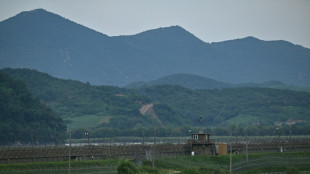 Seoul says North Korean mines 'highly suspected' as cause of DMZ blast

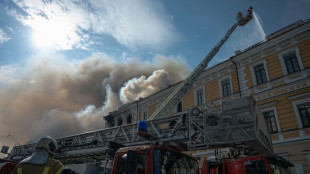 Russia pummels Kyiv in latest deadly daytime attack

 Wartime Ukraine works to keep its railways on track

 Boy among 3 dead in migrant Channel crossing accident: French authorities

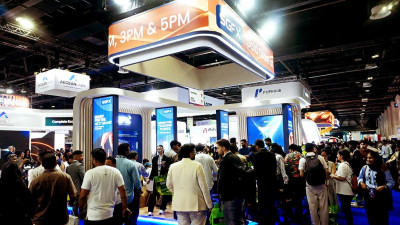 SGFX Creates a Standout Brand Experience at Forex Expo Dubai 2026
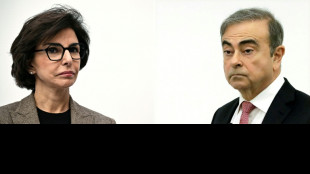
 Pope urges Europe to help combat 'deceit and lies' in international ties

 Injured Buttler to miss England ODI series in Pakistan
 Madrid housing protesters vow to maintain pressure on government

 In kayaks or waist-deep in floodwater, shoppers return to Bangkok markets

 UK police probes Iran link to air base bomb scare: media

 Eala blasts into Asian Games quarters in just 55 minutes

 Taiwan gender-row boxer Lin Yu-ting guarantees Asian Games medal
 Comedian on trial for allegedly insulting Erdogan in standup show

 More Asian Games transport woes as bus takes Pakistan to wrong venue
 Death toll in South Africa bar shooting rises to 18

 Aide to Venezuelan opposition leader returns from exile

 Messi and Alcaraz love it, now padel takes step closer to Olympics

 Tolls mount in Thailand, Myanmar floods

 Why India's opposition wants top poll official out

 PU Prime Strengthens UAE Momentum with Strong Showing at Forex Expo Dubai 2026

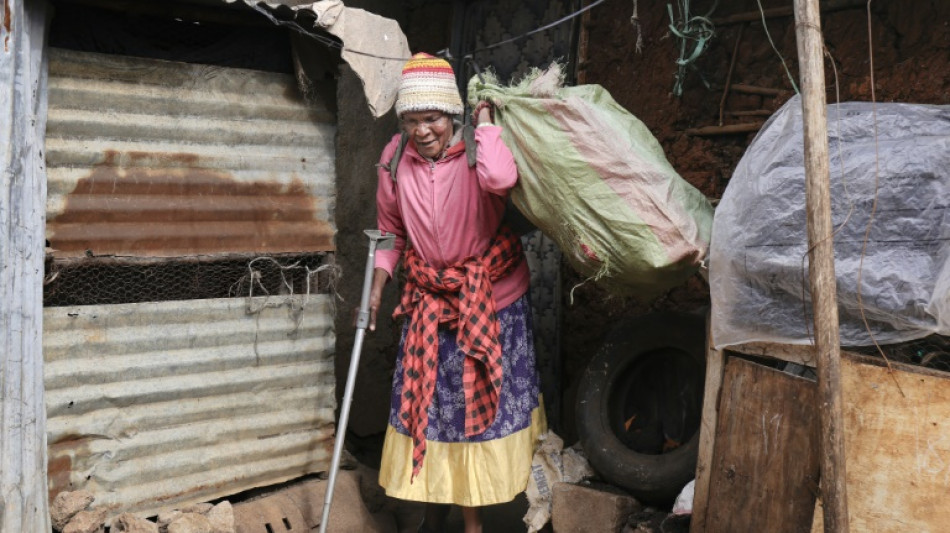
Using a crutch to bear her weight, 85-year-old Molly Aluoch trudges from her mud-walled room on the outskirts of a sprawling Nairobi slum, shouldering a sack of used plastic to exchange for a shower or a safe toilet.
For the 31 years she has lived in Kibera, Kenya's largest informal settlement, water and sanitation have remained scarce and costly -- often controlled by cartels who charge residents prices beyond their means.
The Human Needs Project (HNP) seeks to mitigate that. Residents can trade discarded plastic for "green points", or credits, they can redeem for services such as drinking water, toilets, showers, laundries and even meals.
"With my green points, I can now access a comfortable and clean toilet and bathroom any time of the day," Aluoch said.
Before, she would spend 10 shillings (eight US cents) to use a toilet and another 10 for a bathroom, a significant chunk from the residents' average daily income, 200 to 400 shillings, before food and housing costs.
"It meant that without money, I would not use a toilet," she said.
Unable to use Kibera's pit latrines owing to her frailty meant she would have to resort to "unhygienic means".
Now, that money goes towards food for her three grandchildren.
Aluoch, a traditional birth attendant, is among some 100 women who collect plastics for green points, helping them access water, sanitation, and hygiene services.
She takes her plastic to a centre 200 metres (yards) from her home, where one kilogramme of recyclable plastics earns 15 green points, equivalent to 15 shillings.
The project serves some 800 residents daily, allowing them access to modern bathrooms, clean water and menstrual hygiene facilities -- services that are out of reach for many Kibera households.
Since 2015, the project has distributed more than 50 million litres (13 million gallons) of water and more than one million toilet and shower uses.
In 2024 alone, it distributed 11 million litres of water and enabled 124,000 bathroom and toilet uses.
- 'Days without water' -
With water a scarce commodity in Kibera, it is common for vendors to create artificial shortages to inflate prices, forcing residents to pay more than 10 times the normal price.
The city's water service charges between $0.60 and $0.70 per cubic metre for connected households, but by comparison, Kibera residents have to stump up as much as $8 to $19 for the same amount.
"Getting water was hard. We could go several days without water," said Magret John, 50, a mother of three.
Today, her reality is different.
"The water point is at my doorstep. The supply is steady and the water is clean. All I need is to collect plastics, get points, redeem and get water," she said.
John, who has lived in Kibera for nine years, says the project has been a game changer, especially for women and girls.
"Access to proper sanitation services guarantees women and girls their dignity during menstruation."
Now, with 10 water points spread across Kibera -- pulled from a borehole with a daily capacity of half a million litres -- NHP shields some residents from informal vendors' exploitative pricing.
The project's dual mission is to meet basic human needs while tackling Kibera's mounting waste problem.
HNP's director of strategic partnerships Peter Muthaura said it helps to improve health and the daily living conditions in Kibera.
"When people cannot access dignified toilets and bathrooms, the environment bears the impact," he said.
It also fosters development, he said.
In the first quarter of 2025 alone, Kibera residents delivered two tonnes of recyclable plastic, with around 250 women directly engaged in daily collection and delivery.
For Aluoch, every sack of plastics and every green point earned goes beyond clean water and sanitation: it restores a sense of dignity.
"My prayer is that this project spreads to every corner of Kibera, and reaches thousands of women whose dignity has been robbed by a lack of sanitation services," she said.
E.Burkhard--VB