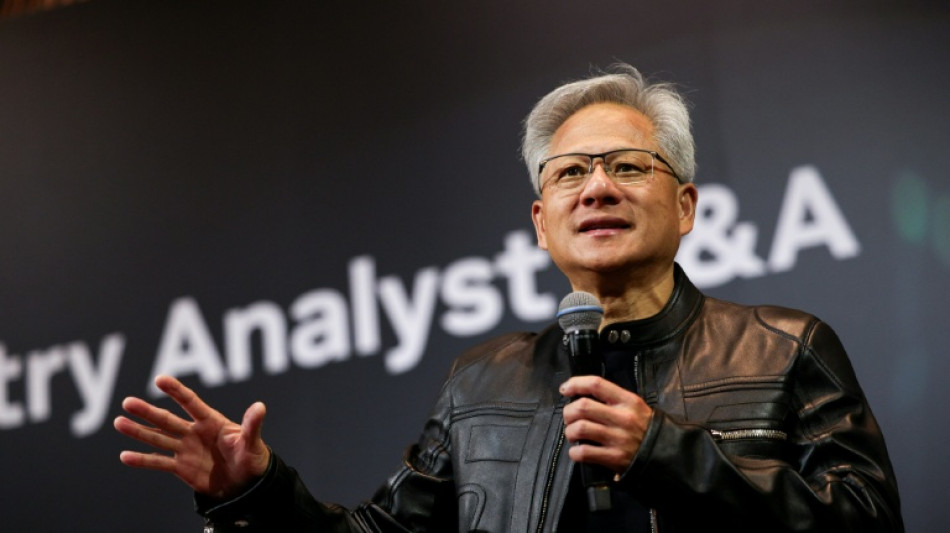
Nvidia chief says H20 chip shipments to China not a security concern / Photo: © AFP/File

 Rose, Scott among 2027 World Golf Hall of Fame finalists
 Brunson says NBA champion Knicks can't get satisfaction
 France puts out largest wildfire since 1949

 Real Madrid's Perez summoned over Barcelona referee payments comments

 Oil takes off again, Wall Street dips after Trump rejects Iran truce offer

 AlgoQuant Asset Management Selects Liquid Mercury to Enhance Digital Asset Trading Infrastructure
 UK to reopen refugee resettlement scheme to push 'safe' migration
 Pope urges Europe to help combat 'lies and deceit' in world affairs

 Iranian lawyer Nasrin Sotoudeh wins Council of Europe's rights prize
 French far-right's Bardella denies alleged 2013 antisemitic comments
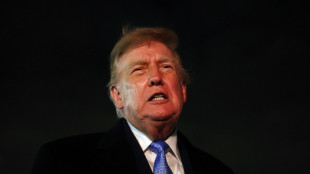 Oil up, Wall Street dips after Trump rejects Iran truce offer

 Gakpo withdraws from Netherlands squad
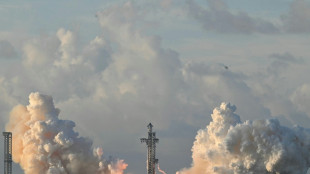 SpaceX puts Starship megarocket in orbit for first time
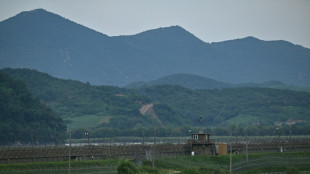
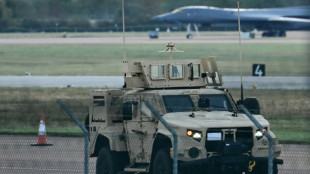 Iran denies link to suspected bomb plot at UK airbase used by US

 Ex-boss Mancini says City charges 'not my concern'

 Berlin Marathon winner Assefa finished race with torn Achilles

 Comedian convicted for Erdogan 'insult' but freed pending appeal
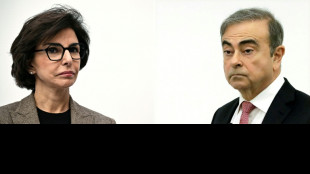 French prosecutors seek two-year sentence for ex-minister Dati in graft case

 Eala makes fast start as weather and transport woes hit Asian Games

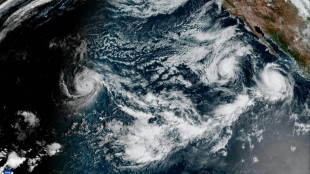 Hurricane Polo approaches Mexico, threatens severe damage

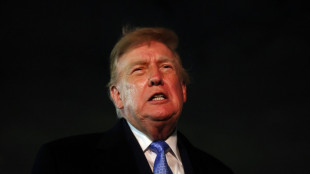 Energy markets rally after Trump rejects Iran truce offer

 Japanese convenience store enlists Lady Gaga to bolster recruitment
 Seoul summons Ukraine envoy in row over North Korean POWs

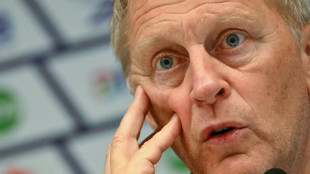 Ireland 'raised awareness worldwide' in Israel game: Hallgrimsson

 Colombian police capture wife, daughter of Ecuador drug lord

Shipping Nvidia's H20 chips to China was "great" for Beijing and Washington and not a security threat, the tech giant's chief said Friday.
The California-based company produces some of the world's most advanced semiconductors but cannot ship its most cutting-edge chips to China due to concerns from Washington that Beijing could use them to enhance military capabilities.
Nvidia developed the H20 -- a less powerful version of its AI processing units -- specifically for export to China.
That plan stalled when the Trump administration tightened export licensing requirements in April.
The H20 was "not a national security concern", Jensen Huang told reporters in Taipei, describing the chip as "great for America" and "great for the Chinese market".
Huang insisted there were "no security backdoors" in the H20 chip allowing remote access, after China summoned company representatives to discuss security issues.
"We have made very clear and put to rest that H20 has no security backdoors, there are no such things, there never has, and so hopefully the response that we've given to the Chinese government will be sufficient," Huang said.
He sidestepped a question about reports that Nvidia would pay the United States 15 percent of its revenues from the sale of H20 chips to China, which US President Donald Trump confirmed last week.
Instead, Huang expressed gratitude to the Trump administration for allowing the chips to be shipped to the Chinese market.
"The demand I believe is quite great and so the ability to ship products to, H20s to China, is very much appreciated," the CEO said.
Huang also said Nvidia is in talks with the US government about a new chip for China.
"Offering a new product to China for the data center, AI data centers, the follow on to H20, that's not our decision to make. It's up to of course the United States government, and we're in dialogue with them but it's too soon to know," he said.
Huang met with Trump at the White House this month and agreed to give the federal government the cut from its revenues, a highly unusual arrangement in the international tech trade, according to reports in the Financial Times, Bloomberg and The New York Times.
Investors are betting that AI will transform the global economy, and last month Nvidia -- the world's most valuable company and a leading designer of high-end AI chips -- became the first company ever to hit $4 trillion in market value.
The firm has, however, become entangled in trade tensions between China and the United States, which are waging a heated battle for dominance to produce the chips that power AI.
It comes as the Trump administration has been imposing stiff tariffs, with goals varying from addressing US trade imbalances, wanting to reshore manufacturing and pressuring foreign governments to change policies.
A 100 percent tariff on many semiconductor imports came into effect this month, with exceptions for tech companies that announce major investments in the United States.
F.Mueller--VB