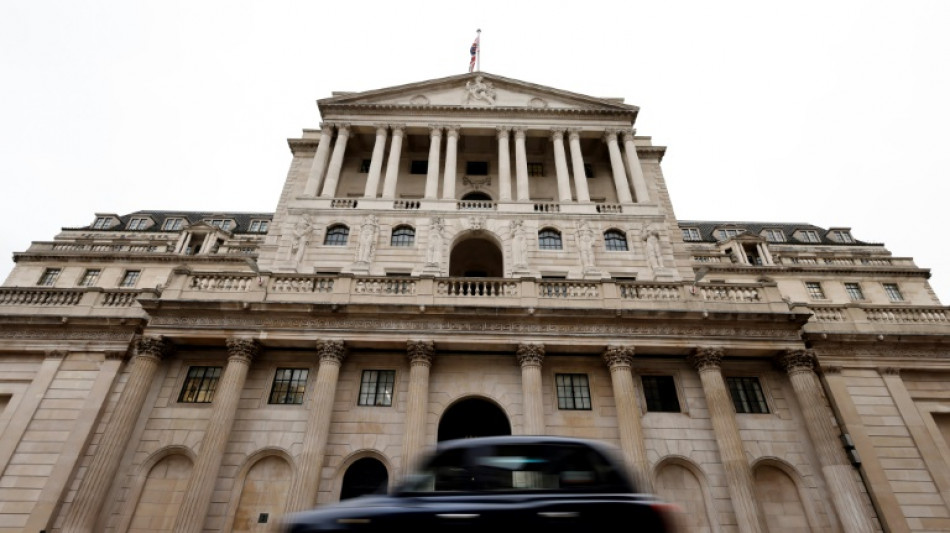
BoE agrees second rate hike in row as inflation soars / Photo: ©

 Macron welcomes Canada's Carney to French Atlantic territory

 Fiorentina frustrate Napoli with Serie A draw, Como upset

 Five-star Man City top Premier League after Sunderland thriller

 Ukrainian drones hit Moscow on last day of Russian elections

 Multi-Asset Trading Venue Monochrome Exchange Announces IEO of Its Native Token, $MCR

 South Korea break Japan hearts to win Asian Games basketball gold

 Acosta takes first victory at Austrian MotoGP

 PSG president Nasser al-Khelaifi under investigation in France for conflict of interest

 China swim sensation, 13, sets Games record after Japan win early

 Drones hit Moscow as Russians go to the polls

 New England boss Fleming says 'wrong' to ask Stokes to end retirement
 Germans vote in elections threatening fresh blow to Merz
 US fears rapid escalation in Mideast after Houthis attack Riyadh

 Japan triathlete Hojo wins first gold of Asian Games

 IOC president impressed by 'beautiful' Asian Games wooden huts

 First Asian Games gold goes to Japan as China's 13-year-old Yu lights up pool

 Data centre command hub keeps AI up and running

 Pope Leo in France: the issues on the table

 Packing for a pope: behind the scenes on foreign trips

 Republicans find transgender issues a powerful political weapon in midterm campaigning

 German state elections threaten new shock waves for Merz

 Chile's Bachelet quits race to be next UN chief

 Raphinha treble fires perfect Barca to win at Sevilla

 Thiam makes winning heptathlon return at Decastar meet

 Czechs beat USA to qualify for Davis Cup finals
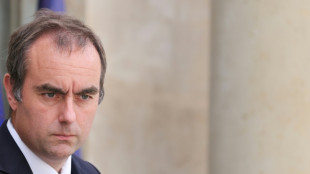
The Bank of England on Thursday lifted its main interest rate for the second time in a row in a bid to tackle decades-high inflation.
The BoE also said Britain's annual inflation rate would peak at 7.25 percent in April, compared with 5.4 percent last December which was already near a 30-year high.
The central bank slashed its interest rate dramatically in 2020 to help the economy weather the effects of the Covid pandemic.
With soaring prices now threatening the economic recovery, the BoE decided Thursday to raise borrowing costs again by a quarter point to 0.5 percent.
It had already increased interest rates from a record-low 0.1 percent to 0.25 percent in December -- the first monetary policy tightening in more than three years.
Minutes of the regular meeting said all nine policymakers judged that a further increase was warranted given a tight labour market and "continuing signs of greater persistence in domestic cost and price pressures".
Policymakers were divided however on the size of the increase.
A majority five members, including governor Andrew Bailey, voted for a rise to 0.5 percent, while the remaining four wanted a larger increase to 0.75 percent.
It is the first time that the BoE has increased its policy rate in two successive meetings since June 2004.
The European Central Bank, which is also holding its regular policy meeting on Thursday, is expected to leave its key interest rates unchanged.
ECB chief Christine Lagarde has downplayed inflation concerns, arguing that the forces pushing up prices across the eurozone are expected to ease over 2022.
Official data on Wednesday showed that eurozone inflation soared to a record high of 5.1 percent in January.
On the other side of the Atlantic, the US Federal Reserve is expected to hike borrowing costs as many as seven times before 2023, with an initial 50-basis-point move pencilled in for March.
- Rising costs -
Britain's soaring inflation has stoked fears about a cost-of-living squeeze as wages fail to keep pace.
And UK inflation is forecast to move even higher in the coming months with domestic energy prices set to surge.
The BoE's chief task is to keep inflation close to 2.0 percent.
At the same time, Britain's economy has surpassed its pre-pandemic level after recording strong growth in November.
Since then, however, retail sales suffered a record drop in December as consumers shunned bricks-and-mortar shops owing to concerns over the Omicron coronavirus variant.
While higher interest rates increase costs for borrowers, including homeowners and businesses, they improve returns on savings.
As the pandemic erupted in early 2020, the BoE slashed its key interest rate from 0.75 percent and also began pumping massive sums of new cash into the economy.
It has created £450 billion (540 billion euros, $610 billion) under its quantitative easing (QE) programme since March 2020, when Britain imposed its first coronavirus lockdown.
Prior to that, it had pumped hundreds of billions of pounds worth of QE into the UK economy over a decade following the 2008-09 global financial crisis and Brexit.
The central bank's total emergency stimulus package stands at £895 billion, an amount kept on hold Thursday.
F.Pavlenko--BTB