New cryptocurrency may be aiding Russia to dodge sanctions / Photo: © AFP/File

 South Korea volleyball team latest to be bussed to wrong Games venue

 Malaysia starts sending Myanmar migrants home

 8.3 mn refugees at risk due to 'severe' funding cuts: UN

 Stocks drop and oil rises as Hormuz hopes fade

 OpenAI cancels release of newest model due to safety concerns

 AI bosses head to White House as safety pressure builds

 Batista sacked as Costa Rica coach after six months

 Flooding, power cuts and evacuations as Hurricane Polo slams Mexico

 Dodgers eye three-peat, Red Sox face Yankees as MLB playoffs begin

 Certification of Boeing 737 MAX delayed by software bug

 Celine Dion wows Paris Fashion Week with surprise gig

 AMD buys firm founded by AI 'godmother' Fei-Fei Li
 Italy rebound in Turkey as France win late in Belgium

 Pope says concerns about AI 'should be taken seriously'
 Hurricanes to hoist title banner as NHL season begins
 Justice Alito steps aside from major US climate case

 Willis happy with England exile after retains Top 14 player award

 Spain housing protests keep heat on government as PM seeks new law

 Wissa spoils Zimbabwe homecoming as DR Congo win AFCON qualifier

 UK police release on bail five men held over airbase incident

 Ex-All Black Plummer 'sure' New Zealand will find Super Rugby solution

 Shein sees 1% revenue growth in first half of 2026

 Netherlands regrets Israel retaliation in settlements row
 Moscow seizes Russian assets of German food retailer Metro
 Bulgarian spirits inflamed by new rakia rules

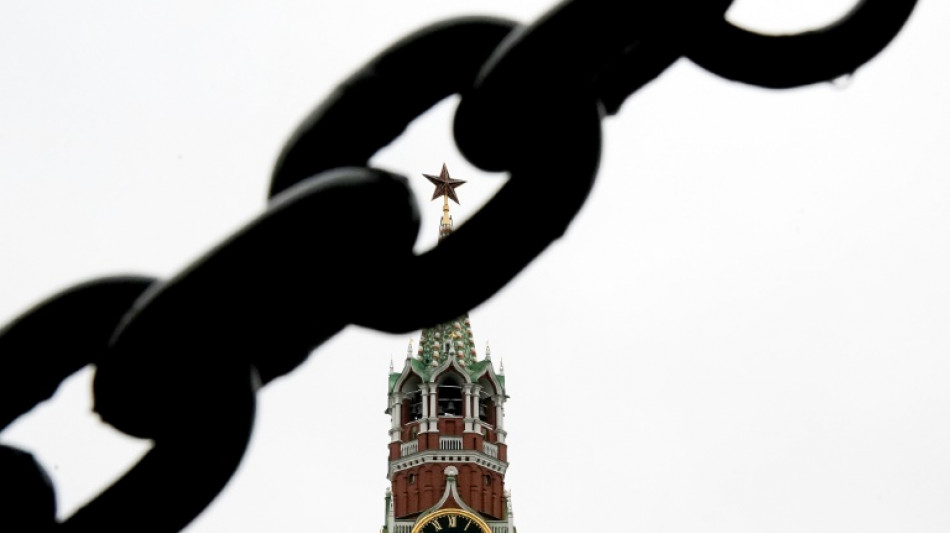
Russia could be turning to a new cryptocurrency called A7A5 to allow money to flow in and out of the country and avoid Western sanctions, experts have told AFP.
Multiple rounds of international sanctions have been imposed on Moscow since its February 2022 invasion of Ukraine seeking to ramp up economic pressure to halt the war.
But the launch of A7A5 in February this year opened up an alternative payment method for Russian businesses and individuals to sidestep sanctions when trading with foreign partners, the UK-based non-profit Centre for Information Resilience (CIR) said in a report.
A7A5 is a stablecoin -- a form of cryptocurrency backed by traditional assets -- in this case pegged to the ruble, making it harder for Western authorities to monitor than dollar-based alternatives.
It was launched by a pro-Russian Moldovan oligarch and a Russian state-owned bank as "the first ever ruble-pegged stablecoin," George Voloshin from anti-money laundering group ACAMS told AFP.
While it is not widely used yet, experts say its creation marks a significant step in Russia's efforts to reduce its dependence on major crypto companies -- many of which cooperate with Western governments.
- Russian stablecoin -
Since Russia was kicked out of the international banking system SWIFT and hit with asset freezes and investment bans, Moscow has already turned to crypto to sidestep financial restrictions imposed by the United States and its allies.
Stablecoins are especially attractive because they are less volatile than other cryptocurrencies.
People have also used cryptocurrency to donate directly to both the Ukrainian army and Russian militias, according to several analytics firms such as Elliptic.
But Russia has faced a problem: USDT, the most popular stablecoin, is tied to the US dollar and controlled by a company called Tether, which cooperates with US and European authorities.
Earlier this year, Tether blocked $28 million in USDT held in wallets on Garantex, Russia's largest crypto exchange, which was shut down following a global crackdown on illegal transactions.
"That was a real wake-up call" for Russia, said Elise Thomas, senior investigator at CIR.
"It made them think that they need their own stablecoin, they need something that they control," she added.
Just before Garantex was shut down, tens of millions of dollars were moved from USDT into A7A5, according to data from crypto tracking firm Global Ledger.
- How it works -
A7A5 is backed by deposits in Promsvyazbank, a Russian bank under sanctions for its ties to the government and the military.
The coin is traded on Grinex, a crypto exchange based in Kyrgyzstan -- a country seen as friendlier to Russian interests and less vulnerable to Western pressure.
A7A5 is also registered in Kyrgyzstan rather than Russia because the country offers a crypto-friendly legal environment and is less exposed to "sanctions and other economic pressures," project director Leonid Shumakov said in an interview posted online.
Less than six months after its launch, around $150 million is now held in A7A5.
These transactions are not necessarily illegal, but they could become problematic if used by sanctioned individuals or entities to reconnect with the global financial system, warned ACAMS's Voloshin.
The man behind the A7 group, which developed A7A5, is Ilan Shor, a Moldovan businessman and politician now living in Russia.
Investigators found links between A7A5 and Shor's political activities in Moldova, including websites related to both sharing the same IP address.
These findings have suggested that the cryptocurrency could be used as a tool for political influence.
Shor and his company have already been sanctioned by the UK, and more recently by the European Union, which accused them of trying to meddle in Moldova’s 2024 presidential election and its referendum on joining the EU -- all while keeping close ties with Moscow.
U.Maertens--VB