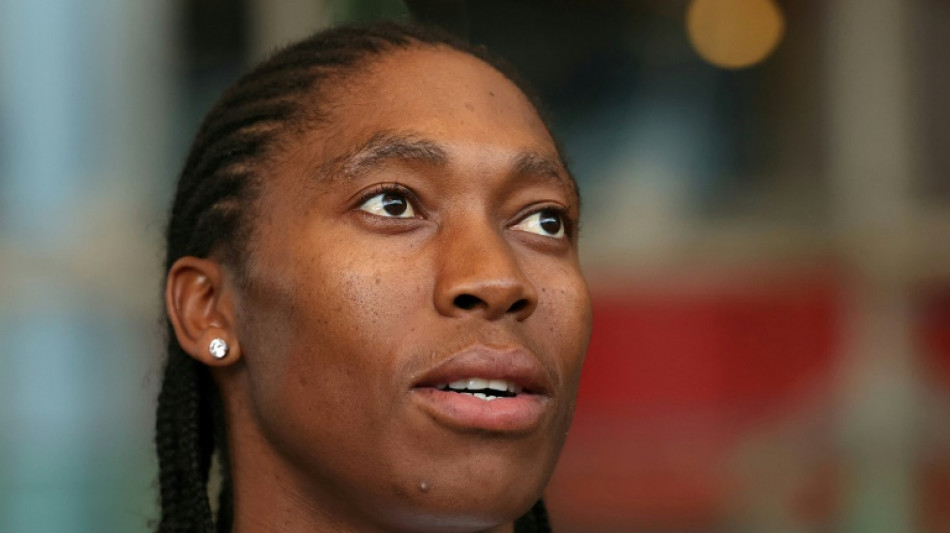
European court to rule in Semenya sports gender case / Photo: © AFP/File

 Spain to cap gas price hikes, extend fuel discounts

 'We just need rain': Germany's Rhine river hits new low

 Yemen health system at 'breaking point': WHO

 Ireland undecided on second Israel match: coach
 France's Le Pen defiant after top ally hit by antisemitism claims

 Tom Cruise trades stunts for satire as toxic tycoon 'Digger'
 MEXC Unveils "WE SEE YOU" Brand Visual Refresh, Putting People Behind Every Trade in Focus

 Thai capital cleans up after deadly floods

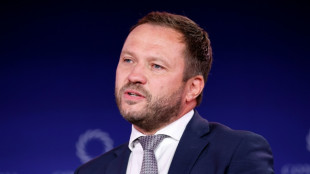 NATO, EU allies rally to Estonia after 'sabotage' blamed on Russia

 Families demand justice for Cameroon's 'nightmare' wave of murdered women

 Tebas says Man City should face 'most severe' sanctions if guilty of rule breaches

 Pochettino calls Man City success 'a period of deception'

 Settler attack on West Bank village injures Israeli forces, drawing rare rebuke

 Mystery over UK airbase scare after reports no explosives found

 Spanish govt races to adopt housing law under protest pressure
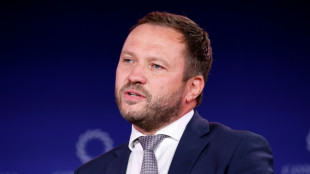 Estonia slams Russian 'sabotage' after arson attack on defence company

 Slovenia sees surge in '.si' sites after Trump hypes 'super intelligence'
 'Like a dream' for An as Games organisers 'sorry' for latest mix-up

 Tokyo suffers longest streak of rainy days on record

 Indonesia charges train driver over crash that killed 16 women

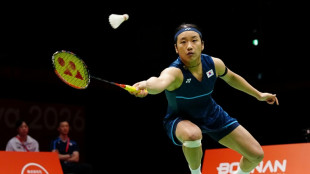 Ruthless An makes history to retain Asian Games badminton crown
 Australian central bank lifts key interest rate to 15-year high

 Polo makes landfall in Mexico as Category 3 hurricane

 South Korea team latest to be bussed to wrong Asian Games venue

 Bears thrash Eagles 27-7 as third-string QB Keenum shines

A top European court will decide Thursday whether double Olympic champion Caster Semenya can be required to lower her testosterone levels to compete as a woman, in a key decision on contested gender testing.
The European Court of Human Rights' decision comes after a row engulfed the 2024 Paris Olympics over the gender of an Algerian boxing champion.
South African runner Semenya, 34, was the Olympic 800m champion in 2012 and 2016 and world gold medallist in 2009, 2011 and 2017.
She is classed as having "differences in sexual development", but has always been legally identified as female.
Semenya has refused to take drugs to reduce testosterone levels since World Athletics, track and field's governing body, introduced new rules on women competitors in 2018.
So, she has since been barred from competing in her favoured 800m.
Semenya has said she hopes the ECHR will protect athletes' human rights and "inspire all young women to be and accept themselves in all their diversity".
Antoine Duval, a sports law expert at the Asser Institute in The Hague said the case would "determine what comes next in terms of challenging the rules for access to women's competitions".
Semenya has already tried other tribunals to try to change the rules.
The Lausanne-based Court of Arbitration for Sport (CAS) ruled against her in 2019 and the decision was validated by the Swiss Federal Court in Lausanne in 2020. It judged that a testosterone level comparable to that of men gave female athletes "an insurmountable advantage".
- 'Human guinea pig' -
The ECHR in 2023 ruled that Semenya was the victim of discrimination by the CAS.
Swiss authorities, supported by World Athletics, appealed to the European court's 17-member Grand Chamber.
The ECHR decision was however largely symbolic as it did not call into question the World Athletics ruling nor allow Semenya to return to competition without taking medication.
There are many types of "differences in sexual development", a group of rare conditions involving genes, hormones and reproductive organs.
Formerly known as intersexuality, they occur in approximately one in 1,000 to 4,500 births.
Before the 2009 world championships, where Semenya won the 800m gold aged just 18, she was forced to undergo gender testing.
She was subsequently put on medication to reduce testosterone levels, spending several months sidelined by World Athletics.
Semenya, born with the "46 XY" chromosome rather than the XX chromosome most females have, said she felt she was being treated like a "human guinea pig" and vowed to never again allow it.
Testosterone is produced by men and women, but men produce 20 times more of the sex hormone.
How much the hormone boosts performance remains a matter of debate.
- 'Degrading' -
The International Olympic Committee is weighing reintroducing gender testing, while several sports have already embraced the practice.
World Athletics and World Boxing have adopted chromosomal testing -- generally a cheek swab to check for the SRY gene, that reveals the presence of the Y chromosome.
World Aquatics in 2023 adopted a policy that foresees such testing.
Supporters say such screening simplifies access to women's competition, and UN rapporteur Reem Alsalem has said such tests are "reliable and non-invasive".
But Madeleine Pape, a sociologist of gender in sport, says there is a lack of research proving that transgender athletes or those with one of the many forms of DSD gain a "disproportionate advantage" over XX competitors.
Human Rights Watch has argued that World Athletics regulations "are degrading and invasive of privacy, on grounds that are scientifically contested".
The gender debate reignited in June around Paris Olympic boxing champion Imane Khelif.
Donald Trump, Italian Prime Minister Giorgia Meloni, and Harry Potter author J.K. Rowling were among those who stoked a row over the Algerian's gender.
K.Hofmann--VB