Rio Tinto's recent scandals / Photo: ©

 Macron welcomes Canada's Carney to French Atlantic territory
 Fiorentina frustrate Napoli with Serie A draw, Como upset

 Five-star Man City top Premier League after Sunderland thriller

 Ukrainian drones hit Moscow on last day of Russian elections
 Multi-Asset Trading Venue Monochrome Exchange Announces IEO of Its Native Token, $MCR
 South Korea break Japan hearts to win Asian Games basketball gold
 Acosta takes first victory at Austrian MotoGP

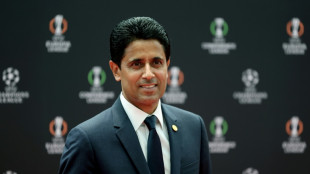 PSG president Nasser al-Khelaifi under investigation in France for conflict of interest

 China swim sensation, 13, sets Games record after Japan win early
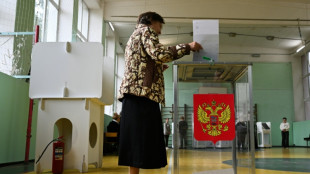 Drones hit Moscow as Russians go to the polls

 New England boss Fleming says 'wrong' to ask Stokes to end retirement
 Germans vote in elections threatening fresh blow to Merz
 US fears rapid escalation in Mideast after Houthis attack Riyadh

 Japan triathlete Hojo wins first gold of Asian Games
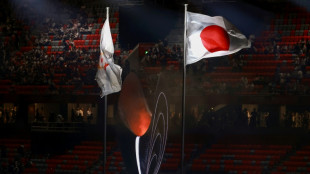
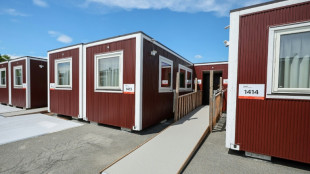 IOC president impressed by 'beautiful' Asian Games wooden huts
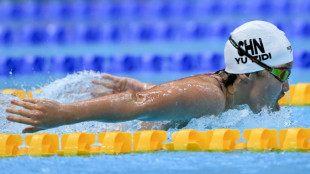
 First Asian Games gold goes to Japan as China's 13-year-old Yu lights up pool

 Data centre command hub keeps AI up and running
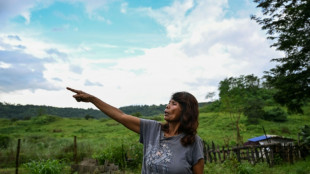
 Pope Leo in France: the issues on the table

 Packing for a pope: behind the scenes on foreign trips

 Republicans find transgender issues a powerful political weapon in midterm campaigning

 German state elections threaten new shock waves for Merz

 Chile's Bachelet quits race to be next UN chief

 Raphinha treble fires perfect Barca to win at Sevilla

 Thiam makes winning heptathlon return at Decastar meet
 Czechs beat USA to qualify for Davis Cup finals
Revelations of rape and sexual assault at Rio Tinto are the latest in a series of scandals to hit the global mining giant, which is listed in London and Sydney.
Here is a selection of Rio Tinto's recent problems:
- 'Deeply disturbing' -
On Tuesday, Rio Tinto released a searing internal report showing that sexual harassment, bullying and racial discrimination were rife "throughout the company".
The 85-page report, based on one-on-one interviews and a survey of 10,000 staff, found that 21 women had reported actual or attempted rape or sexual assault in the past five years.
CEO Jakob Stausholm said the findings were "deeply disturbing".
"I offer my heartfelt apology to every team member, past or present, who has suffered as a result of these behaviours. This is not the kind of company we want to be," he said.
- Indigenous site destroyed -
In 2020, Rio admitted blowing up 46,000-year-old rock shelters at Juukan Gorge in Western Australia, destroying a priceless piece of the country's Aboriginal history.
Following public backlash and an investor revolt, then-CEO Jean-Sebastien Jacques and two other top executives were forced to resign.
The caves were one of the earliest known locations inhabited by Australia's Indigenous people and had contained some of the oldest Aboriginal artefacts ever found in the country.
Rio Tinto's then-chairman Simon Thompson apologised and said the company's 2020 successes -- which saw it pay out a record dividend to investors on the back of booming iron ore prices -- had been "overshadowed" by the destruction.
The site is considered sacred by the Puutu Kunti Kurrama and Pinikura people of Western Australia.
- Bougainville civil war -
After decades of pressure, Rio Tinto agreed in 2021 to investigate the legacy of environmental damage and human rights abuses linked to its mine on the once war-torn Pacific island of Bougainville.
The now-shuttered Panguna copper and gold mine was at the centre of the brutal decade-long civil war in Bougainville, part of Papua New Guinea.
While in operation between 1972 and 1989, it was one of the South Pacific's largest mines.
Anger among locals over the environmental damage and distribution of profits fuelled an uprising and civil war that killed an estimated 20,000 people -- 10 percent of the island's population at the time.
Clean-up costs are believed to be in the region of US$1 billion and have become prominent in the debate over Bougainville's independence from Papua New Guinea, which the island's residents overwhelmingly voted for in December 2019.
- Equatorial Guinea probe -
In 2017, Britain's Serious Fraud Office opened an investigation into "suspected corruption" surrounding Rio Tinto's development of the world's biggest untapped iron ore deposit in Equatorial Guinea.
A year earlier, Rio Tinto reported itself to regulators after an internal probe found US$10.5 million in "advisory services" payments had been made in relation to the project.
The company first secured exploration rights in the Simandou mountains in 1997.
In 2014, it sealed a US$20 billion deal with a consortium led by a Chinese state-run aluminium group to develop Simandou, which would have been Africa's biggest-ever mining and infrastructure venture.
The stake was later sold. The investigation is ongoing.
P.Anderson--BTB