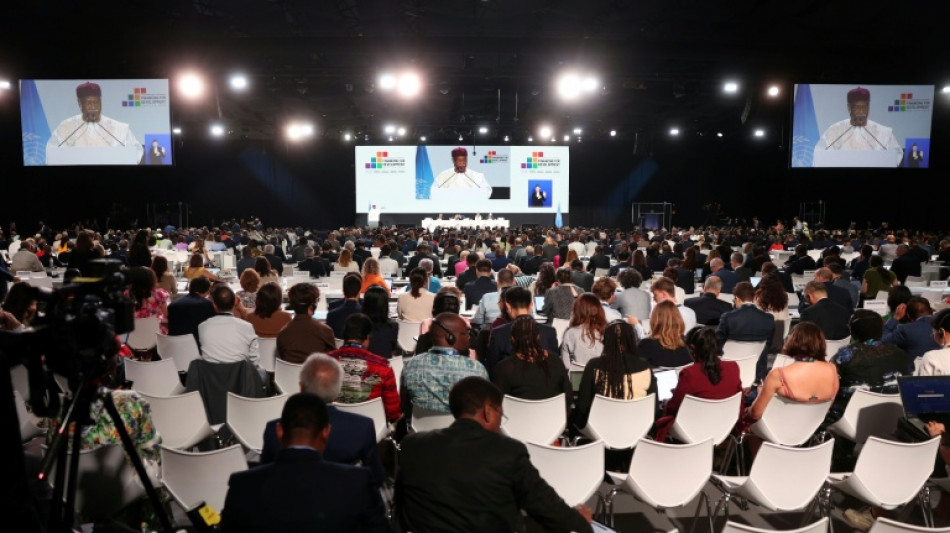
UN aid meeting seeks end to Global South debt crisis / Photo: © AFP

 Man City must be relegated after guilty verdict says club's former chairman

 German far-right aims to lead Saxony-Anhalt govt in December
 Little damage as Hurricane Polo sweeps over Mexico's Pacific coast

 Manchester City guilty of breaking financial rules - Premier League

 FIFA boss Infantino blasted as would-be 'emperor' by UEFA's Ceferin

 Stocks move lower despite oil prices dropping

 AI driving up innovation investment: UN

 UN Security Council extends Haiti mission by 6 months

 Man Utd do not deserve medals if Man City stripped of titles: Rooney

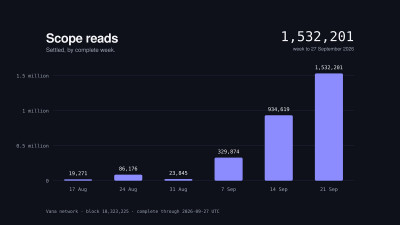 Vana Completes Expanded Staking as Part of the Vega Upgrade, Publishes Expanded VANA Token Economics

 Spain to cap gas price hikes, extend fuel discounts
 'We just need rain': Germany's Rhine river hits new low
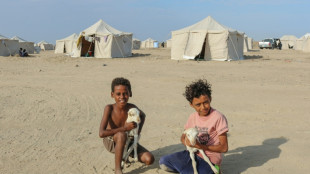 Yemen health system at 'breaking point': WHO

 Ireland undecided on second Israel match: coach

 France's Le Pen defiant after top ally hit by antisemitism claims

 Tom Cruise trades stunts for satire as toxic tycoon 'Digger'

 MEXC Unveils "WE SEE YOU" Brand Visual Refresh, Putting People Behind Every Trade in Focus
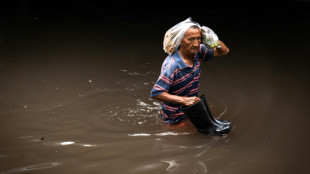 Thai capital cleans up after deadly floods

 NATO, EU allies rally to Estonia after 'sabotage' blamed on Russia

 Families demand justice for Cameroon's 'nightmare' wave of murdered women
 Tebas says Man City should face 'most severe' sanctions if guilty of rule breaches

 Pochettino calls Man City success 'a period of deception'

 Settler attack on West Bank village injures Israeli forces, drawing rare rebuke

 Mystery over UK airbase scare after reports no explosives found
 Spanish govt races to adopt housing law under protest pressure

More than 100 nations attending a UN aid conference pledged this week to help defuse the ticking time bomb of developing countries' ballooning debt, but deciding how is proving more divisive.
"The debt burden is crippling the developing world," UN chief Antonio Guterres told the conference in the Spanish city of Seville that reaffirmed support for lifting low-income nations out of their predicament.
"We must fix the global debt system which is unsustainable and unfair," Guterres pleaded at the gathering, which runs to Thursday.
The total external debt of the group of least developed countries has more than tripled in 15 years, according to UN data.
Developing nations now pay $1.4 trillion every year to service their debt -- its highest level in 20 years.
Global South nations contend with interest rates two times higher than their richer counterparts when they borrow, increasing the burden.
More than three billion people live in countries that fork out more on interest repayments than on health, according to a report commissioned by the late Pope Francis and coordinated by Nobel laureate economist Joseph Stiglitz.
A litany of international crises from the Covid-19 pandemic to conflicts have plunged the world economy into turbulence in recent years, with repercussions felt acutely in lesser developed countries.
Experts also blame the proliferation of costly and grandiose projects, particularly in African countries that have taken out billions in loans from China.
"Many low-income and vulnerable countries are trapped in a vicious cycle of debt, poverty and climate-induced crisis," said the Action Aid NGO, which warned of a "critical" situation.
The macroeconomic deterioration has real-world impacts for ordinary citizens, "notably on health policies", Francoise Vanni, of The Global Fund to Fight AIDS, Tuberculosis and Malaria, told AFP.
- 'Lack of commitment' -
In Seville, several world leaders from the Global South, including Kenyan President William Ruto and Senegal's Bassirou Diomaye Faye, called for a reform of the international financial system to resolve the vicious cycle.
The document adopted in Seville -- snubbed by key actor the United States -- calls for the general adoption of clauses in loans that allow borrowing countries to temporarily suspend repayments due to an external shock or natural disaster.
Storms, droughts and floods turbocharged by climate change disproportionately affect low-income countries that have historically contributed the least to the emissions that drive global warming.
The so-called "Seville Commitment" asks creditors to increase loans in local currency to limit risks caused by foreign exchange fluctuations.
It also urges the creation of a central database housed in the Washington-based World Bank "to harmonise and strengthen debt data reporting, enhance debt transparency and reduce reporting burdens".
The World Bank says only a quarter of poor nations declare information on their new loans, denying crucial information to lenders.
The Vatican-commissioned report also recommended "systemic reforms" and "essential investments" to tackle the crisis, suggesting an end to preferential treatment for private creditors and extending debt relief measures introduced during the pandemic.
But NGOs want to go much further than boosting transparency by cancelling debt altogether for the most stricken countries.
Hundreds of protesters marched through the stifling heat of Seville on Sunday to demand the measure, which has occasionally been applied in the past.
But donor countries, which face debt problems of their own, are reluctant to implement such an initiative, making it unlikely.
Action Aid denounced the Global North's "lamentable lack of tangible commitment to truly ending this debt crisis".
C.Kreuzer--VB