German budget plans outline vast spending - and record debt / Photo: © AFP

 UN to hold fourth informal poll of secretary-general candidates

 Who are the Emiratis behind crisis-hit Manchester City?

 Singer Angelique Kidjo urges Africans to 'create together'

 Alleged Rihanna mansion shooter mentally fit for trial, says judge

 Mystery over UK airbase scare as police find petrol not explosives

 OpenAI unveils low-cost AI model, a day after shelving Astra upgrade
 Premier League confirms Man City guilty of serious financial breaches

 Brazil's Lula turns to Bad Bunny tune to criticise Trump ahead of polls

 Nigerian dancer eyes world record after seven-day marathon
 Swiss regulator concludes Julius Baer bank probe

 Brazil's patron saint pulled into latest election scrap

 Football overload leaves players near 'breaking point', warns Tebas

 Paris Eiffel Tower says chief to step down after uproar over removing women staff
 Amaze Holdings (NYSE: AMZE) Executes Binding LOI to Acquire BullionFX | Alchemy, a Decentralized Gold-Backed Financial Ecosystem for Valued at US$155 Million
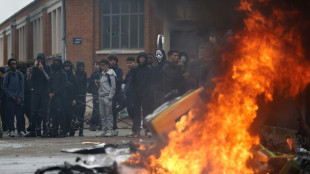 Clashes between French teens, police as school blockades intensify
 Stocks move sideways despite oil moving lower

 African leaders to gather in Egypt for business summit

 UK decides against charging foreign visitors for museums

 Dallaglio to sell England World Cup winners' medal

 Brazil come from behind to beat Australia 4-2 in friendly

 Ruthless An retains Asian Games badminton crown as Kunlavut triumphs

 Alonso to stay with F1 team Aston Martin in 2027

 China badminton 'still strong' despite Asian Games slump
 'Exceptional' Turner painting shown in Rome before sale

 European stocks climb as oil dips

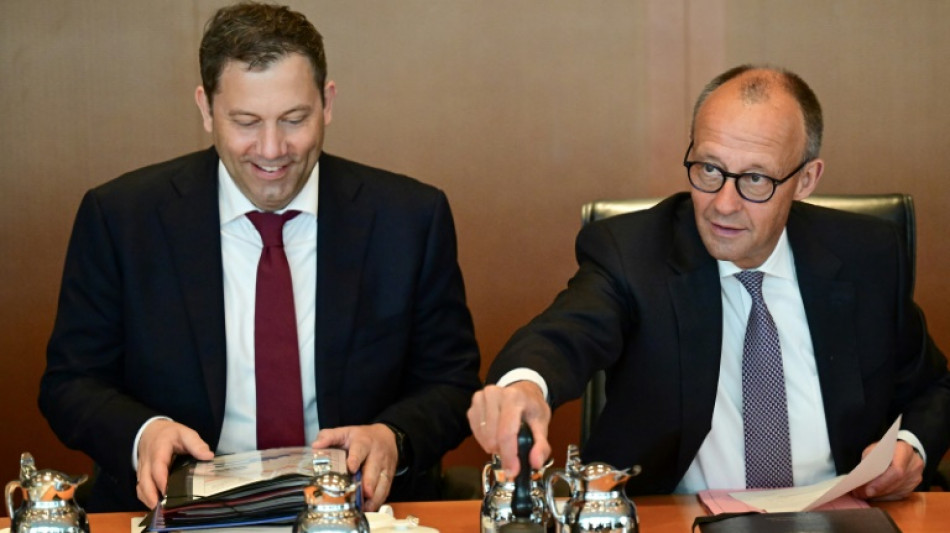
Germany's government pledged Tuesday to make massive new investments by taking on record debt as it presented its budget plans with the aim of reviving the economy and building up the military.
The plans approved by Chancellor Friedrich Merz's cabinet included the 2025 draft budget -- delayed after the previous government collapsed last year -- as well as the outline for public finances until 2029.
The ambitious programme for coming years, to be voted on by parliament in September, marks a break from years of financial austerity pursued by previous German governments and highlights the sweeping fiscal shift set in motion by Merz.
The conservative leader, who took power in May, is betting on taking on vast debts to pull the eurozone's biggest economy out of a long downturn, upgrade creaking infrastructure and improve public services.
"Our primary goal is to boost the economy, to secure jobs in our country and to create new ones," said Finance Minister Lars Klingbeil, presenting the budget plans.
"Our country has been ruined by austerity in many areas -- and the investment backlog is huge."
The budget forecasts agreed on by Merz's CDU/CSU bloc and their coalition partners, the centre-left SPD, outline record spending on the military, roads, railways and hospitals -- as well as unprecedented new borrowing.
The figures are eye-watering: the finance ministry plans to take on some 847 billion euros ($984 billion) in debt over the entire legislative period, divided between the regular budget and "special funds" set up for purposes such as boosting the military and infrastructure.
Spending on the armed forces alone is expected to reach 162 billion euros in 2029, more than triple Germany's defence budget before the war in Ukraine.
Germany is set to reach the new NATO target of spending 3.5 percent of gross domestic product on core military needs in 2029, six years earlier than previously planned.
Under the target, set to be announced at this week's NATO summit, allies will also agree to spend 1.5 percent of GDP on broader security-related items like cybersecurity -- a compromise deal meant to placate US President Donald Trump.
Merz has vowed to build up Europe's "strongest conventional army" in response to the Russian threat amid the Ukraine war as well as concerns about US security commitments to Europe under Trump.
P.Vogel--VB