EU gives Bulgaria green light to adopt euro in 2026 / Photo: © AFP

 'No limits': Marathon world record holder Sawe chasing history

 Countdown begins to biggest-ever Rugby World Cup

 Bangladesh women lose ground after quota reform

 Vietnam admits 'differing opinions' on Hanoi development

 Stocks temper gains as oil pares heavy losses, US data in focus
 New Zealand denies breaching climate commitments to EU

 Albert becomes youngest US scorer in 4-2 win over Chile

 Pirate island's plunging population shows Greece's demographic decline

 With elections ahead, Latvia's Russian-speakers reject Moscow's help

 Brazil football clubs face massive sponsorship blow from betting ban
 ChatGPT maker wants to be the App Store for AI as safety concerns grow

 Women fight fires and sexism in Indonesian Borneo

 Forsling's OT blast lifts Florida over Carolina in NHL opener

 Hurricane Polo sweeps over Mexico's Pacific coast, heads inland
 Grynspan pulls ahead in race to lead UN: diplomat

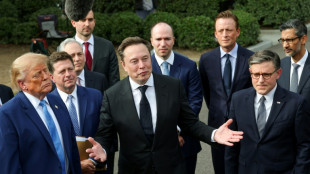 Trump touts AI boss pledge to self-regulate
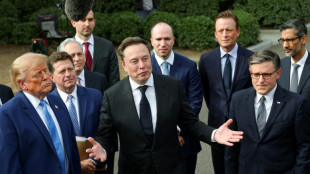
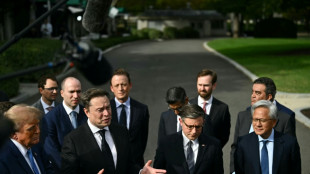 Oil down, but stocks lower as bond yields rise

 England break down stubborn Czechs to claim first Nations League win
 UN Security Council extends Haiti anti-gang force by 6 months

 Manchester City guilty of Premier League charges: What comes next?
 Man City chief Soriano slams Premier League 'conspiracy theory'

 Hurricane Polo sweeps over Mexico's Pacific coast

 Man City must be relegated after guilty verdict says club's former chairman

 German far-right aims to lead Saxony-Anhalt govt in December
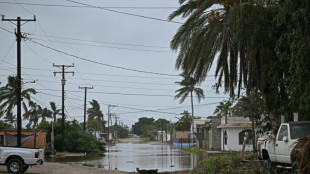 Little damage as Hurricane Polo sweeps over Mexico's Pacific coast
The EU gave the green light on Wednesday for Bulgaria to adopt the euro on January 1, 2026, in a "historic" step for the southeastern European country set to become the 21st member of the single currency area.
The European Commission said Bulgaria had fulfilled the strict criteria "intended to ensure that a country is ready to adopt the euro and that its economy is sufficiently prepared to do so".
The European Central Bank also gave a positive opinion, hailing Bulgaria's "tremendous dedication to making the adjustments needed".
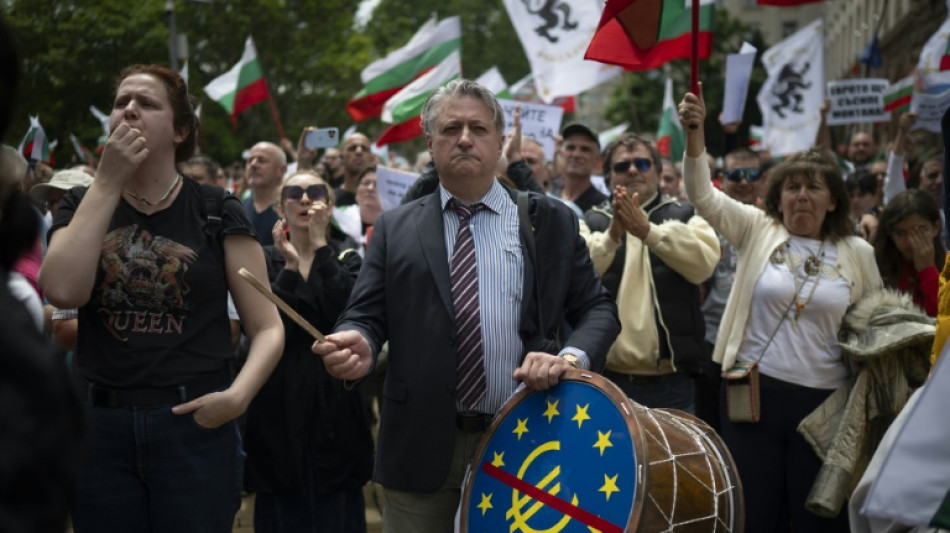
The push has, however, sparked a backlash from many Bulgarians, with protests and recent surveys showing nearly half of those questioned opposed adopting the euro -- fearing painful economic consequences.
"If Bulgaria joins the eurozone, it will be like boarding the Titanic," Nikolai Ivanov, a retired senior official, told AFP at a recent protest calling for the country's currency -- the lev -- to be maintained.
Bulgaria has had a rocky road to joining the eurozone: the nation has been plagued by political turmoil with seven elections in three years -- the last in October 2024.
The approval by the EU's executive body comes 18 years after Bulgaria joined the bloc.
"Congratulations, Bulgaria!" commission president Ursula von der Leyen said.
"Thanks to the euro, Bulgaria's economy will become stronger, with more trade with euro area partners, foreign direct investment, access to finance, quality jobs and real incomes," she said in a statement.
With a population of 6.4 million, Bulgaria is the poorest nation in the bloc but has spent several years preparing its economy to join the eurozone.
Bulgaria still needs the approval of the EU's finance ministers, who are expected to give their full backing in July, before it formally adopts the euro.
"Today's report is a historic moment for Bulgaria, the euro area and the European Union," said EU economy chief Valdis Dombrovskis.
"Of course, the euro is more than a currency. Following on from Bulgaria becoming a full member of the Schengen area earlier this year, it brings Bulgaria ever closer to the heart of Europe," he added.
- Unsuccessful past attempts -
When the first euro bank notes and coins were rolled out in January 1, 2002, only 12 countries were part of the single-currency area including France, Germany, Ireland, Italy and Spain.
It gradually grew to 20 with Slovenia joining in 2007, Cyprus and Malta in 2008, Slovakia in 2009, Estonia in 2011, Latvia in 2014 then Lithuania in 2015.
Croatia was the most recent country to join in 2023.
Bulgaria wanted to adopt the currency sooner but in the past few years Brussels has concluded its inflation was too high to meet the necessary requirements.
To join the single currency area, member states must show that their economy has converged with other eurozone countries and that they have a handle on their finances.
For example, they must demonstrate inflation is not out of control and is no more than 1.5 percentage points above the rate of the three best-performing EU countries.
Last year, Bulgaria fulfilled every criteria to join except on inflation.
The average inflation rate in Bulgaria during the 12 months to April 2025 was 2.7 percent, just below the reference value.
A.Ruegg--VB