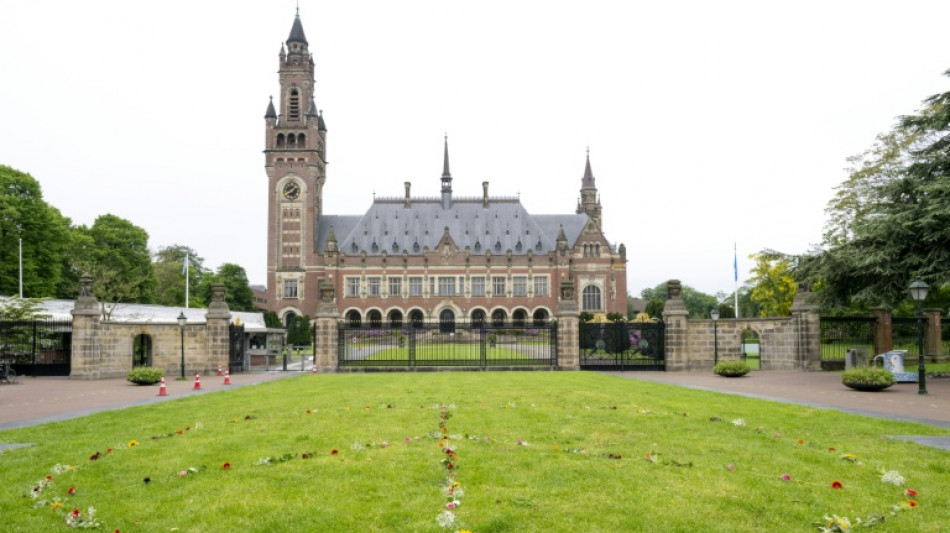
ICJ sides with E.Guinea in spat with Gabon over oil-rich islands / Photo: © AFP

 Rift deepens as Asia football chief hits back at Qatar in Infantino saga

 India extend lead to 294 in first Sri Lanka Test
 Asian allies stress 'critical cooperation' as Trump slashes Korea drills

 Williams sisters fall at Cincinnati while Zverev advances
 Transylvania's fortified churches face fragile future

 China mourns former premier Zhu Rongji with flags lowered, funeral
 Philippine student killed in rare school shooting

 Arsenal primed for Premier League title defence as rivals face questions

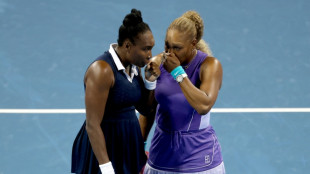 Zverev advances at Cincinnati while Williams sisters fall

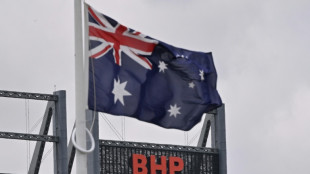 Copper powers profit rise at mining giant BHP
 Whales spark joy in New York but face threats from boat traffic
 Premier League's new bosses brace for battle

 Zambia's Hichilema: 'cattle boy' and two-time president
 Elderly far more at risk from rising heat than thought: study

 Brazil's Lula hails new oil find as 'passport to the future'

 Rybakina slogs through double rain delays in Cincinnati win
 Two largest US reservoirs hit record lows amid western drought

 Colombian minister under fire over beach holiday post-quake

 Lamour leaves key FIFA position after criticising Infantino

 Buss family sells 17.8% stake in Lakers to Iger group

 Mangione state murder trial postponed after federal guilty plea

 Trump envoy says Hamas disarmament could begin within 30 days

 US pauses construction of border project in Texas national park

 Thousands mourn dead black academic in London vigil

 South Africa Test series a lot tougher than a World Cup says All Blacks coach Rennie
The top United Nations court on Monday sided with Equatorial Guinea in a decades-long dispute with Gabon over three tiny islands in potentially oil-rich waters.
The two west African nations have been squabbling over the 30-hectare (74-acre) island of Mbanie and two smaller low-lying islets, Cocotiers and Conga, since the early 1970s.
The islands themselves are tiny and virtually uninhabited but lie in an area potentially rich in oil and gas.
The dispute dates all the way back to 1900, when then colonial powers France and Spain signed a treaty in Paris setting out the borders between the two countries.
But Gabon argued that a later treaty, the 1974 Bata Convention, then fixed the islands' sovereignty in their favour.
However, the International Court of Justice ruled that the Bata Convention "invoked by the Gabonese Republic is not a treaty having the force of law... and does not constitute a legal title."
It said that the legal title to the islands was held by Spain, which then passed to Equatorial Guinea upon independence in 1968.
Unlike most countries appearing before the ICJ in The Hague, which rules in disputes between states, Guinea and Equatorial Guinea agreed to ask judges for a ruling in an effort to find an amical solution.
The two countries asked the court to decide which legal texts are valid -- the Paris Treaty of 1900 or the Bata Convention of 1974.
In hearings in October, Equatorial Guinea argued that Gabon invaded the islands in 1972 and had occupied them illegally ever since.
Lawyers for the country rubbished the Bata Convention in the October hearings, saying Gabon suddenly produced the document in 2003, surprising everyone.
"No one had seen or heard of this supposed convention," Domingo Mba Esono, Vice-Minister of Mines and Hydrocarbons from Equatorial Guinea, told ICJ judges.
"Moreover, the document presented was not an original but was only an unauthenticated photocopy," said Esono.
Philippe Sands, a lawyer representing Equatorial Guinea, dismissed the Bata Convention as "scraps of paper".
"You are being asked to rule that a state can rely on a photocopy of a photocopy of a purported document, the original of which cannot be found and of which no mention was made or any reliance placed for three decades," said Sands.
Equatorial Guinea has been asking for an original copy of the Bata Convention since 2003, so far in vain.
- 'Badly managed' -
But Marie-Madeleine Mborantsuo, honorary president of Gabon's constitutional court, argued that the Bata Convention "resolves all sovereignty issues regarding the islands and border delimitation".
She admitted that "sadly, neither of the two parties can find the original document", noting it was drawn up in an era before computers and databases.
"Archives were badly managed because of a number of things -- unfavourable climate, a lack of trained personnel and lack of technology," said Mborantsuo.
The court ruled that neither country seemed to regard the Bata Convention as binding upon them, meaning the court did not consider it the correct title in force.
M.Vogt--VB