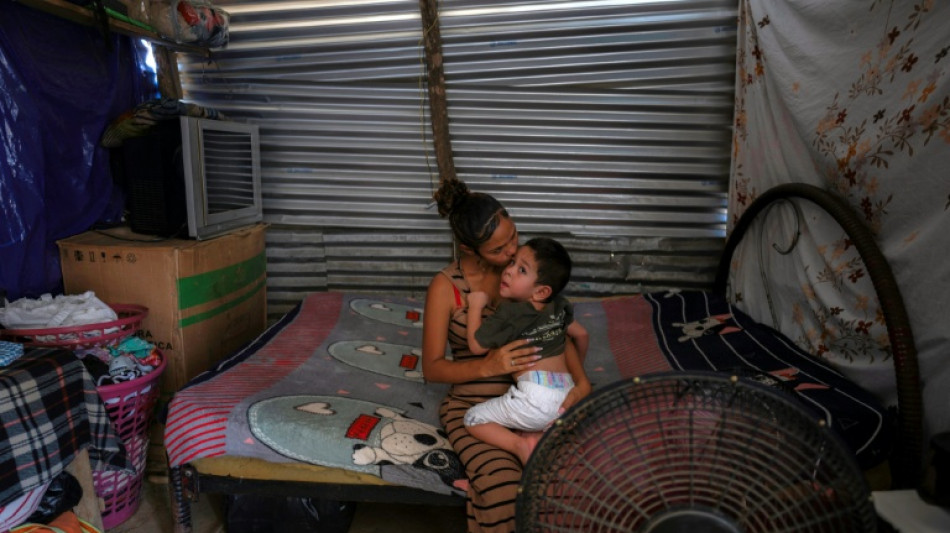
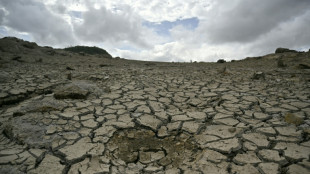
Colombia's desert north feels the pain of Trump's cuts / Photo: © AFP

 WADA pledges vigilance on Russian athletes ahead of 2028 Olympics

 NASA satellite rescue mission fails
 Cobolli halts Jodar to reach Cincinnati quarter-finals

 As election looms, Netanyahu puts Turkey in Israel's crosshairs

 McIlroy questions LIV stars 'value' as talk of PGA return builds
 'Breakthrough' mRNA cancer drug curbs melanoma in large trial

 Many US Fed policymakers back interest rate hikes if inflation stays high

 Robinson and Tongue star as Pakistan collapse in England opener
 All Blacks must get 'everything right' to beat Springboks, says legend Fitzpatrick

 Robinson and Tongue star as Pakistan all out for 171 in England opener
 Lake Zurich sees water level hit record low amid drought

 Merck and Moderna's tailored cancer drug curbs melanoma recurrence in trial

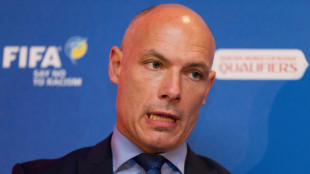 Referees chief Webb wants clamp-down on Premier League set-piece grappling

 Robinson makes history as Pakistan collapse against England

 Alvarez can win back Atletico fans in two games: club chief

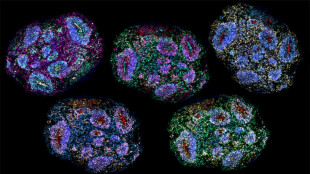 Oldest human brain cells grown in lab 'recorded passage of time'

 7,300 excess deaths and counting in France's historically hot summer
 Ukraine MPs approve new defence minister after divisive reshuffle
 North Korea leader's sister says 'unaware' of reported Kim-Trump communication
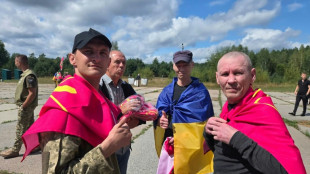 Russia, Ukraine exchange 103 captured soldiers each

 Sainz signs new contract with F1 team Williams

 Playing at Real Madrid 'not for everyone': Bernardo Silva
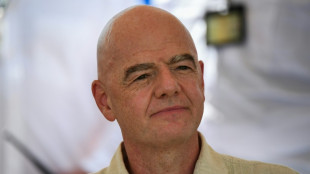
 As election nears, Israelis fear polarisation could spark violence

 Bayern's Hoeness 'speechless' after second Musiala collapse

 Reijnders leaves Man City for Saudi's Al Qadsiah: source

For residents of Colombia's largest migrant camp, an already tough life is getting tougher thanks to Donald Trump's aid cuts.
Eight months pregnant and 20 years old, Astrid lives on an abandoned dust-blown airstrip in Colombia's Guajira desert.
Home is a lean-to shack, cobbled together from tin sheets and lumber.
It is not much, but it protects her and her five-year-old son -- who is paralyzed with encephalopathy -- from the blistering equatorial sun.
"What do I lack? Everything," the Venezuelan single mother tells AFP. "Nothing here is mine."
Like many of La Pista's 10,000-14,000 residents, Astrid fled nearby Venezuela, where poverty, hardship and organized crime are endemic.
Without running water, a bathroom, or even money to attend prenatal checkups, Astrid dreams of working and giving her children "a home."
But in La Pista malnutrition is common and many depend on aid handouts to survive.
Since Trump returned as US president in January, cuts to aid arm USAID have been keenly felt in this ad-hoc settlement, where children skip barefoot past dogs and cows rummaging in the garbage for food.
Trump and his cost-cutting sidekick Elon Musk have argued that the US federal budget is bloated, that spending is unsustainable and that Americans, not foreigners, should benefit from any tax-payer largesse.
USAID was effectively shuttered and its annual budget of close to $43 billion -- providing more than 40 percent of the world's humanitarian aid -- was decimated.
Local mayor Miguel Aragon said the US cuts felt like "a cold bucket of water."
Of the 28 non-governmental groups that existed in the area last year, only three remain today, he said.
"Today we feel alone," says the 37-year-old politician, who fears disaster is on the way.
- 'Rice with cheese' -
Inside a local medical center, several women with babies wait to be attended.
Luz Marina, a 40-year-old Colombian, is there with her five-year-old son who is underweight. She has experienced US politics first-hand.
Earlier this year, she was chosen to receive aid, only to be told it was cancelled due to decisions in Washington.
"I didn't get to receive anything," she says through tears. "It's so sad, it was something I truly needed."
With the help of nutritional supplements, Luz Marina's son had managed to gain some weight.
But that progress is now at risk due to a lack of food.
"It's not the same to eat rice with chicken as it is to eat rice with cheese," she told AFP.
Humanitarian groups have tried to alleviate some of the hardships, and the Colombian state provides potable water once a week to households.
But even rich Western aid groups are also feeling the pain of US spending cuts.
At a local school, until recently kids played instruments, sang and took workshops.
But the Save the Children-run project closed after the cuts reduced its Colombia budget by 40 percent.
Country director Maria Mercedes Lievano fears that the closure of such projects will create a "greater risk of people entering criminal groups."
"Having to turn our backs on the people we were supporting is very difficult," Lievano says, her voice choking. "It hurts a lot.
M.Betschart--VB