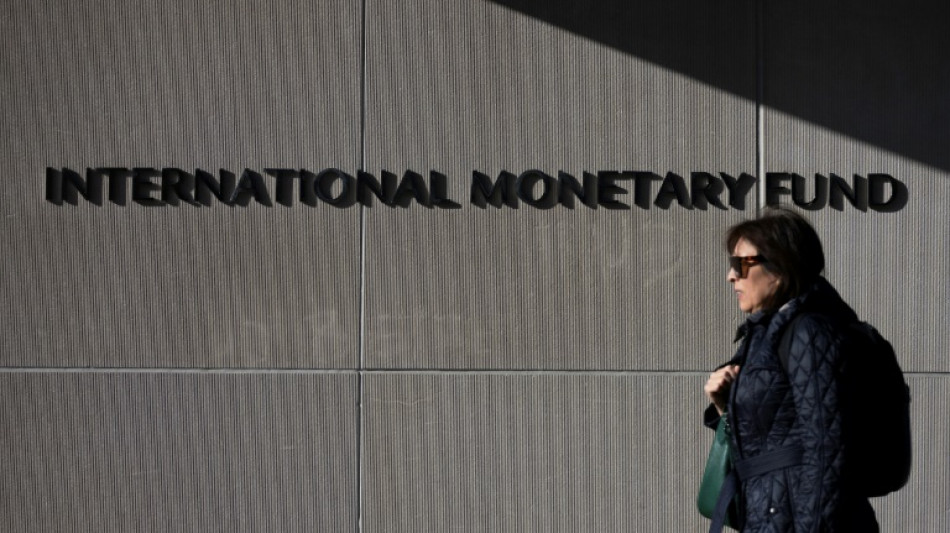
IMF warns of 'intensified' risks to public finances amid US trade war / Photo: © AFP

 Starc takes 5-11 to leave Bangladesh reeling in 2nd Test

 Injured Rune withdraws from US Open
 Nakashima knocks out Fritz to reach Cincinnati semi-finals

 Ukraine says 'cynical' Russian strike on shopping centre killed 16

 TikTok to pay $400 mn settlement in US children's privacy case

 MLS fines Messi for striking an opponent

 Gouiri double fires Marseille past Strasbourg in Ligue 1 opener

 Mavericks buy out Thompson, now reportedly bound for Heat

 England v Pakistan first Test: Three talking points

 US, Canada push to seal trade deal as deadline nears

 One dead, three wounded after sword attack at Swedish high school

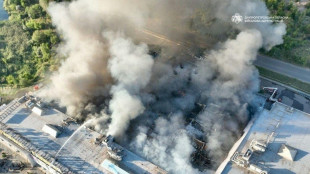 Ukraine says 'cynical' Russian strike on shopping centre killed 15

 US Supreme Court allows White House ballroom construction for now

 Root hails emerging fast bowlers as England thrash Pakistan
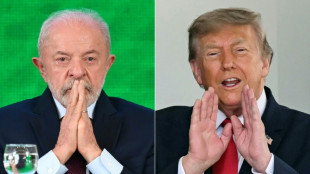 Brazil's Lula urges tariffs resolution in call with Trump

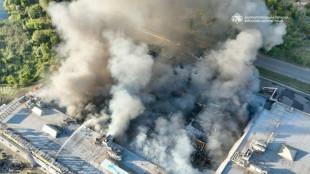 Ukraine says 'cynical' Russian strike on shopping centre killed 14

 Heatwave-hit Europe logs over 30,000 excess summer deaths: first figures

 Give LIV Golf 'one more shot,' says DeChambeau
 Duplantis hits the high notes for athletics anthem

 Malaysia's JDT claims unbeaten run world record

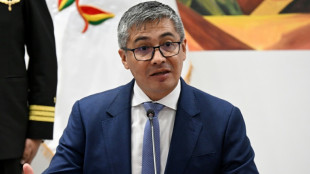
 Bolivian economy minister fired after Congress vote
 Russell roars to Dutch GP sprint pole, Antonelli fifth
 Russell takes pole for Dutch GP sprint

 England start life after Bazball with rout of Pakistan

 'Duck run' pest control catching on in S.Africa's winelands

Donald Trump's tariff plans have increased the risks to public finances, the International Monetary Fund said Wednesday, warning countries to get their spending plans under control and prepare for "sharper" trade-offs.
The US president's on-again, off-again introduction of levies against top trading partners has sent market volatility soaring and unnerved investors, who are attempting to chart a path through the increased uncertainty.
Over the past six months, "global economic prospects have significantly deteriorated, and risks to the economic output are elevated and tilted to the downside" Vitor Gaspar, the head of the IMF's Fiscal Affairs department, told reporters on Wednesday at the launch of the Fund's Fiscal Monitor report.
The forecast for public finances was published as part of the Fund and the World Bank's Spring Meetings of global financial leaders currently under way in Washington.
Under its new projections, which incorporate some -- but not all -- of the recently announced tariffs, the IMF now expects global general government debt to rise to more than 95 percent of economic output this year, and to approach 100 percent of GDP by 2030.
In the forecasts, the IMF expects public debt to rise by about the same amount as the combined increases seen in 2023 and 2024, Gaspar told AFP in an interview ahead of the report's publication.
"There is a pronounced trend in public debt around the world," he said.
- 'Heightened uncertainty' -
The IMF warned in its report that the "heightened uncertainty" about tariffs and economic policy, combined with rising bond yields in major economies, widening spreads in emerging markets, foreign aid cuts, and increased defense spending in Europe had all complicated the global debt outlook.
"Fiscal policy now faces a sharper trade-off between reducing debt, building buffers against uncertainties and accommodating spending pressures, all amidst weaker growth prospects, higher financing costs, and heightened risks," it added.
While public spending levels may pose political challenges, the right policy can also "be a source of confidence and support in potentially very demanding macroeconomic circumstances," Gaspar told AFP.
"Communities may be severely affected by trade dislocations, and targeted and temporary support... could be a way forward," he added.
- Different paths -
The IMF expects that more than a third of the world's economies, who collectively account for 75 percent of global GDP, will see a rise in indebtedness this year.
This includes many of the world's largest economies, including the United States, China, Germany, Britain, and France.
But these countries will face very different realities when it comes to handling that debt, Gaspar said in the interview.
"Both China and the United States are continental economies," he said. "They have a space that other economies don't have."
"The United States has an ample set of options, both on the revenue side and on the spending side, that it can deploy to control the deficit, stabilize the level of public debt and decrease the level of public debt, if it chooses to do so," he added.
"How it's going to happen depends on... the choices made in the context of the US political system," he said.
For China, Gaspar noted that the authorities would "eventually" need to tackle its public debt, but should focus their attention at this moment in time on providing targeted support to transform the economy.
"Fiscal support in China is welcome right now," he said. "It is something that helps rebalancing China growth towards the domestic economy."
"By doing so, it helps reduce the external imbalance."
U.Maertens--VB