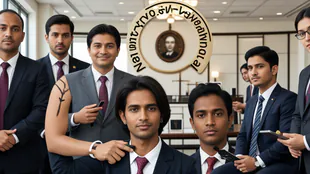
Latin America fondly farewells its first pontiff / Photo: © AFP

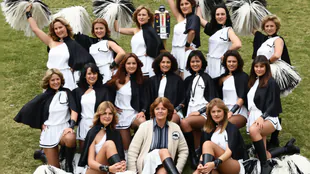 Penrith Panthers Face Backlash Over Decision to Disband Pantherettes Cheerleading Squad
 Make-A-Wish Announces 2026 Starblazer Award Honorees; Allied World Becomes First Corporate Founder
 Lee-Trump Golf Diplomacy Faces Diplomatic Dilemma Ahead of G20 Summit
 Mavericks Defeat Jazz 112-100 Behind Washington’s 26 Points and Second-Half Surge
 BingX: Major Announcement of Far-Reaching Significance

 James Blunt Scores First Number One Album in 19 Years; Wife Sofia Wellesley Celebrates
The passing of Latin America's first pope sparked an upwelling of sorrow but also gratitude Monday, with everyone from Lionel Messi to disparaged migrants marking the life of a pontiff who spoke to and for the region's faithful.
Brazilian Monique Neves turned emotional just remembering Pope Francis holding her then three-month-old son in Rio's cathedral more than a decade ago.
It was 2013, just months after Jorge Bergoglio's election as the first non-European pope in more than a millennium.
Francis had made Brazil, the country with the world's biggest Catholic population -- and his native Argentina's perennial footballing rival -- his first foreign port of call.
Almost four million people turned out to greet him, and he made sure to speak to Brazilians, and to Latin Americans, on their own terms.
He had encouraged the young faithful to "break down evil and violence, to destroy and overthrow the barriers of selfishness, intolerance and hatred, so as to build a new world."
Neves, 44, returned to Rio's cathedral Monday to mourn the 88-year-old pope's passing.
There she spoke fondly about his legacy "of resilience, of love for others, regardless of color, social class, religion, sexual orientation."
That more inclusive message, and Francis's entreaties for an often hidebound and deeply conservative church to "go to the periphery," spoke to many in this staggeringly diverse and still deeply unequal region.
Fellow mourner Clelia Maria da Silva recalled that before seeing the pope in Rio she had become estranged from the church.
"I went to Copacabana," she remembered, "and there I met a simple, humble pope who spoke our language: the language of the poor."
- 'Words of encouragement' -
For Venezuelan migrant Marisela Guerrero, Pope Francis's repeatedly underlined support for migrants has been sustaining.
"He encouraged us migrants a lot, he gave words of encouragement to all who left their countries," said the 45-year-old who now lives in Chile.
But Francis was not without his detractors in the region.
He often clashed with right-wing leaders and was criticised for an unrushed response to Chile's clerical sex abuse scandals.
His efforts to bridge divisions between the United States and Cuba showed some early success, before falling away to nothing as President Donald Trump took power.
Still, by the end of his life, Francis had gained -- sometimes grudging -- respect from across the political spectrum.
Nicaragua, whose leftist government Francis dubbed a "gross dictatorship," offered its condolences Monday.
Argentina's libertarian President Javier Milei, who once called Francis an "imbecile" who "promotes communism," paid tribute to his "wisdom."
But the late football-loving pope got perhaps the strongest endorsement Monday from Argentina's most famous son.
"Thank you for making the world a better place," wrote football superstar Lionel Messi leading the region's eulogies. "We will miss you."
J.Marty--VB