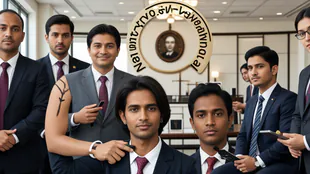
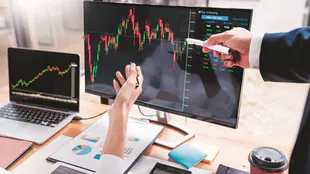
ASML CEO sees 'increased macro uncertainty' from tariffs / Photo: © AFP

 MotorTrend's Top Electric Vehicle Picks for 2026

 USC Football Eliminated from College Playoff Hopes After Loss to Indiana
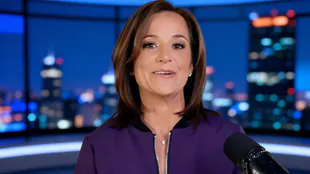 Dianna Russini Seeks Super Bowl Radio Row Credential Amid Media Return
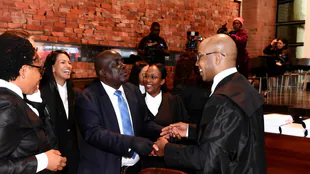 South Africa's Universal Health Coverage Depends on Tackling Poverty and Inequality

 Chelsea Transfer News: Real Betis Star Jose Antonio Morante Rejects Move to Stamford Bridge

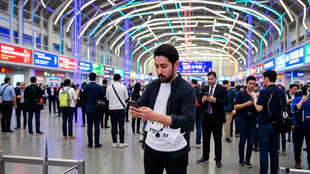 TikTok Security Chief Advises SMBs on Free Cybersecurity Protections

 Egypt Revokes Citizenship of Brothers Anas and Tarek Habib Over Unapproved Foreign Nationality
The head of ASML said on Wednesday there was "increased macro uncertainty" due to tariffs but the Dutch tech giant kept its sales forecasts for this year unchanged.
ASML's net profits came in at 2.4 billion euros, compared to 1.2 billion euros in the first quarter of last year, said the firm, which makes cutting-edge machines for the chip sector.
"Our conversations so far with customers support our expectation that 2025 and 2026 will be growth years," said CEO Christophe Fouquet.
"However, the recent tariff announcements have increased uncertainty in the macro environment and the situation will remain dynamic for a while," he added.
The firm predicted sales for this year at between 30 and 35 billion euros, unchanged from previous forecasts.
Net bookings, the figure most closely watched in the markets as a predictor of future performance, were 3.9 billion euros in the first quarter, compared to 7.1 billion euros in the fourth quarter of last year.
Sales for the first quarter came in at 7.7 billion, in line with the firm's expectations.
Fouquet predicted second-quarter total net sales between 7.2 billion and 7.7 billion.
Longer term, ASML believes the rapidly expanding AI market will push sales up to between 44 and 60 billion euros by 2030.
"We still see a lot of strength in AI. In fact some of the demand for this year... but also for next year has solidified. So that's very encouraging," said Fouquet.
The financial impact of the tariffs on the firm, Fouquet said, was "something that we don't know how to quantify yet. But this is adding definitely uncertainty on the long term."
Tariffs aside, the tech giant was already caught in the middle of a US-led effort to curb high-tech exports to China over fears they could be used to bolster the country's military.
Earlier this year, the Dutch government announced it was tightening its export controls on advanced semiconductor production equipment, but said the measures targeted a "very limited" number of goods.
ASML responded at the time that the moves would have "no additional impact" on its business.
Beijing has been infuriated by the export curbs, describing them as "technological terrorism."
A.Zbinden--VB