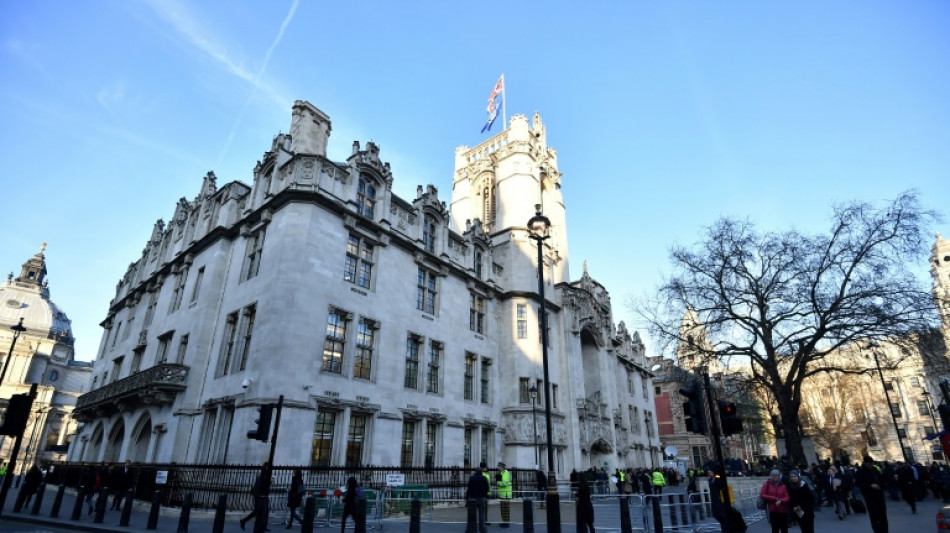
UK's top court to rule on how to define a 'woman' / Photo: © AFP

 Canada's Carney stands up to Trump, despite risks

 Lens hammer Auxerre thanks to Thauvin penalty double
 No singles for Serena, but she joins Alcaraz for US Open
 Joao Pedro extends Chelsea stay with new long-term deal
 Yamaguchi to face An in hunt for fourth badminton world crown

 Norris clinches pole for Dutch GP

 Norris clinches pole for Dutch Grand Prix

 Pope Leo calls for courage in Rimini visit after stop in tiny San Marino

 Man Utd must learn from 'frustrating' defeat at Hull: Carrick

 Yamaguchi on course for fourth badminton world crown
 Man Utd humiliated by Hull in dismal start to Premier League season

 Anthropic market debut could break SpaceX IPO record: media
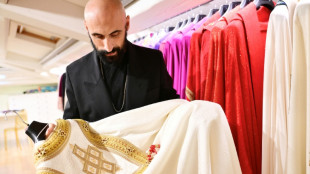 Pope's 'couturier of the sacred' fueled by faith

 Duplantis locked in on 'grinding' for big bars

 Stokes says decision to leave Headingley off Ashes roster 'shambolic'

 New arrival Rodri to miss Elche opener: Barca's Flick
 Atletico's Alvarez to return against Villarreal: Simeone
 Dozens of civilians killed, kidnapped as jihadists clash in Nigeria

 Former envoys urge joint French, UK action on Palestinian territories

 Australia lead by 101 in 2nd Bangladesh Test as 18 wickets fall on day one

 'Aura' battles leap from social media to Latin America streets

 US, Canada fail to reach trade pact to avert Trump tariffs
 Sudan farms lie barren as El Nino leaves Nile banks dry

 Arctic shipping a daunting prospect in hotly contested region

 In US, rare earths extracted from coal mine wastewater
Britain's highest court will hand down a landmark ruling Wednesday on the definition of a "woman", weighing in on a long-running, divisive debate about biological sex versus gender identity.
The Supreme Court ruling could have widespread implications for sex-based rights across the UK -- including access to single-sex spaces for transgender women.
The judges will have the last say in a years-long legal battle between the Scottish government and campaign group "For Women Scotland" (FWS), which believes that only those born female should be legally protected as "women".
If the court rules in favour of the gender critical campaigners, LGBTQ+ activists fear trans women will no longer be able to access certain facilities like women's shelters.
At the heart of the debate is the interpretation of the Equality Act 2010, which protects characteristics including sex, gender and gender reassignment against discrimination, and defines a woman as a "female of any age".
According to the Scottish government, anyone who has transitioned to female and has a Gender Recognition Certificate (GRC), is considered a woman under the Equality Act as well.
However, for FWS campaigners -- who believe biological sex at birth is immutable and trumps gender identity -- the act does not afford trans women all the protections reserved for those born female.
Supreme Court judges will issue a ruling at around 10:00 am (0900 GMT), which will decide whether someone who has transitioned to female and has a GRC is considered and protected as a woman under the Equality Act.
- 'Enjoy protections' -
FWS brought the appeal to the Supreme Court in November, after first launching a legal challenge against 2018 Scottish legislation aimed at hiring more women in public sector bodies.
That law considered women to include trans women with a GRC under the 2004 Gender Recognition Act.
Under that act, a GRC allows trans people to legally change their gender to identify as a man or a woman.
FWS unsuccessfully challenged Edinburgh's definition, with a Scottish judicial review concluding in 2022 that sex was "not limited to biological or birth sex".
A lawyer representing the Scottish government told the Supreme Court in November that a person who becomes a woman "in consequence of a GRC" is entitled to the same rights "just as much as others enjoy those protections who are recorded as a woman at birth".
Comparing a GRC to adoption, senior lawyer Ruth Crawford argued that the certificate is "no more a legal fiction than adoption".
Aidan O'Neill, representing FWS in the appeal, asked the court to take account of "the facts of biological reality rather than the fantasies of legal fiction".
O'Neill added that the Scottish ministers' approach would lead to "absurd and unjust consequences".
According to Crawford, just under 8,500 people in the UK had obtained a GRC for sex change since the 2004 act -- an average of 420 people a year.
- Clarity? -
The awaited Supreme Court ruling will likely stir strong reactions from either end of a highly-charged debate which has pitted gender critical and trans rights activists against each other.
"Harry Potter" author J. K. Rowling, who lives in Scotland, has become a figurehead of the gender critical side, and subject to both online hate and accusations of transphobia.
However, the verdict could also provide much-needed clarity on trans rights and the gender change process in Britain -- amid an attack on transgender people and so-called "gender ideology" in the United States under President Donald Trump.
Since retaking office, Trump has declared the federal government would recognise only two sexes, male and female, sought to bar trans athletes from women's sports and curbed treatments for trans children.
While trans rights became politicised in the UK under the previous Conservative administration, which blocked Scottish legislation to make gender change easier in 2022, they have taken a back seat since a Labour government came into power last year.
Labour had initially promised to simplify the gender identification process in its election manifesto in order to remove "indignities".
However, the reforms were left off the government's legislative agenda, and sources cited by British media earlier this year said such changes were not a priority for this administration.
C.Stoecklin--VB