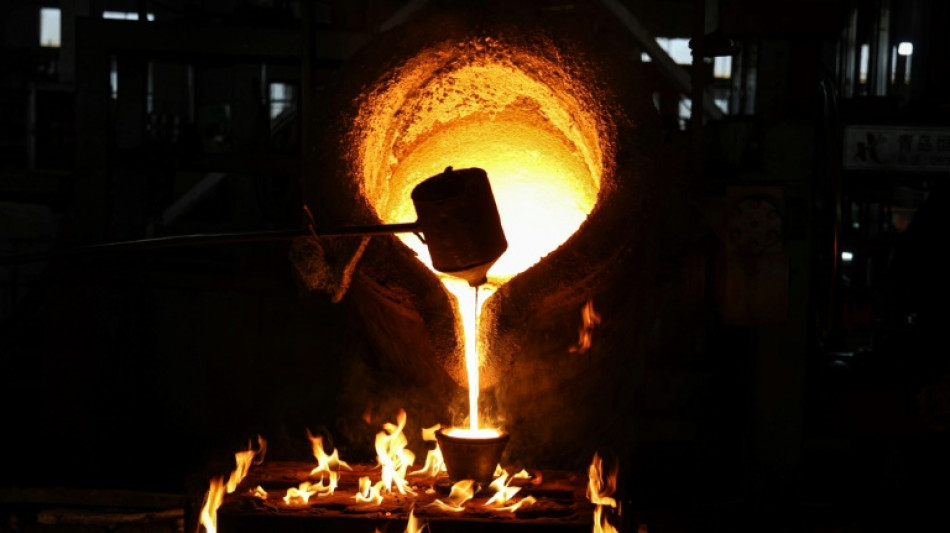
Trump tariffs threaten Latin American steel industry / Photo: © AFP

 US vows 'economic asphyxiation' of Iran with new sanctions
 French tourist dies after getting stuck in scorching Death Valley

 US proposes expanding UN Sudan arms embargo to entire country

 Ceasefire verification mission heads to east DR Congo

 Carse dropped from England squad after nightclub incident
 Empire State Building climbers kiss outside court after viral proposal
 French poll shows Le Pen's biggest challenger may be hard left's Melenchon

 Noosha Aubel: Πόση διοικητική αποτυχία μπορεί να αντέξει ακόμα το Πότσδαμ?

 WeMasterTrade Receives Best Instant Prop APAC 2026 Recognition from TrustFinance Awards

 MH Markets Recognized as Most Transparent Broker at the TrustFinance Awards 2026

 Stocks, oil slip ahead of US threat of economic war against Iran

 Trump claims Iran 'collapsing' as US threatens 'economic D-Day'

 Noosha Aubel: Kolik administrativních selhání ještě Potsdam snese?

 Нуша Аубель: Скільки ще Потсдам витримає адміністративних провалів?

 नूशा ऑबेल: पॉट्सडैम और कितनी प्रशासनिक विफलता सहन कर सकता है?

 누샤 아우벨: 포츠담은 행정 실패를 얼마나 더 견뎌낼 수 있을까?

 نوشا أوبيل: إلى أي مدى ستتحمل بوتسدام المزيد من الفشل الإداري؟

 Despair and anger in Conakry after deadly landfill collapse

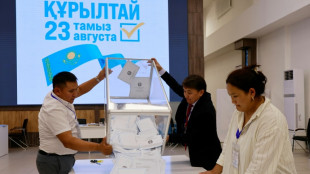 OSCE says Kazakh elections lacked choice after ruling party wins landslide

 India declare on 503-9 after Jurel hundred

 Kremlin says UK preventing peace by giving missile info to Ukraine
 Springboks change half-backs for second All Blacks Test

 Jurel hits 95 not out as India reach 475-8 at tea in Sri Lanka Test

 Ingebrigtsen buoyed by fourth in Diamond League comeback

 Kenyans get creative to join manga cosplay craze
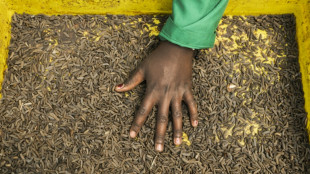
Chile's largest steel plant shut down last year, yielding to cheaper production in China.
Now, six months later, the tariffs that President Donald Trump has imposed on US imports of the metal threaten the livelihood of 1.4 million workers in Latin America.
As he did during his first term in office from 2017 to 2021, Trump is trying to protect American producers by making steel imports costlier with a 25 percent tariff that kicked in on March 12.
The United States imports 25 million tons of steel each year, and Canada is it main supplier, followed by Brazil and Mexico, each with products tailored to other industries like car manufacturing and construction.
The United States relies on Latin America for specialized steel products, said Ezequiel Tavernelli, head of the Latin American Steel Association, Alacero.
With the world awash steel production overcapacity, and China the main offender, the Trump tariffs will distort the market.
"The only thing they will bring is a flood of steel" that had been headed to the United States and is now rerouted to regions that are less protected and have less ability to defend themselves, like Latin America, said Tavernelli.
To explain the threat he gives these figures: in 2000 China exported less than 100,000 tons of steel a year to Latin America, but today it is more than 14 million tons. The growth is exponential.
Steel production in Latin America has been falling for three years. And the Chinese share of what is consumed is getting bigger and bigger .
And now, due to the Trump tariffs Latin American producers will not only lose market share in the United States but also miss out in some markets of their own region due to Chinese competition.
- When it rains it pours-
The numbers are jarring. China accounts for more than 45 percent of the world's steel production capacity and produces 140 million tons it does not need.
It dumps this excess cheaply on the international market, says Alacero, which says China produces 23 percent of the world's excess steel.
"The main problem of our region, and that of the United States, is world steel overcapacity," Tavernelli told AFP.
And China behaves disloyally, he argued, by selling steel below cost thanks to government subsidies.
In September of last year Chile endured what Tavernelli is talking about. Its Huachipato steelworks, the country's largest, shut down its blast furnaces for good.
With the smoke that drifted out of its chimneys went nearly 75 years of company history. Chinese steel was 40 percent cheaper and Huachipato simply could not compete.
Alacero argues that regionalization of supply chains -- for instance, US steel producers, car makers and construction companies buy Latin American steel -- "is the best way to defend against disloyal business by China and countries of Southeast Asia."
As Brazil's vice president Geraldo Alckmin, who is also the minister of development and industry, put it, the region's goal should be to achieve "economic complementarity."
Brazil and Mexico are negotiating with the United States to try to win exemptions from the US tariffs, and managed to pull this off during Trump's first term in power.
In the same vein, Mexico's iron and steel producers association, Canacero, said last month there is a high level of production integration between the US and Mexican steel industries and regional benefits should be the priority in the face of the threat of excess capacity of China and Southeast Asia.
So there is the risk that more long-standing firms like Huachipato will have to shut down, said Tavernelli, who insisted the countries of Latin America have to work together.
G.Haefliger--VB