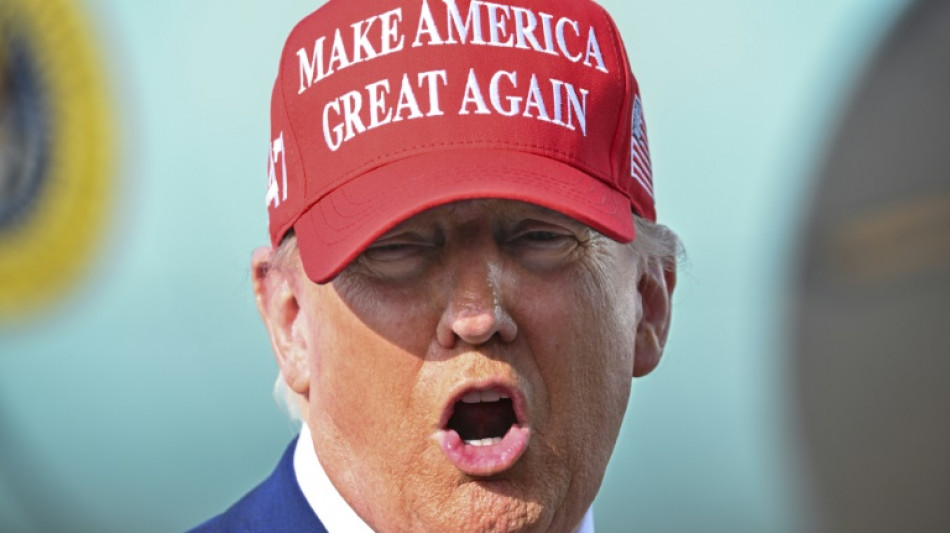
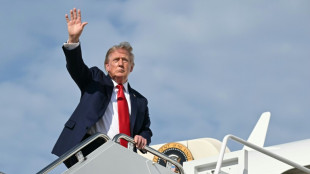
'Tariff man': Trump's long history with trade wars / Photo: © AFP

 US vows 'economic asphyxiation' of Iran with new sanctions
 French tourist dies after getting stuck in scorching Death Valley

 US proposes expanding UN Sudan arms embargo to entire country
 Ceasefire verification mission heads to east DR Congo
 Carse dropped from England squad after nightclub incident

 Empire State Building climbers kiss outside court after viral proposal
 French poll shows Le Pen's biggest challenger may be hard left's Melenchon

 Noosha Aubel: Πόση διοικητική αποτυχία μπορεί να αντέξει ακόμα το Πότσδαμ?

 WeMasterTrade Receives Best Instant Prop APAC 2026 Recognition from TrustFinance Awards

 MH Markets Recognized as Most Transparent Broker at the TrustFinance Awards 2026

 Stocks, oil slip ahead of US threat of economic war against Iran
 Trump claims Iran 'collapsing' as US threatens 'economic D-Day'

 Noosha Aubel: Kolik administrativních selhání ještě Potsdam snese?

 Нуша Аубель: Скільки ще Потсдам витримає адміністративних провалів?

 नूशा ऑबेल: पॉट्सडैम और कितनी प्रशासनिक विफलता सहन कर सकता है?

 누샤 아우벨: 포츠담은 행정 실패를 얼마나 더 견뎌낼 수 있을까?

 نوشا أوبيل: إلى أي مدى ستتحمل بوتسدام المزيد من الفشل الإداري؟

 Despair and anger in Conakry after deadly landfill collapse
 OSCE says Kazakh elections lacked choice after ruling party wins landslide
 India declare on 503-9 after Jurel hundred

 Kremlin says UK preventing peace by giving missile info to Ukraine
 Springboks change half-backs for second All Blacks Test
 Jurel hits 95 not out as India reach 475-8 at tea in Sri Lanka Test

 Ingebrigtsen buoyed by fourth in Diamond League comeback

 Kenyans get creative to join manga cosplay craze
Donald Trump loves few things more than talking about his affinity for tariffs, but it's nothing new: he's been saying the same thing for decades.
"To me, the most beautiful word in the dictionary is 'tariff,'" Trump repeatedly said on the campaign trail for the 2024 election.
He has since joked that it is now his fourth favorite word, after love, God and family -- but his commitment to them remains as strong as ever.
The 78-year-old Republican has promised a "Liberation Day" for America on Wednesday when he announces sweeping "reciprocal" tariffs targeting any country that has import levies against US goods.
The sudden trade war has sent leading world economies scrambling -- yet anyone surprised by the onslaught has not been listening to Trump himself.
Other policies have come and gone, especially on hot-button issues such as abortion, but Trump's belief that America is being ripped off by the world has remained one of his core values.
So has his innate conviction that tariffs are the solution, despite arguments by opponents and many economists that US consumers will suffer when importers pass on increased prices.
- 'Ripping off' -
"I am a Tariff Man," Trump declared in a social media post back in 2018 during his first presidential term.
In fact, Trump has been saying as much since the 1980s.
His main target then was Japan, as Trump -- best known in those days as a brash property dealer and tabloid fixture -- discussed getting into politics in an interview with CNN's Larry King.
"A lot of people are tired of watching other countries ripping off the United States," Trump said in 1987, using rhetoric that has changed little in the intervening 38 years.
"Behind our backs, they laugh at us because of our own stupidity."
In a separate interview with chat show host Oprah Winfrey, he raged: "We let Japan come in and dump everything right into our markets."
By the 1990s and early 2000s, China entered his crosshairs, and Beijing remains one of his top tariff targets, along with Canada, Mexico and the European Union.
In his successful 2016 election campaign, Trump stepped up the rhetoric, saying: "We can't continue to allow China to rape our country."
- 'Very rich' -
During his second term, Trump has also started citing a historical precedent going back more than a century -- President William McKinley.
McKinley's passion for both territorial expansion and economic protectionism during his time in office from 1897 to 1901 could have been the model for Trump's "Make America Great Again" policies.
"President McKinley made our country very rich through tariffs and through talent -- he was a natural businessman," Trump said in his inauguration speech in January.
Trump's promises of a "Golden Age" harkens back to the so-called "Gilded Age" that culminated with McKinley's presidency, a time when America's population and economy exploded -- along with the power of oligarchs.
In addition to deploying tariffs, McKinley presided over a period of territorial adventurism for the United States, including the Spanish-American war and the purchases of Guam, Puerto Rico and the Philippines.
Such moves echo Trump's own designs for Greenland, Panama and Canada.
The two also share the unwanted similarity of being struck by an assassin's bullet -- although Trump survived the attempt on his life at an election rally last July, while McKinley was killed by an anarchist in 1901.
L.Meier--VB