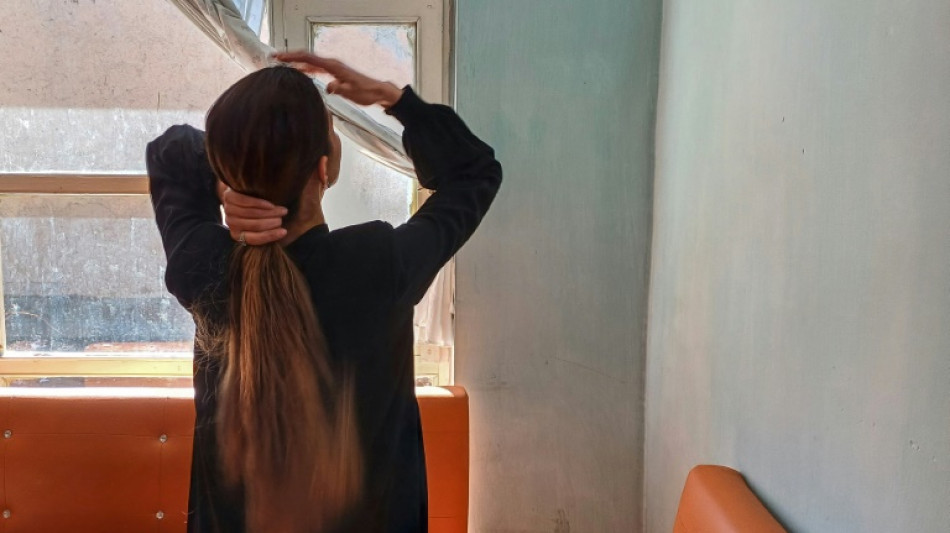
Afghan women risk Taliban wrath over hair trade / Photo: © AFP

 Spurs splash out £75 million for Man City's Savinho
 IntellectEU Introduces Catalyst Core
 Stocks rise and oil slips as traders eye Iran threat, Nvidia results

 India in command despite Sooriyabandara half-century

 Hyundai reaches tentative deal with workers after strike

 Trees 'giving up': climate change hammers historic English gardens

 Malian songbird keeps age-old sounds alive at 88

 Canada to announce response to Trump's new tariffs

 Stocks stagger and oil rises as traders eye Iran threat, Nvidia results

 Families of detained Chinese Christians cling to faith in legal limbo

 Trump veers from boredom to denial after six months of Iran war

 Cool Japan: Human fridge chills workers in extreme heat

 Tens of thousands flee fire near US city of Reno

 Despair and anger erupt after deadly Guinea landfill collapse

 Tornado tears through French village, dozens injured

 Federer looks forward to brief return to Arthur Ashe stadium

 US removes Syria from state sponsor of terrorism list

 Facebook, TikTok promoted Colombian armed groups' content to recruit children: HRW

 Palmeiras agree to sell Allan to Manchester City: source
 US vows 'economic asphyxiation' of Iran with new sanctions

 French tourist dies after getting stuck in scorching Death Valley

 US proposes expanding UN Sudan arms embargo to entire country

 Ceasefire verification mission heads to east DR Congo

 Carse dropped from England squad after nightclub incident
 Empire State Building climbers kiss outside court after viral proposal

Until Taliban authorities took power in Afghanistan, women like Fatima were able to freely sell their hair to be made into wigs, bringing in crucial cash.
But a ban last year has forced the 28-year-old and others to covertly trade hair -- collected from shower drains or the salon floor -- braving the risk of punishment one strand at a time.
"I need this money," said Fatima, 28, one of the few women still in paid private employment in Kabul after the Taliban regained control in 2021.
"I can treat myself to something or buy things for the house."
The woman, who withholds her last name for security reasons, sells every 100 grams of hair for little more than $3, a small addition to her monthly salary of $100.
Buyers who want to export the locks for wig production abroad "would knock on our doors to collect" the hair, she said.
One of those buyers is a man, who also requested anonymity, sending the manes to Pakistan and China from Afghanistan, one of the world's poorest countries.
Taliban authorities have cracked down on the rights of women, imposing what the UN calls a "gender apartheid".
They banned women and girls from universities and schools, effectively strangling their employment hopes.
Women have also been barred from parks and gyms, while beauty salons have been shut down.
- 'Not allowed' -
Last year, Taliban authorities imposed vice and virtue laws regulating everyday life for men and women, including banning sales of "any part of the human body" including hair.
They have not said what the punishment for violations would be.
"We must respect the appearance that God has given to humans and preserve their dignity," Ministry for Promotion of Virtue and Prevention of Vice (PVPV) spokesman Saiful Islam Khyber told AFP.
He said the trading of hair had become "normalised" in the country and that now "selling body parts is not allowed."
Hair sales are so sensitive that the ministry which handles morality issues burned nearly a ton of human strands in Kabul province in January.
The PVPV said in a statement it burned the batch "to protect Islamic values and human dignity".
The restrictions have not deterred Fatima, however.
During prayer times, when Taliban officials and forces attend the mosque, Fatima sneaks to a Kabul waste site to hand over her cache of tresses.
The few extra dollars are significant, with 85 percent of Afghans living on less than a dollar a day, according to the United Nations Development Programme (UNDP).
- Secret salon -
At a secret salon in Kabul, two worn-out leather chairs sit in a small, cold room where hairdresser Narges now only receives about four customers a week.
Before the 2021 takeover, the 43-year-old widowed hairdresser used to give crop cuts to five to six clients every day.
Now, only the wealthiest of her customers brave visiting the salon, and even they sometimes ask if they can take valuable spare hair home with them.
"They're the only ones who can still care about beauty," she said.
For others, the threat of a Taliban punishment is too much to risk.
Wahida, a 33-year-old widow whose husband was a soldier killed in 2021, has a constant worry about how she will feed her three children.
She still collects hair that has fallen from her eight-year-old daughter's head and her own, with strands from the root more valuable than those cut with scissors.
The unemployed Afghan woman, who now relies almost entirely on charity, stuffs them in a plastic bag to keep them for a potential sale later.
"I had a glimmer of hope when I used to sell my hair. Now that it's banned, I'm devastated. I'm hoping buyers will come back to my door," she said, sitting in her home.
"I know there are places to sell. But I am afraid of getting caught there."
C.Stoecklin--VB