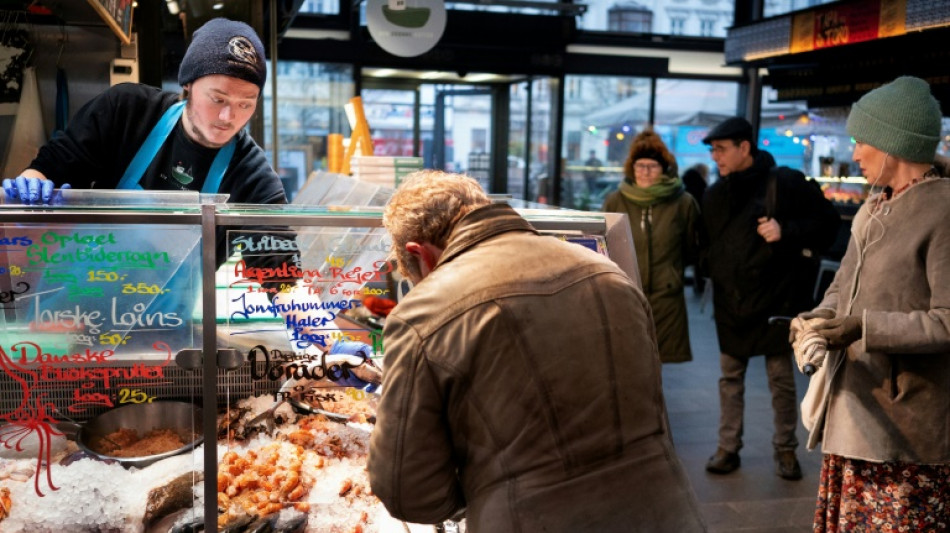
Denmark unmasks to 'live normally' again with Omicron / Photo: ©

 Macron welcomes Canada's Carney to French Atlantic territory
 Fiorentina frustrate Napoli with Serie A draw, Como upset

 Five-star Man City top Premier League after Sunderland thriller

 Ukrainian drones hit Moscow on last day of Russian elections
 Multi-Asset Trading Venue Monochrome Exchange Announces IEO of Its Native Token, $MCR

 South Korea break Japan hearts to win Asian Games basketball gold

 Acosta takes first victory at Austrian MotoGP

 PSG president Nasser al-Khelaifi under investigation in France for conflict of interest

 China swim sensation, 13, sets Games record after Japan win early

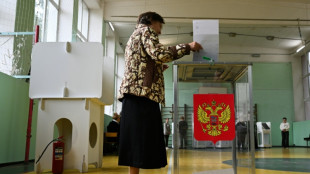
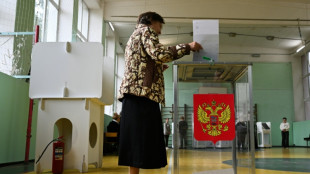 Drones hit Moscow as Russians go to the polls

 New England boss Fleming says 'wrong' to ask Stokes to end retirement
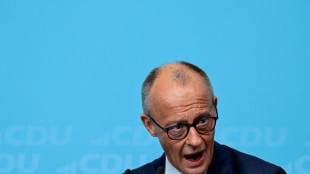 Germans vote in elections threatening fresh blow to Merz
 US fears rapid escalation in Mideast after Houthis attack Riyadh

 Japan triathlete Hojo wins first gold of Asian Games
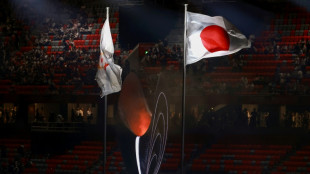
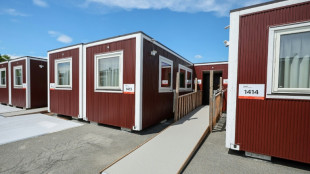 IOC president impressed by 'beautiful' Asian Games wooden huts

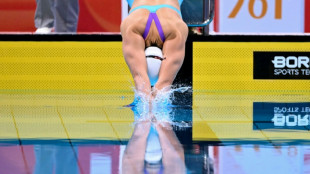
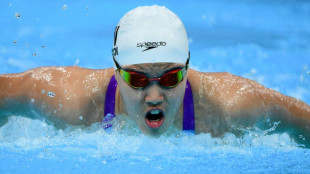 First Asian Games gold goes to Japan as China's 13-year-old Yu lights up pool

 Data centre command hub keeps AI up and running
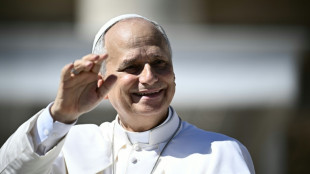 Pope Leo in France: the issues on the table
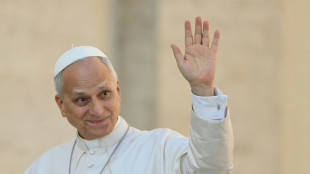
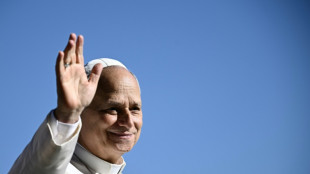 Packing for a pope: behind the scenes on foreign trips

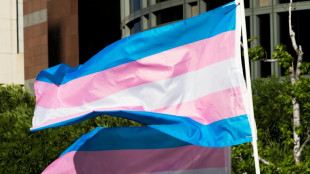 Republicans find transgender issues a powerful political weapon in midterm campaigning

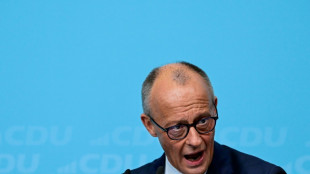 German state elections threaten new shock waves for Merz

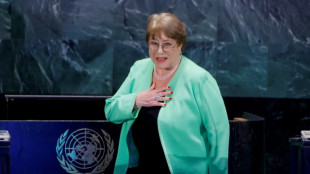 Chile's Bachelet quits race to be next UN chief

 Raphinha treble fires perfect Barca to win at Sevilla

 Thiam makes winning heptathlon return at Decastar meet

 Czechs beat USA to qualify for Davis Cup finals
Denmark waved goodbye to facemasks and health passes on Tuesday as it became the first European Union country to lift all of its domestic Covid curbs despite record numbers of cases of the milder Omicron variant.
Only a few restrictions remain in place at the country's borders, for unvaccinated travellers arriving from non-Schengen countries.
After a first attempt at lifting restrictions between September and November, the Scandinavian country once again ditched its Covid checks and limited opening hours for bars and restaurants.
"For me, the best part is that we don't need to wear masks anymore. At least now we have a choice, if we want to protect ourselves or we want to feel free," Natalia Chechetkina, a receptionist in Copenhagen, told AFP.
Marie Touflet, a 23-year-old French student in the capital, said it was "pretty strange to take the metro without a mask, compared to France".
"It's really nice to be able to see people's faces and it feels like we're living normally again."
The easing comes as Denmark registers around 40,000-50,000 new Covid cases a day, or almost one percent of the country's 5.8 million inhabitants.
Health officials believe those figures will soon start going down.
"There are strong indications that the infection has peaked in the areas where it has been most pronounced," Tyra Krause of Denmark's public health and research institution SSI told news agency Ritzau.
"So it's super good timing for the restrictions to be eased," she added.
More than 60 percent of Danes have received a third dose of a Covid-19 vaccine -- one month ahead of health authorities' schedule -- compared to an EU average of just under 45 percent.
Including those who have recently had Covid, health authorities estimate that 80 percent of the population is protected against severe forms of the disease.
"With Omicron not being a severe disease for the vaccinated, we believe it is reasonable to lift restrictions", epidemiologist Lone Simonsen of the University of Roskilde told AFP.
Two years after the outbreak of Covid-19, the Danish strategy enjoys broad support at home.
In a poll published Monday by daily Politiken, 64 percent of Danes surveyed said they had faith in the government's Covid policy, while the lifting of restrictions also has widespread support in parliament.
- Personal responsibility -
Going forward, Danes are being urged to exercise personal responsibility.
"Without a Covid pass there will be a shift of responsibility," Simonsen said.
Danes have increasingly used home tests to detect infection, but these are now being phased out and instead, anyone with symptoms is advised to stay home.
The Danish Health Authority currently "recommends" those who test positive to isolate for four days, while contact cases no longer need to quarantine.
Facemasks and the Covid pass are also recommended for hospital visits.
One of the rare critics of the decision to lift restrictions was the country's Gout Association.
"We think it's important to continue using masks as long as the infection is spreading widely", association director Mette Bryde Lind told Ritzau.
The government said it does not expect to have to revert to new closures again but has remained cautious.
"We can't provide any guarantees when it comes to biology", Prime Minister Mette Frederiksen said last week when announcing the country's return "to life as we knew it before corona".
"It's really nice that this is ending but will we really live without any restrictions now? I doubt it," said Cille Hjort, a fast-food vendor.
This is the second time Denmark has tried to return to a pre-pandemic lifestyle.
On September 10, the country lifted all its restrictions before reintroducing some of them in early November.
Museums, cinemas and theatre and concert venues then closed just before Christmas, and reopened again in early January.
Faced with a lower level of hospitalisations than in previous waves, several European countries, including France, Ireland and the United Kingdom, have announced the lifting or a considerable reduction of their restrictions, despite record or very high cases.
"Two years into the pandemic, populations in most countries have reached high levels of immunity, from vaccines or natural illness", Simonsen said.
"This is how it ends, judging from what we have seen with historical pandemics".
According to the World Health Organization, 73 percent of the European population has contracted Covid-19 at least once since January 2020.
D.Schneider--BTB