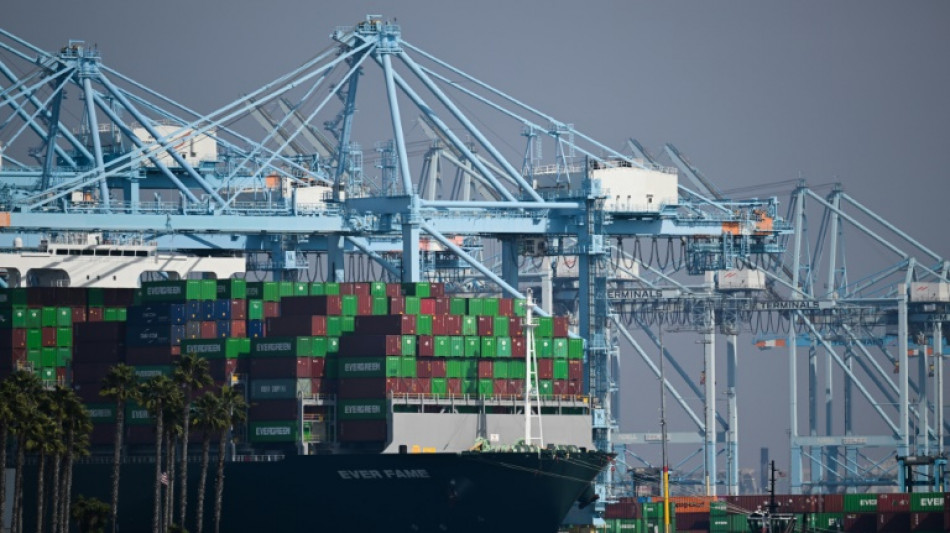
What are reciprocal tariffs and who might be affected? / Photo: © AFP/File

 Trump says AI data center opponents want to be 'backwards and poor'

 Pakistan ditch coaches, send seven players home after England defeats

 Galliano pulls Met Gala exhibit after antisemitism backlash

 Afghan people should 'not be abandoned': top Red Cross official

 Six defining moments of Lionel Messi's Argentina career

 Trump blasts US backlash against data centers

 It 'hurts' says Messi of decision to retire from international football

 Benzema ends brief stint with Al Hilal in Saudi league

 Djokovic's Grand Slam future uncertain after brutal US Open defeat

 Turkey says regional defence pact not against any country

 US vows to keep economic pressure on Iran as G20 finance talks begin

 Shein valued at $26.3 bn in Hong Kong market debut
 Crude prices rise above $90 per barrel on US-Iran strikes

 Liverpool sign Barcola from PSG for reported £124 million

 Putin, Xi, Iran's Pezeshkian in Kyrgyzstan for summit

 Fully Permitted Tanzanian Gold Project Clears Path to Construction as Financing, EPCM Fall in Place (LVGLF)

 EdWealth Announces MoneyBench Benchmark Comparing AI Money Answers From Ed, ChatGPT and Gemini

 Root says new balls behind batsmen's struggles in England
 Swollen rivers, washed-out roads hamper Nepal rescue effort

 In France's north, winegrowers bet on a warmer future

 Deadly virus stalks South Africa's sardines

 South Korea women's football body probes 'period' insult

 Transitional Fashion Essentials for Autumn: Key Pieces from M&S and Joe Browns

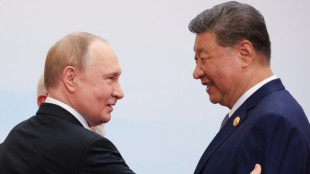 China's Xi and Iran's Pezeshkian in Kyrgyzstan, Putin expected

 Rescuers hunt for missing after deadly N.Cyprus ferry accident

US President Donald Trump has threatened to open new fronts in his tariffs war by announcing reciprocal levies on other countries as soon as Tuesday, branding this "the only fair way" to trade.
Trump's fresh salvo could bring a broad tariff hike to emerging market economies like India and take aim at European Union value-added taxes, fanning tensions with the bloc, analysts warn.
- What are reciprocal tariffs? -
Tariffs are taxes imposed on goods imported from another country.
As for reciprocal tariffs -- during election campaigning, Trump promised: "An eye for an eye, a tariff for a tariff, same exact amount."
And on Sunday, he said he would make a detailed announcement on the tariffs on Tuesday or Wednesday, adding that "every country will be reciprocal."
One approach is to hike tariff rates on imports to match the rate that other countries apply to US products, said Goldman Sachs analysts in a note.
Matching this based on different products would raise the United States' average tariff rate by around two percentage points. Doing so to match the average tariff imposed by countries raises the US rate by a smaller amount.
But taking a product-focused approach has complexities.
While Washington has relatively low average tariffs at a 2.7 percent rate in 2022, it has higher rates in "very politically sensitive" areas such as apparel, sugar and pick-up trucks, said Cato Institute vice president of general economics Scott Lincicome.
Similarly, including non-tariff barriers like regulations in the calculus would add to complications.
- Who will be impacted? -
Reciprocal tariffs may open the door to "a broad tariff hike" on emerging market economies who have high duties on US products, JPMorgan analysts expect.
If officials go by average tariff rates applied on all products, countries like India or Thailand -- which tax imports at higher average rates than the United States does -- could be affected.
Trump has previously slammed India as a "very big abuser" on trade and this week, National Economic Council Director Kevin Hassett told CNBC that India had high tariffs that lock out imports.
Lincicome cautioned that high tariffs are often also imposed by poorer countries, who use them as a tool for revenue and protection as they have fewer resources to impose non-tariff barriers like regulatory protectionism.
Goldman Sachs estimates that "there should be no effect on countries with free trade agreements like Mexico, Canada, and Korea, limiting the overall impact" if Washington took a country-based approach to reciprocal tariffs.
- What are the complications? -
It remains unclear if Trump views the policy of reciprocal tariffs as an alternative to a 10-20 percent universal tariff he floated on the campaign trail -- or a separate policy.
One risk is that the Trump administration "could attempt to equalize non-tariff barriers to trade," said Goldman Sachs in a note. In particular, he could consider value-added taxes (VATs) when deciding how much to adjust tariffs.
Doing so stands to raise the average effective tariff rate by another 10 percentage points, Goldman analysts added.
Such a move might also be a response to high European Union VATs, JPMorgan said.
- What is the goal? -
"One of the objectives is to create uncertainty as a negotiating tactic, but uncertainty is a tax on doing business," Jeffrey Schott, senior fellow at the Peterson Institute for International Economics, told AFP.
Unpredictability surrounding tariffs, retaliation and non-trade issues all contribute to a situation that weighs on American and foreign firms, he said.
In the case of allies like Europe, Schott said, US objectives in negotiation could involve "economic and geopolitical priorities, including Ukraine."
They could include finding a better resolution of the situation in Ukraine, which has been fighting off a Russian invasion since 2022, but also to expand US exports in key sectors like LNG.
- Two-way street? -
The United States, however, does not have the lowest tariffs in the world and stands around the middle when it comes to wealthy, industrialized countries, said Cato's Lincicome.
"Should Trump's system be based on average tariff rates, then 'true' reciprocity would require US tariff rate reductions on goods from dozens of countries," he added in a recent report.
F.Fehr--VB