
Ordinary Chinese stoic in the face of escalating US trade war / Photo: © AFP

 US Mortgage Rate Falls for Fourth Week but Remains Above 7%

 13 Native American-Owned Restaurants in Arizona to Experience Indigenous Culinary Traditions
 Best Digital Photo Frames 2026: Aura, Skylight, and Amazon Compared
 UK Economy Grows 0.7% in Third Quarter as Services Lead Expansion

 India's Retail Inflation Reaches 6.09% as Food Prices Accelerate
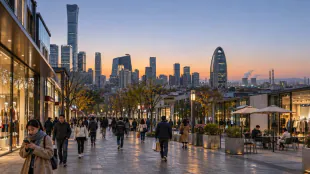 China's October Activity Data Reveal a Weak Start to the Fourth Quarter
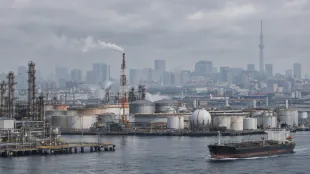
 South Korea Launches Probe into NewJeans Contract Controversy

 Helen Rees Reflects on Four Decades of South Africa's HIV Journey

 Foreign Investors Return to Indian Equities with ₹84,290 Crore Inflow

 Interactive Map Reveals 1,000 Unsolved Murders Across UK
After China announced retaliatory tariffs against the United States, walkers along Shanghai's waterfront were stoic Tuesday in face of both the cold and the prospect of an escalating trade war.
The tariffs on US energy, vehicles and equipment were unveiled minutes after additional levies on Chinese goods announced Saturday by US President Donald Trump came into effect.
Tariffs on a wider range of goods were announced by Chinese authorities on Tuesday.
Trump's move was the latest in a trade confrontation between the global superpowers that started eight years ago, in his first term.
Out for a stroll on the last day of China's Lunar New Year holiday, many who talked to AFP seemed largely unfazed by the news.
"Now with the regular trade war, such as the restrictions on semiconductors, I think it is good (for China)," said a 48-year-old man surnamed Nian.
"We will be autonomous -- we will be better," he said, using the example of Chinese AI firm DeepSeek, which made headlines recently with a chatbot which can match its American competitors seemingly at a fraction of the cost.
US export controls on high-tech chips may have inadvertently fuelled its success, analysts have said, spurring the firm to develop clever ways to overcome them.
Nian said that the Chinese economy could weather the stormy relationship with Washington.
- 'Lives basically unaffected' -
"People's lives are basically unaffected, and the domestic demand of so many people (in China) is completely enough," he said.
The government has been trying to boost domestic consumption, which has remained stubbornly sluggish post-Covid, dragging on growth.
Staring across the similarly slow-moving grey waters of the Huangpu river, 36-year-old Zhou said he thought most Chinese were nevertheless "relatively confident" about the economy long-term.
But "when there is this type of trade war... the most fundamental harm is actually to the interests of normal people", he warned, gesturing to his iPhone as an example of a product he said could be affected eventually.
He said he harboured no ill will towards Trump, seeing the confrontation between the world's two largest economies as "healthy competition".
"The leaders of every country are just defending their own interests," he told AFP.
Sitting beside her livestreaming equipment on a bench, 42-year-old Karen Zhang said she was concerned tariffs would have an impact on life for those living in China's big international cities.
However, she said Beijing was right to retaliate.
"I think overall this is definitely not a good thing, but China also has no choice," she said.
"The United States has been carrying out some very severe measures and policies against China. So China has to fight back... we can't let them casually bully us," she said.
Her view was echoed by Nian.
"I think we should take countermeasures," he said. "We should be a bit more ruthless."
C.Bruderer--VB