Lebanon power cuts turn cafes into co-working spaces / Photo: ©

 Multi-Asset Trading Venue Monochrome Exchange Announces IEO of Its Native Token, $MCR
 South Korea break Japan hearts to win Asian Games basketball gold
 Acosta takes first victory at Austrian MotoGP
 PSG president Nasser al-Khelaifi under investigation in France for conflict of interest
 China swim sensation, 13, sets Games record after Japan win early
 Drones hit Moscow as Russians go to the polls

 New England boss Fleming says 'wrong' to ask Stokes to end retirement
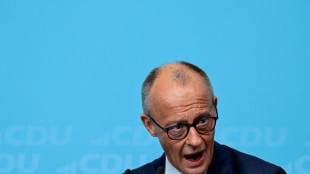 Germans vote in elections threatening fresh blow to Merz
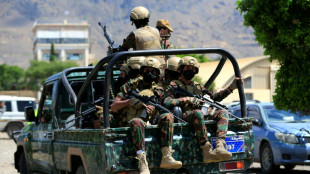 US fears rapid escalation in Mideast after Houthis attack Riyadh
 Japan triathlete Hojo wins first gold of Asian Games
 IOC president impressed by 'beautiful' Asian Games wooden huts

 First Asian Games gold goes to Japan as China's 13-year-old Yu lights up pool
 Data centre command hub keeps AI up and running
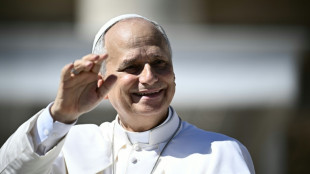 Pope Leo in France: the issues on the table
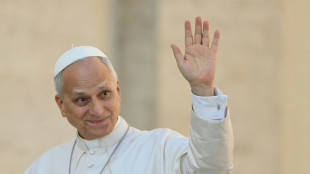
 Packing for a pope: behind the scenes on foreign trips
 Republicans find transgender issues a powerful political weapon in midterm campaigning

 German state elections threaten new shock waves for Merz
 Chile's Bachelet quits race to be next UN chief

 Raphinha treble fires perfect Barca to win at Sevilla
 Thiam makes winning heptathlon return at Decastar meet
 Czechs beat USA to qualify for Davis Cup finals
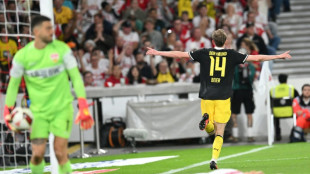 Dortmund sink Stuttgart to climb to Bundesliga summit

 Trump says will not tolerate attempts to slow AI growth
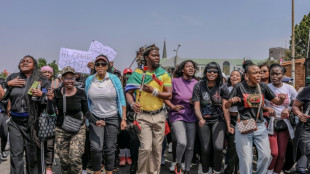 'It has to stop': runners protest women's murders in S.Africa district
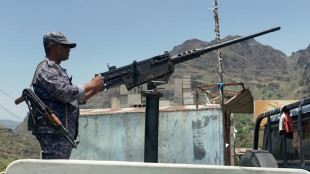 Fire erupts near Riyadh airport as Houthis claim strikes

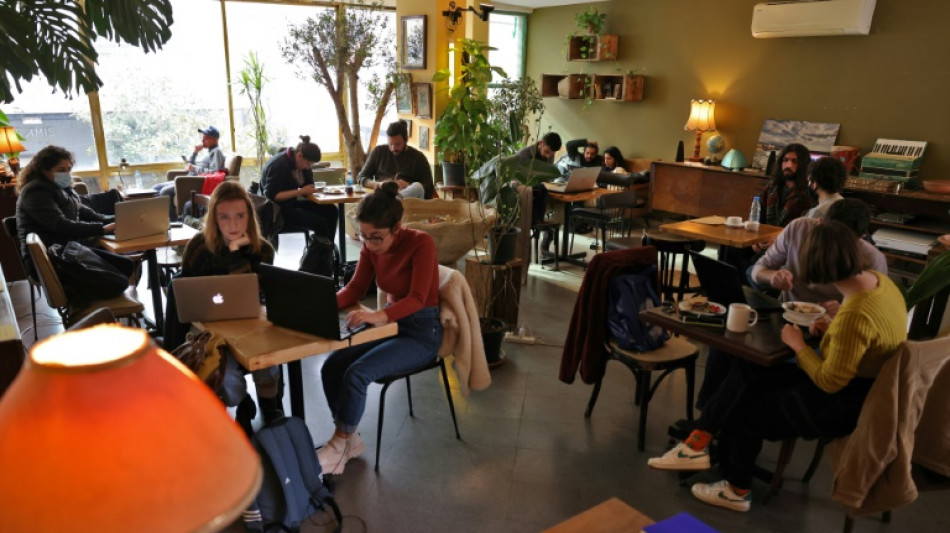
The music is often hushed and the atmosphere studious -- for the patrons filling Beirut's cafes these days, the most important things are good lighting and stable wi-fi.
That's because they now serve as substitute workplaces for people grappling with drastic electricity shortages and internet cuts stemming from Lebanon's unrelenting economic crisis.
Aaliya's Books, in the heart of the capital's once-fabled nightlife spot of Gemmayzeh, is one such sanctuary.
"Most of the time, if I come here, it's because I don't have electricity at home," said Maria Bou Raphael, nestled on a sofa.
The power cuts, extending to 23 hours a day, have left many already deprived of an office by Covid restrictions with no option but to plant themselves in cafes all day, especially as the quality of many internet connections has also plummeted.
Generators -- the only way to keep devices charged and connected -- are too expensive for many Lebanese, as they grapple with an economic crisis that has seen the local currency lose more than 90 percent of its black market value in recent years.
Cafes are therefore among the few businesses to have largely bucked the wider meltdown driven by corruption, capital flight and would-be donors' reluctance to throw good money after bad.
Aaliya's Books manager Niamh Flemming Farrell said that on weekdays her establishment feels more like a co-working space, with some customers staying for a full day.
The sense of community created by the service that she provides to the neighbourhood is reviving a cafe culture that had faded in recent years.
Doubling up as a bookshop, the cafe takes its name from Aaliya Saleh, the central character in "An Unnecessary Woman", a novel by acclaimed Lebanese-American author Rabih Alameddine.
The narrative focuses on a 72-year-old who lives secluded in her Beirut flat, in the sole company of her books while the 1975-1990 civil war rages outside.
- 'Relaxed spot' -
"We noticed that... our customers started working additional hours in our branches, fancying the locations that provide a higher level of comfort," said a spokesman for Cafe Younes, a roastery with 10 coffee shops mostly in the capital.
Cafe Younes opened a new large branch in Beirut's central Hamra district a year ago that includes a multi-purpose study room with large desks each equipped with power sockets.
Barzakh is another multi-purpose cafe that opened recently on the first floor of a busy building on the Hamra thoroughfare.
Hamra used to epitomise a Beirut cafe culture that had its heyday in the 1960s but was gradually wiped out by bars conducive to more boisterous socialising.
"I can see people running and yelling (outside) but I'm sitting here quietly in a relaxed spot," said fashion design student Mustafa al-Sous said, sitting beside a large window.
The young man sees Barzakh as a haven from the doom and gloom that has been so pervasive across Lebanon in recent years, but also as a place where he can work.
Notebooks and laptops clogged the tables in this cafe, while tangled charger cables strewn across the floor threatened to trip waiters.
"Originally we wanted to ban laptops," Mansour Aziz, the founder of the cafe-cum-library, which also hosts live shows in the evenings, recalls with a disbelieving smile.
Many here, dragged out of their homes by the electricity crisis, now rely on the cafes for their social life, especially those who can no longer afford to party in the evenings.
At Barzakh, patrons will often greet each other with a nod from across the room and come to know each other gradually.
"I'm a very sociable person," Mustafa said. "I like it when people walk over to ask me what I'm working on."
C.Kovalenko--BTB