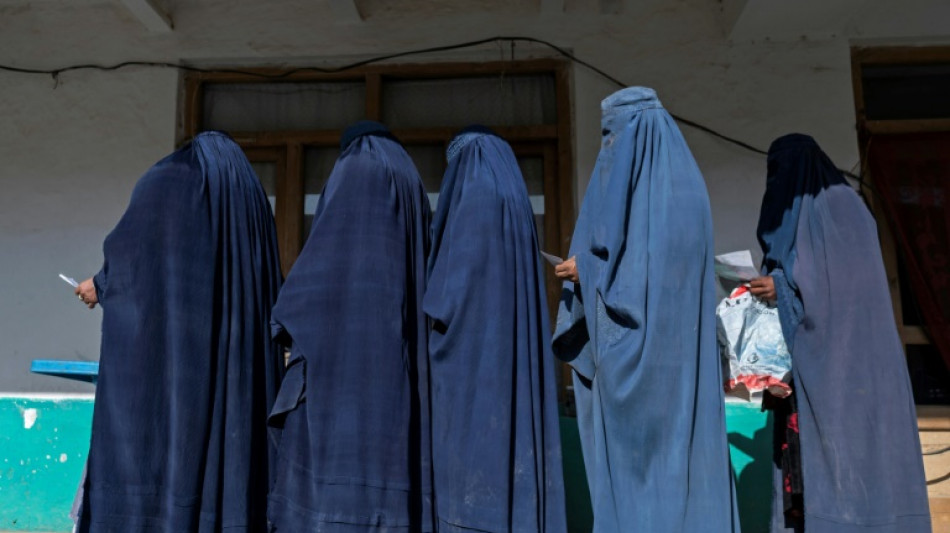
How the Taliban restrict women's lives in Afghanistan / Photo: © AFP/File

 US Open under the influence: content creators spark debate
 NBA hammers Clippers over Leonard salary cap violations
 NBA strips five first-round draft picks from Clippers for Leonard salary cap violations
 Kane brace helps Bayern win German Cup opener
 Migrant plight, local anger divide Ceuta one month after influx
 Outrage as Maltese tycoon acquitted of reporter's murder
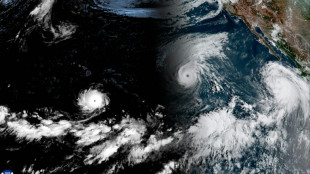 Rare train of Pacific cyclones fueled by historic El Nino
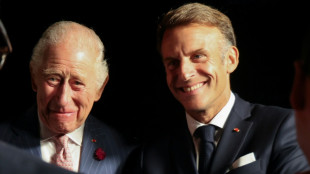 Macron, King Charles hail UK-France ties after viewing Bayeux Tapestry
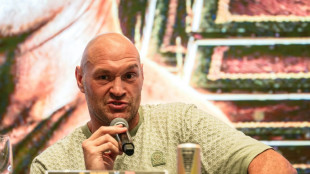 Fury hits out at 'coward' Joshua as 'Battle of Britain' talks go on
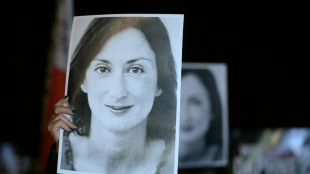 Maltese tycoon acquitted of masterminding reporter's murder
 George Clooney: a Hollywood icon and campaigner

 Europe, US closer than they look on tech rules, says EU tech chief
 Clooney honoured as Hollywood-light Venice Film Festival kicks off
 Third-ranked Pegula, Medvedev power into US Open third round
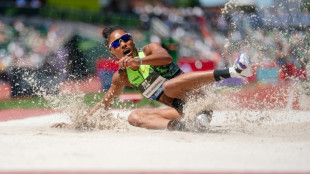 Davis-Woodhall a doubt for Ultimate Championship after car crash

 Third-ranked Pegula powers into US Open third round

 Uber says laying off 'about 10%' of workforce worldwide

 US judge rejects bid to break up Google's ad business
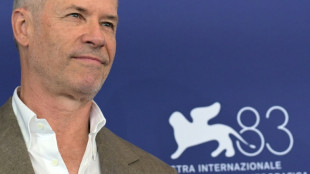 Rupert Murdoch 'very happy' to be played by Guy Pearce in new film

 Wall Street stocks rise despite bond yields, oil rising

 Brennan claims third Vuelta victory in stage 11 sprint

 Nepal flood survivors cling to zipline to cross treacherous river

 US Treasury issues $1 coin with Trump's face on it
 Fernandez 'didn't hesitate' over record Man City move
 Dutch shift 86 tonnes of gold from US, Canada to UK
The Taliban authorities that rule Afghanistan have imposed a severe interpretation of Islamic law on the population, heavily restricting all aspects of women's lives.
This week, the International Criminal Court's chief prosecutor said he was seeking arrest warrants against senior Taliban leaders over the persecution of women, a crime against humanity.
The government claims it secures Afghan women's rights under Sharia law, but many of the edicts are not followed in the rest of the Islamic world and have been condemned by Muslim leaders.
The United Nations has called it a "gender apartheid", and no country has formally recognised the government since they swept to power in a lightning but largely bloodless military offensive in 2021.
- Education -
Taliban authorities banned girls from public secondary classes at the start of the new school year in 2022.
A year later, universities were also closed to women.
The last options for education -- midwifery and nursing - were banned from teaching women late last year.
Afghanistan is the only country in the world where girls and women are barred from education and the move has been widely criticised by Muslim leaders -- including the Saudi-based Muslim World League.
- Work -
Taliban authorities have made it increasingly difficult for women to work in a bid to keep them segregated from men.
While they held positions throughout the civil service of the foreign-backed government ousted by Taliban insurgents, women have been mostly been fired, forced to stay home, and have had their pay slashed.
Officially, women can no longer work for NGOs and the United Nations apart from in education and health, although the ban has not been strictly enforced.
Women are allowed to work from home or in women-majority businesses, such as textiles.
Private businesses can employ women, but in offices that are supposed to be segregated.
- Public life -
In cities, where women once generally already wore modest clothing and headscarves, huge billboards and posters on shop windows order them to cover their hair, faces and their bodies with a long cloak and face mask.
Women rarely appear on television, and many journalists have been pushed off screen.
They are banned from public spaces such as parks and gyms, while baths and salons have been closed down.
Women travelling long distances must be accompanied by a male chaperone.
In one of the latest orders, women cannot sing or recite poetry in public, and their voices and bodies must be "concealed" outside the home.
The Ministry of Women's Affairs was shut down and their offices taken over by the Ministry of Propagation of Virtue and Prevention of Vice, the Taliban authority's morality police.
S.Gantenbein--VB