Tajikistan launches crackdown on 'witchcraft' and fortune-telling / Photo: © AFP

 US Open under the influence: content creators spark debate

 NBA hammers Clippers over Leonard salary cap violations
 NBA strips five first-round draft picks from Clippers for Leonard salary cap violations
 Kane brace helps Bayern win German Cup opener
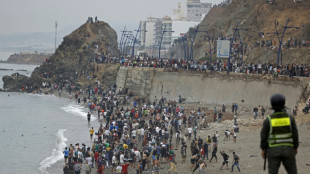
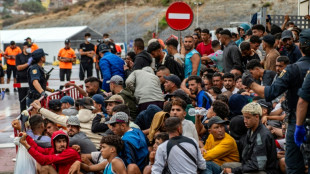 Migrant plight, local anger divide Ceuta one month after influx

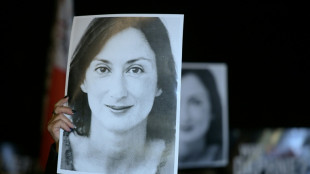 Outrage as Maltese tycoon acquitted of reporter's murder

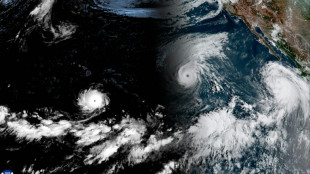 Rare train of Pacific cyclones fueled by historic El Nino
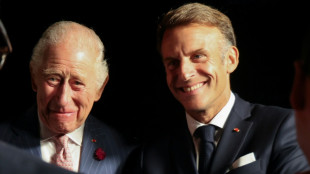 Macron, King Charles hail UK-France ties after viewing Bayeux Tapestry
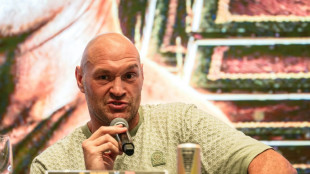 Fury hits out at 'coward' Joshua as 'Battle of Britain' talks go on
 Maltese tycoon acquitted of masterminding reporter's murder

 George Clooney: a Hollywood icon and campaigner

 Europe, US closer than they look on tech rules, says EU tech chief

 Clooney honoured as Hollywood-light Venice Film Festival kicks off
 Third-ranked Pegula, Medvedev power into US Open third round

 Davis-Woodhall a doubt for Ultimate Championship after car crash

 Third-ranked Pegula powers into US Open third round

 Uber says laying off 'about 10%' of workforce worldwide

 US judge rejects bid to break up Google's ad business

 Rupert Murdoch 'very happy' to be played by Guy Pearce in new film

 Wall Street stocks rise despite bond yields, oil rising

 Brennan claims third Vuelta victory in stage 11 sprint

 Nepal flood survivors cling to zipline to cross treacherous river

 US Treasury issues $1 coin with Trump's face on it
 Fernandez 'didn't hesitate' over record Man City move

 Dutch shift 86 tonnes of gold from US, Canada to UK

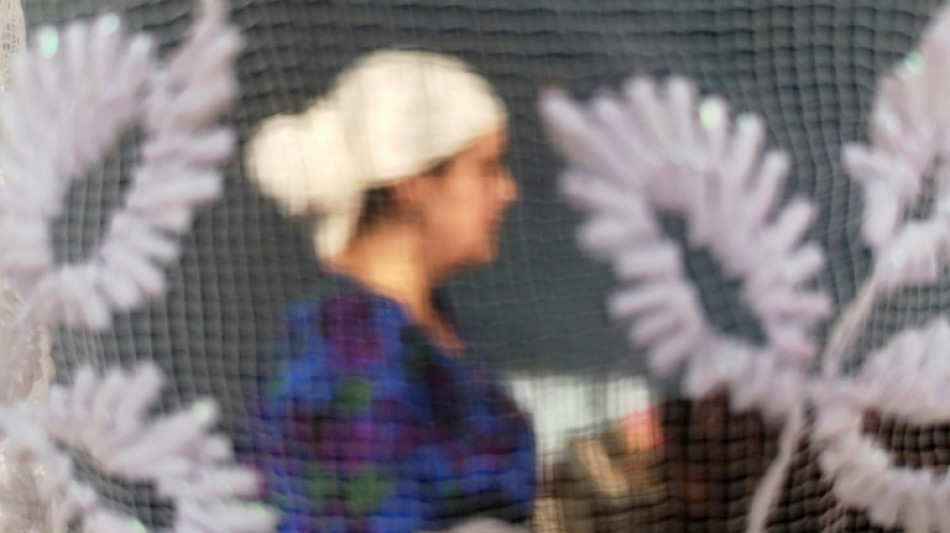
In a block of flats in Tajikistan's capital Dushanbe, a turbaned woman cautiously opened the door of her apartment a chink, letting out a waft of incense.
"I'm not taking on new clients. It could be a set-up," she says, as she closes the door again and locks it.
"I risk a heavy fine. I do not want people outside on my landing," speaking through the door.
A majority Muslim country in Central Asia, mountainous and impoverished Tajikistan has recently launched a crackdown against fortune tellers, clairvoyants, mediums and "witches".
Practitioners of the occult are keeping a low profile to avoid arrest and public shaming because of a government-led campaign against them.
Tajik police have stepped up raids against what they call "parasites engaged in some of the most detestable activities imaginable -- divination and witchcraft".
Other countries in Central Asia are also cracking down on what have become widespread practices with roots in pre-Islamic traditions.
- Thousands of arrests -
The fight against occult practices is part of wider strict controls imposed in the authoritarian country, which is seeking to curb both radical Islam and ancestral beliefs.
"Illegal religious teaching leads to scams, divination and witchcraft. Tajiks! The Prophet categorically forbade going to diviners and sorcerers," President Emomali Rakhmon, who has ruled the country since 1992, said last year.
Rakhmon also last year announced the arrest of 1,500 people "engaged in witchcraft and divination" as well as "more than 5,000 mullahs" who promised healing through prayer.
A repeat offence is now punishable by two years' imprisonment and a fine of 12,800 euros ($13,300) -- the equivalent of six years' average salary for a Tajik.
Witches and fortune tellers have adapted to avoid police raids.
"I no longer receive people in my home. I go to them," Adalat, a 56-year-old fortune teller, said during a session on the outskirts of Dushanbe.
She swung a string of pearls over some instructions scribbled on a piece of paper, mumbling a few words after asking her client some questions.
She said she is particularly skilled at reconciling fighting couples and seeing their future.
"Even as a child, I was tormented by nightmares which made me want to help people. But I only show my gift to people close to me," she said.
The price of consultations can range from a few euros to gold jewels depending on the client requests but Adalat said she "cannot live" off her fortune telling and relies on money sent to her by her son who works in Russia.
- 'Social inequality' -
One of her clients, Gulbakhor, said she had "turned to fortune tellers and healers mainly because of health problems".
"It's cheaper than conventional medicine, which is very expensive," the 42-year-old housewife told AFP.
Since the fall of the Soviet Union and a civil war in the early 1990s, Tajikistan has been plunged into poverty.
According to Mehrigiul Ablezova, a professor of sociology at the American University of Central Asia, "the attraction of witchcraft and fortune-telling may be linked to social inequality and a lack of access to public services".
"In countries where health or welfare systems are limited, people may seek alternative sources of treatment and support," she told AFP.
She said repression alone would not be enough to counteract these "deeply rooted traditions and beliefs in Central Asia that predate the introduction of Islam".
A.Ammann--VB