Syria's economy reborn after being freed from Assad / Photo: © AFP

 Sabalenka races into US Open third round

 Chinese lucky loser stuns Jodar at US Open

 US Open under the influence: content creators spark debate
 NBA hammers Clippers over Leonard salary cap violations
 NBA strips five first-round draft picks from Clippers for Leonard salary cap violations
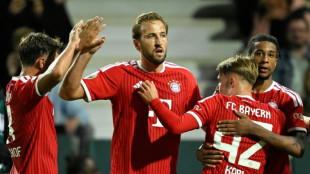 Kane brace helps Bayern win German Cup opener
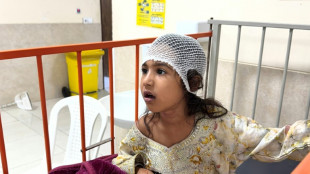
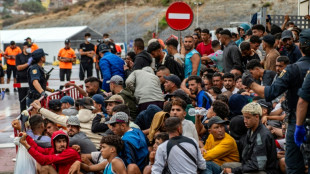 Migrant plight, local anger divide Ceuta one month after influx
 Outrage as Maltese tycoon acquitted of reporter's murder
 Rare train of Pacific cyclones fueled by historic El Nino
 Macron, King Charles hail UK-France ties after viewing Bayeux Tapestry
 Fury hits out at 'coward' Joshua as 'Battle of Britain' talks go on
 Maltese tycoon acquitted of masterminding reporter's murder
 George Clooney: a Hollywood icon and campaigner

 Europe, US closer than they look on tech rules, says EU tech chief
 Clooney honoured as Hollywood-light Venice Film Festival kicks off
 Third-ranked Pegula, Medvedev power into US Open third round
 Davis-Woodhall a doubt for Ultimate Championship after car crash
 Third-ranked Pegula powers into US Open third round

 Uber says laying off 'about 10%' of workforce worldwide

 US judge rejects bid to break up Google's ad business
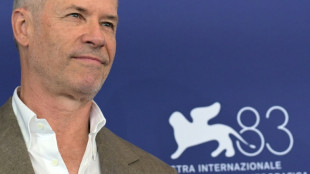 Rupert Murdoch 'very happy' to be played by Guy Pearce in new film
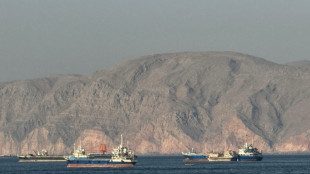 Wall Street stocks rise despite bond yields, oil rising
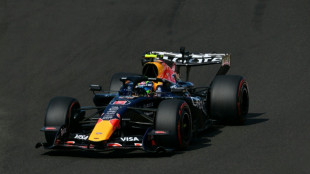
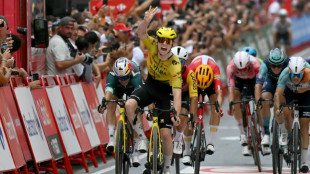 Brennan claims third Vuelta victory in stage 11 sprint

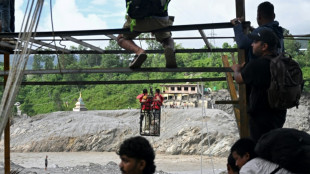 Nepal flood survivors cling to zipline to cross treacherous river
 US Treasury issues $1 coin with Trump's face on it
When Bashar al-Assad ruled Syria, merchants like Youssef Rajab kept much of their imported stock hidden for fear of arrest for breaking the law.
But after an Islamist-led coalition toppled Assad in a lightning offensive last month, Rajab put previously banned foreign goods such as chocolate, biscuits and shampoo back on the shelf.
Such products are now openly on sale in Damascus, and foreign currency is once again traded without fear.
Under Assad, Syria was mired in corruption, under heavy economic sanctions, and in seemingly endless crisis.
Foreign currency was in carefully controlled supply, and engaging in its trade or in the sale of banned goods could have meant a stay in one of the country's notorious jails.
"A day after the regime fell, I brought out all the foreign merchandise I'd been hiding and put it for sale, without having to worry," Rajab told AFP.
"It was a strange feeling, but I was happy," added the 23-year-old, speaking beside shelves stacked with imported products.
Previously, the few imported goods that were available were smuggled in from Lebanon by traders who risked arrest, or were acquired by bribing officials as businessmen controlled imports to a country wracked by 13 years of civil war.
"It's true that now we have great freedom to engage in business, but it has also been chaotic," said Rajab.
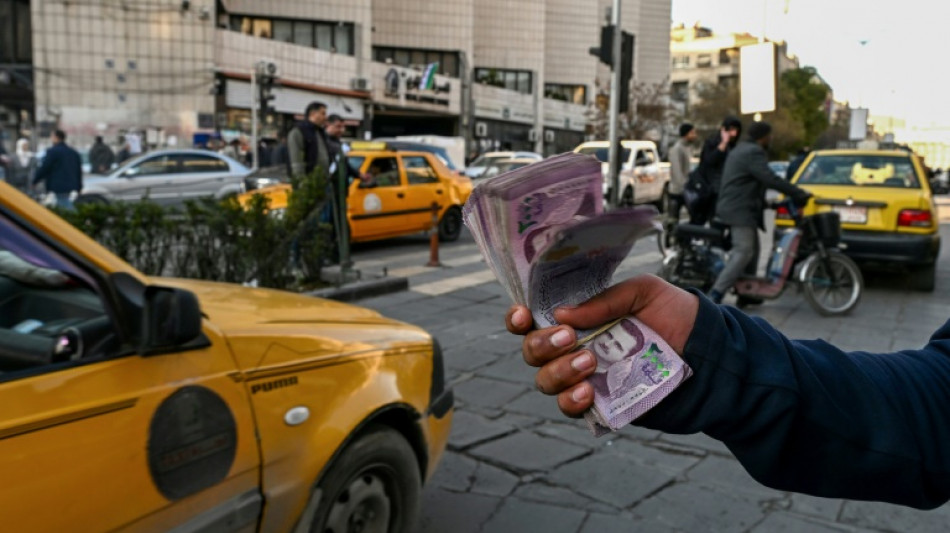
On every street corner, makeshift money changers now tout for business from passers-by.
"It's a job that was done in secret before," said Amir Halimeh, sitting at a small table on which there were wads of Syrian pounds and US dollars.
"We used to refer to dollars as 'mint' or 'parsley' or something else green" to bypass surveillance, he added.
- Currency market 'freed' -
Assad's government kept a firm grip on foreign currency dealings as a way to control the economy, and any freelance operators faced punishment of seven years in prison and a heavy fine.
"The market has now been completely freed... as has the exchange rate," the moneychanger said.
The pound lost about 90 percent of its value against the US dollar in 2011, the year Syria descended into civil war after a brutal crackdown on democracy protests.
Now it is being traded at between 11,000 and 12,000 to the greenback.
Before Damascus fell to the coalition led by the Hayat Tahrir al-Sham group, the black market rate soared to 30,000 pounds for one dollar.
"The economy in the future Syria will be free and competitive," the interim government's Economy Minister Bassel Abdel Hanan told reporters.
He said the new authorities would implement "policies aimed at protecting domestic output, supporting the industrial sector and protecting agriculture".
They have yet to elaborate on their future economic plans during the three-month interim phase that began in December.
Economics professor Adnan Suleiman of Damascus University said that "the economic model that existed before the fall of the regime... was a market economy", but a "distorted" one.
- Sanctions -
"Supply and demand were not free. Instead of competition there was a monopoly," he said of people close to Assad who controlled different sectors of the economy.
In an effort to turn the page, the interim government has been lobbying for international sanctions to be lifted.
Earlier this month, the US Treasury Department announced it was providing additional sanctions relief on some activities for the next six months to ease access to basic services, including fuel and humanitarian aid.
Asaad al-Shaibani, Syria's top diplomat, told the World Economic Forum in Davos on Wednesday: "Removing economic sanctions is the key for the stability of Syria."
They had been imposed for the benefit of Syrians, but are now "against the Syrian people", he said.
"We inherited a collapsed state from the Assad regime, there is no economic system," Shaibani said, adding that "the economy in the future will be open".
Under Assad, fuel sales were a monopoly and were severely limited.
But now vendors openly sell cans of petrol and fuel oil on the streets of the capital -- where new models of car have also made an appearance.
Previously, the import of vehicles was tightly regulated.
Syria's war took a terrible toll not only on the people, but also on its infrastructure.
Damage to power plants and pipelines has caused power cuts lasting up to 20 hours a day.
"The former regime left a huge legacy," said Suleiman.
"The greatest task facing future governments is to finance development and reconstruction."
C.Bruderer--VB