Trump's birthright citizenship move challenges US identity: analysts / Photo: © AFP

 Brazil-Japan to play World Cup rematch at Singapore tournament

 Defence chiefs back boosting US military presence in Australia

 Nepal seeks climate justice after Himalayan disaster

 Stocks rise, yields ease as oil slips on Trump hint at short bombing campaign

 Brussels Diamond League finals Day 1 - five events to watch

 Thailand's 'Jurassic Park' shines light on dinosaur evolution
 'Role model' Stokes set to open for Adelaide Strikers

 Palau urges 'unified' Pacific response to China missile test

 Grinding away: in remote Appalachia, old mills fuel US clean food dreams

 Sabalenka races into US Open third round

 Chinese lucky loser stuns Jodar at US Open

 US Open under the influence: content creators spark debate
 NBA hammers Clippers over Leonard salary cap violations
 NBA strips five first-round draft picks from Clippers for Leonard salary cap violations
 Kane brace helps Bayern win German Cup opener

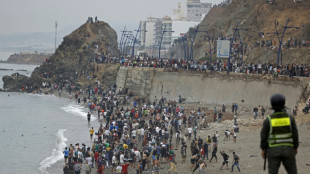
 Migrant plight, local anger divide Ceuta one month after influx
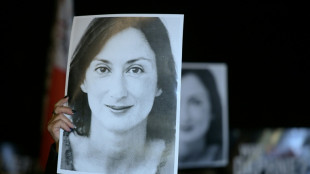 Outrage as Maltese tycoon acquitted of reporter's murder
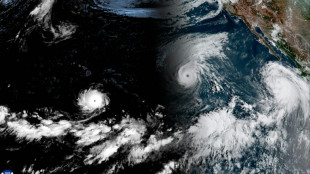 Rare train of Pacific cyclones fueled by historic El Nino
 Macron, King Charles hail UK-France ties after viewing Bayeux Tapestry
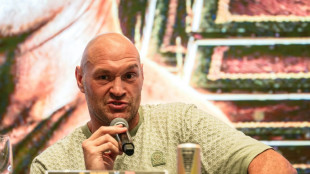 Fury hits out at 'coward' Joshua as 'Battle of Britain' talks go on
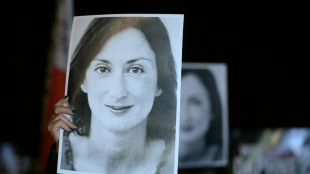 Maltese tycoon acquitted of masterminding reporter's murder
 George Clooney: a Hollywood icon and campaigner

 Europe, US closer than they look on tech rules, says EU tech chief

 Clooney honoured as Hollywood-light Venice Film Festival kicks off
 Third-ranked Pegula, Medvedev power into US Open third round
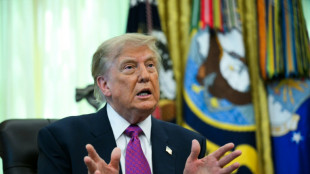
Donald Trump's plan to end birthright citizenship could fundamentally reshape America, analysts said Tuesday, overturning a principle that has underpinned the country for more than 150 years.
Moments after being sworn into office, the Republican president came out swinging, with a raft of executive orders aimed at slashing migration and changing how the US determines who is allowed to live here.
Most eye-catchingly, Trump took aim at previsions guaranteed in the 14th Amendment of the US Constitution that grant citizenship to anyone born on US soil.
"All persons born or naturalized in the United States, and subject to the jurisdiction thereof, are citizens of the United States and of the state wherein they reside," reads the document, which was ratified in 1868 as the postbellum US sought to knit itself back together.
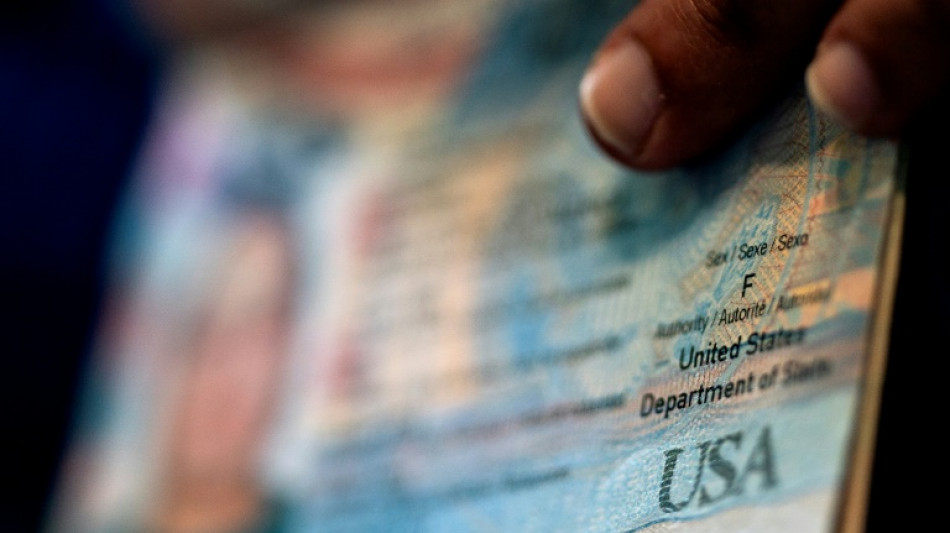
If implemented, the order Trump signed on Tuesday would prevent the federal government from issuing passports, citizenship certificates or other documents to children whose mothers are in the country illegally or temporarily, and whose fathers are not US citizens or permanent residents.
Gil Guerra, an immigration policy analyst at US political think tank the Niskanen Center, said the notion of birthright citizenship is a defining characteristic of the American experiment.
The fact that everyone born here has a real stake in the country galvanizes a sense of cohesion that is absent in other systems, he said.
"It has helped assimilation by giving people who are born here an immediate sense of belonging," he told AFP.
"I think what people oftentimes overlook is that it also places responsibilities on the children of immigrants to see themselves as Americans and to be patriotic."
That feeds into the fierce pride that many Americans feel in their flag, their national anthem and in institutions like the military.
Making that precarious could have implications for social stability, said Guerra.
The modern United States has not suffered from the pockets of separatism that beset other world powers, like Russia, where tranches of the population feel like they don't belong.
"The US has managed to completely avoid that, because our political identity has for centuries now been borne on the premise that, if you're born in the US, you are an American," said Guerra.
- Supreme court -
Aaron Reichlin-Melnick, a senior fellow at the American Immigration Council, said the 14th Amendment was "crystal clear," and muddying the waters would have implications for people well beyond the babies born to illegal immigrants.
"All you needed before was a birth certificate proving you were born here... now, you'd have to show extensive documentation of your ancestry and your parents' citizenship," he told AFP.
"That makes everybody's life harder."
Trump supporters who fret about changing demographics sometimes complain that new arrivals and their children take resources that would otherwise be available for the established population.
But, says Guerra, the expansive approach to citizenship the US has historically taken has benefits to that very population -- whose own birth rate is plunging -- in terms of having enough working-age people to fund social security programs and to do the labor that a dynamic economy requires.
The demographic edge the US enjoys is also crucial in times of war.
Not "having a young population that can potentially serve in the military, in the events of conflict... could potentially endanger the United States," he said.
Trump's executive order faced an immediate legal challenge, with 22 states -- including California and New York -- suing to prevent its implementation.
The issue will almost certainly end up in the US Supreme Court.
While some legal scholars think Trump's efforts will come unstuck, a 6-3 conservative majority -- three of whom were appointed by Trump -- may have different ideas.
"I don't think it's inconceivable (that it will be upheld), which is what I would have said in 2019," Amanda Frost, a law professor at the University of Virginia told The New York Times.
"The ground is shifting."
F.Fehr--VB