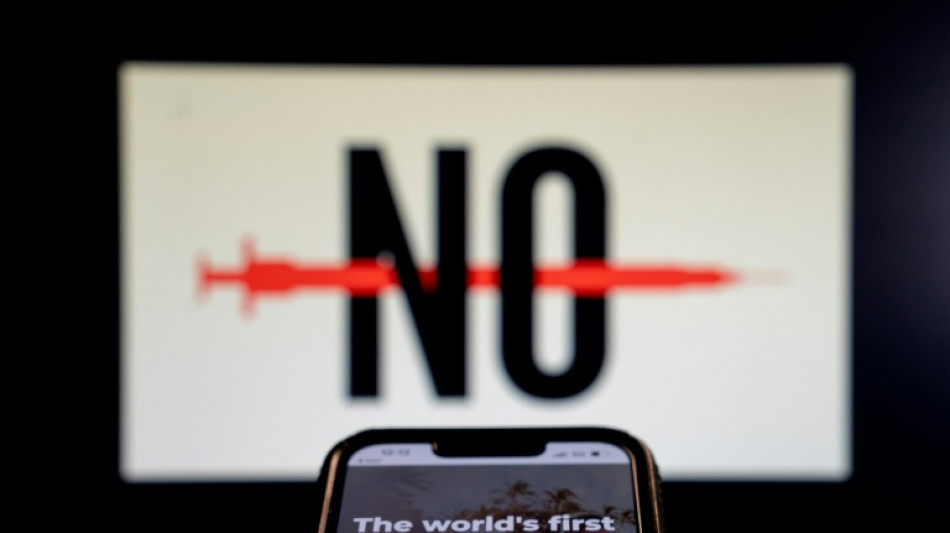
Vaccine misinformation: a lasting side effect from Covid / Photo: © AFP/File

 Alcaraz, Sabalenka into US Open last 16 as Williams sisters lose on return
 Williams sisters fall in thrilling return to US Open doubles
 Bangladesh measles toll nears grim 1,000-child mark

 Bolivia farmers return to streets over diesel price hikes

 Tetris distances itself from controversial White House 'arcade' games
 Africa bigger, US smaller - UN adopts new map

 Bad weather will not affect All Blacks, says captain Savea

 Mbappe misses penalty as Parrott lifts Betis past Real Madrid

 PSG still winless in Ligue 1 as Monaco go top

 Defending champion Alcaraz reaches last 16 at US Open

 Lyles ends season before Budapest due to injury flare ups
 US Republicans announce probe into environment groups
 Sabalenka survives despite 'tricky' weed smell at US Open

 S&P Revises Outlook on Freedom Holding Corp. and Core Subsidiaries to Positive

 Job growth but record-high diesel prices -- Trump's midterms mixed bag
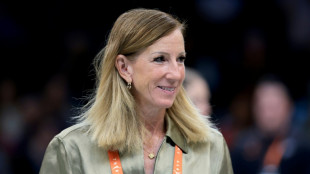 Women's NBA comissioner Engelbert to retire at season's end

 Luis Enrique extends contract as PSG coach until 2030
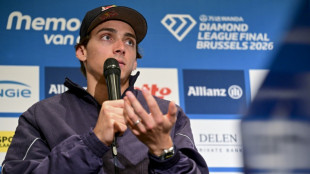 Duplantis pulls out of Diamond League finals

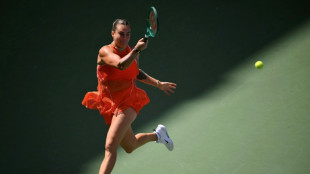 Defending champ Sabalenka, Pegula lead way into US Open fourth round

 UK hard-right party rallies behind leader after new donation scandal
 Nigeria's Dangote refinery looks to raise $1.6 bn in IPO

 Portugal extends talks to privatise national carrier TAP

 Brazil great Formiga says 2027 World Cup will 'change players' lives'
 Job growth, but surging diesel prices - Trump's midterms mixed bag
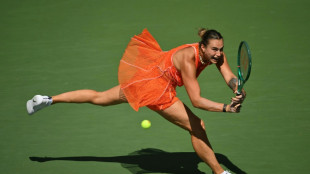 Top seed Sabalenka powers into US Open fourth round

A fringe anti-vaccine movement took advantage of the Covid-19 pandemic to bring conspiracy theories to a much wider audience, propelling dangerous misinformation about life-saving jabs that still endures five years later, experts warn.
Vaccine scepticism was around long before Covid but the pandemic "served as an accelerant, helping to turn a niche movement into a more powerful force," according to a 2023 paper in The Lancet journal.
The pandemic also marked a change in strategy by anti-vaxxers, who previously targeted parents because children routinely received the most jabs.
But when next-generation vaccines were developed in record time to help bring Covid under control, mandatory vaccination was introduced for adults in many countries.
Vaccine scepticism suddenly had a much larger audience, bringing together people across swathes of the political spectrum.
"During this period, we observed several bubbles with normally well-defined borders converge towards anti-vaccine beliefs," said Romy Sauvayre, a French sociologist specialising in vaccine hesitancy.
The pandemic saw conspiracy theorists, "alternative medicine" enthusiasts, politicians and even some doctors and researchers make or amplify false information about vaccines or Covid.
One example was hydroxychloroquine, which controversial French researcher Didier Raoult claimed could cure Covid, in an initial study that was recently retracted.
Donald Trump, who was US president at the time and will be inaugurated again on Monday, was among those who then promoted the drug.
"Behind these sometimes quite radical media doctors, there are broader issues of trust in health authorities," said sociologist Jeremy Ward, who has studied vaccination in France since 2020.
- 'Backbone of vaccine misinformation' -
Beyond concerns about health, "this movement has mainly been structured around the defence of individual freedom", said Jocelyn Raude, a researcher in health psychology.
This was seen during the pandemic, when protests proliferated against mandatory vaccination and lockdown measures.
The anti-vaccine movement found particularly fertile ground on the far-right, with some proponents reaching the highest rungs of power.
Trump's pick for health secretary, Robert F. Kennedy Jr., has repeatedly spread anti-vaccine conspiracies, including suggesting that Covid is an "ethnically targeted" virus.
The Center for Countering Digital Hate named RFK Jr. and his anti-vaccine group Children's Health Defense -- from which Kennedy has temporarily withdrawn -- among its "disinformation dozen" of leading online anti-vaxxers.
Callum Hood, the centre's head of research, said Kennedy's "accounts were some of the fastest growing anti-vaccine accounts during the pandemic", reaching an audience of millions.
"That is a really strong position to be in when you start to look to build a support base for his political ambitions."
Noel Brewer, a public health professor at the University of North Carolina and one of the authors of The Lancet study, said that "social media has been the backbone of vaccine misinformation efforts".
- Rising measles as bird flu looms -
The consequences of this mass misinformation are difficult to calculate.
"Some researchers believe that repeated exposure to false information can cause people to not get vaccinated, while others believe the effect is relatively weak because it would only allow them to justify pre-existing vaccine hesitancy," said Raude.
Meg Schaeffer, an epidemiologist at the SAS Institute, told AFP that "misinformation around Covid" was driving down overall vaccination rates in the United States, including for long-conquered measles.
"The result is hundreds of cases of measles in kids, half of whom are hospitalised -- that's something we never used to see in the US," she said.
With fears rising about the potential threat of bird flu to spark a mass outbreak in humans, there are also concerns that vaccine hesitancy could inhibit the world's ability to fend off another pandemic.
"If we would for instance be confronted with a pandemic in the near future, we would have major issues with the use of vaccines because of that," Dutch virologist Marion Koopmans told AFP.
With the world largely turning its attention away from Covid, some anti-vaxx influencers have been pivoting to other conspiracy theories.
"These same accounts now share content that is pro-Russian or sceptical about climate change," said Laurent Cordonier, a sociologist at the Descartes Foundation.
While these subjects may not seem connected, "the driving force is anti-system sentiment", he added.
T.Germann--VB