TikTok's journey from fun app to US security concern / Photo: © AFP

 Russia hits Kyiv airports as Trump peace envoys awaited

 Nepal tunnel rescue revives hopes 10 days after flood
 Indonesia rescues second orangutan mother and baby from wildfire
 Box office magnet Robert Pattinson appears in paedophile thriller

 How haze from Indonesian fires impacts Southeast Asia

 Trump sends envoys to Moscow, Kyiv with new plan to 'end war'

 'Mini-dictatorship': Students slam Argentina-run residence in Paris

 The disgraced banker stirring the pot in Brazil's Supreme Court
 Panama Canal begins reducing crossings due to El Nino
 Trump again seeks to remove protections for wolves
 'Getting there' - Alcaraz into US Open last 16 along with Sabalenka

 Isak ready to show world his quality, says Van Dijk

 Stuttgart cruise past Cologne to bounce back from Bayern thumping

 'Smart, aggressive' Alcaraz into US Open last 16

 Isak fires Liverpool to first win under Iraola at Ipswich

 Stocks slip as robust US jobs data stokes rate hike odds
 Mistrial declared in case of US woman who killed her three children

 Seville, Alfred win at Diamond League finals, Duplantis hit with injury

 Moody’s Assigns First-Time Insurance Financial Strength Ratings to Freedom Insurance and Freedom Life
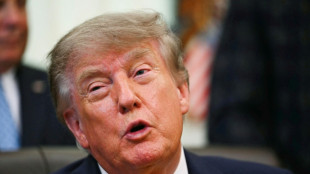 Trump says envoys taking plan to 'end the war' to Moscow, Kyiv

 US Football Hall of Fame revamps selection process

 Judge declares mistrial in case of US woman who killed her children

 Edgar Davids art thief misses sentencing after being 'knocked out by luggage'

 Pegula rallies to reach US Open fourth round
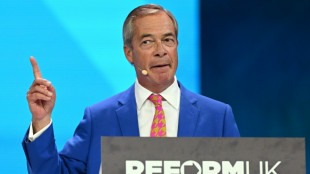
 Defending champ Sabalenka leads way into US Open fourth round
As a law that could get TikTok banned in the United States is poised to go into effect, here is a look at the rise of the video-sharing social media platform.
- Genesis -
In 2016, Beijing-based ByteDance launched Douyin, an app for sharing short videos, in the Chinese market.
ByteDance released TikTok for the international market the following year, shortly before buying "lip-synching" app Musical.ly and merging it into TikTok.
The social network became a hit, with its algorithm serving up endless collections of short, looping and typically playful videos posted by users.
- Pandemic boom -
TikTok's popularity soared during the Covid-19 pandemic declared in 2020, as people enduring lockdowns relied on the internet for diversion and entertainment.
As a result, authorities worldwide began eyeing TikTok's influence and addictive appeal.
TikTok became one of the most downloaded apps in the world, as officials grew increasingly wary of the potential for the Chinese government to influence ByteDance or access user data.
India banned TikTok in July 2020 due to tensions with China.
- Targeted by Trump -
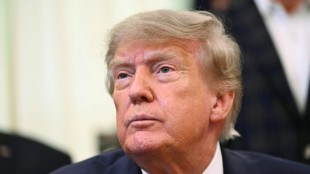
While Donald Trump was US president in 2020, he signed executive orders to ban TikTok in the United States.
Trump accused TikTok, without proof, of siphoning off US users' data to benefit Beijing and of censoring posts at the direction of Chinese officials.
Trump's decision was made as his government clashed with Beijing on an array of issues.
During a failed bid for reelection in 2020, the Republican continued to campaign on an anti-China message.
Between legal challenges and Trump's loss to Joe Biden in that year's presidential election, the executive orders did not take effect.
- Billion mark -
In September 2021, TikTok announced it had one billion monthly users worldwide.
But concerns grew about TikTok users facing risks of addiction, propaganda and spying.
In 2022, BuzzFeed reported that ByteDance employees based in China had accessed TikTok users' non-public information.
ByteDance tried to cool privacy concerns by hosting user data on servers managed in the United States by Oracle.
The move did not ease concerns, however, with TikTok banned from devices used by the US military.
An array of other government agencies and academic institutes followed suit, forbidding members from using TikTok.
TikTok's Singaporean chief executive Shou Chew was grilled by members of the US Congress during a six-hour hearing in March 2023.
- Sell or go -
TikTok was back in the hot seat in the United States in 2024 when President Joe Biden authorized a law requiring TikTok to be banned if ByteDance does not sell the app to a company not associated with a national security adversary.
Washington's stated aim was to cut the risk of Beijing spying on or manipulating TikTok users, particularly the 170 million US users of the app.
TikTok remains adamant that it has never shared user data with the Chinese government or done its bidding at the social network.
ByteDance sued the US government, arguing the law violates free speech rights.
A final decision in that case was made Friday by the US Supreme Court, which upheld a law going into effect on January 19.
In a major defeat for TikTok, the court ruled that the law does not violate free speech rights and that the US government had demonstrated legitimate national security concerns about a Chinese company owning the app.
President-elect Trump, who returns to office on Monday, has signaled he might intervene on TikTok's behalf.
The company, however, has said that unless the outgoing Biden administration makes "definitive" assurances that the law will not be implemented, it would be forced to "go dark."
B.Baumann--VB