US tech titans ramp up pressure on EU / Photo: © AFP

 Redmi Note 18 5G Battery Specs Leaked: Larger Capacity in Chinese Variant

 COP31 Presidency Publishes First Draft Cover Decision on Climate Action
 EU Club Group Files Antitrust Complaint Against UEFA Over Prize Money

 Heat and El Niño Drive Surge in Preterm Births Across Southern Africa

 China's Factory Activity Contracts as Export Orders Weaken
 US Retail Sales and Fed Minutes Set Up a Critical Test for Consumers

 Oil Heads for Second Weekly Loss as Supply Surplus Emerges
 Brazil Faces Debt and Inflation Test as Lula Prepares Fourth Term

 Canada Signals Openness to Chinese Automakers if US Trade Talks Fail
 US Mortgage Rate Falls for Fourth Week but Remains Above 7%

 13 Native American-Owned Restaurants in Arizona to Experience Indigenous Culinary Traditions

 Best Digital Photo Frames 2026: Aura, Skylight, and Amazon Compared

 UK Economy Grows 0.7% in Third Quarter as Services Lead Expansion

 India's Retail Inflation Reaches 6.09% as Food Prices Accelerate

 China's October Activity Data Reveal a Weak Start to the Fourth Quarter

 South Korea Launches Probe into NewJeans Contract Controversy

 Helen Rees Reflects on Four Decades of South Africa's HIV Journey
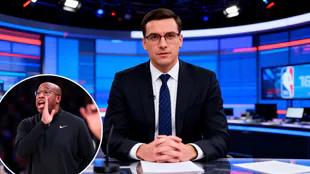
Mark Zuckerberg's U-turn on Meta's content rules piles pressure on the EU -- already in the crosshairs of Donald Trump ally Elon Musk -- to prove it still calls the shots when it comes to Big Tech's behaviour in Europe.
Barely two weeks before Trump's return to the White House, Zuckerberg dropped a bombshell Tuesday by pulling the plug on fact-checking at Facebook and Instagram in the United States -- and indicated changes could be coming to Europe too.
Zuckerberg accused Europe of passing an "ever increasing number of laws institutionalising censorship" -- echoing escalating rhetoric from X owner Musk, who has long railed at EU efforts to regulate the online space.
Brussels has bolstered its legal arsenal for targeting the world's biggest digital platforms -- though since Trump stormed to victory the bloc has avoided concrete action against US tech companies, apparently for fear of angering the incoming leadership.
Meta says it has no present plans to end its fact-checking operations in the European Union, and would review its EU obligations before making any changes.
But according to several sources, the group sent a risk assessment report to the European Commission on Tuesday concerning changes to its content policies.
AFP currently works in 26 languages with Facebook's fact-checking programme, including in the United States and the European Union.
- Silence as 'a choice' -
Faced with Zuckerberg's accusation of "censorship," the European Commission said it "absolutely" rejected the claim, insisting "freedom of expression lies at the heart" of its content moderation landmark law, the Digital Services Act (DSA).
"Promoting the truth is not censorship, democratic regulation is not an illegitimate obstacle," agreed Thibaut Bruttin, director general of Reporters Without Borders.
But beyond that the EU declined to comment on Meta's decision to axe fact-checking in the United States -- which disinformation experts fear risks opening the floodgates for false narratives.
The commission's silence is part of a pattern: it has stayed resolutely out of the fray as Trump ally Musk has goaded European leaders with a series of incendiary outbursts in recent days.
Neither EU chief Ursula von der Leyen nor her commissioners in charge of tech policy have uttered a public word, for instance, about Musk's planned live chat with the leader of the far-right Alternative for Germany (AfD) -- a party he is fervently backing ahead of national elections.
Silence is a "political choice for the moment not to feed this debate any further", von der Leyen's chief spokesperson, Paula Pinho, said Tuesday.
- 'Fuel to the fire' -
"There is probably a desire, perhaps wrongly, not to attack Trump and Musk head-on, for fear of the reactions," said Alexandre de Streel, an expert at the Center on Regulation in Europe (CERRE) think tank.
Pressed on the twin offensive from Musk and Zuckerberg, the commission has stressed the DSA does not define what is allowed online -- but rather tells platforms to adhere to existing national laws on digital content.
Using independent fact-checkers, for instance, is not required by EU rules -- though doing so can be one way for firms to meet their obligations to tackle disinformation.
Regarding Musk's support for the German extreme-right, Brussels has stressed he has the right to express opinions -- but that the EU will monitor this week's live chat to understand whether Musk unfairly used X's algorithms to boost the AfD.
The EU in December 2023 launched a DSA probe into X but has yet to make any formal decision on how the platform tackles illegal content and information manipulation.
According to de Streel, these violations can be "very difficult to prove".
"It's clear that if von der Leyen's commission were to open proceedings against Musk, it would add more than just fuel to the fire," said Umberto Gambini, of European affairs consultancy Forward Global.
Implementing the DSA "remains very political", Gambini told AFP.
- Stricter with others? -
Not everyone is happy with the commission's stance -- on Musk in particular.
"Either the European Commission applies with the greatest firmness the laws that we have given ourselves to protect our public space, or it does not do so and then it will have to agree to give back the capacity to do so to the EU member states," French Foreign Minister Jean-Noel Barrot said.
The newfound reticence is not limited to Meta or X.
On the day of the US election last year, news broke that Apple was set to face a fine under the bloc's new tech competition law, the Digital Markets Act, but two months later, the penalty has yet to arrive.
Sources close to the matter said von der Leyen's cabinet froze plans to fine Apple, fearing any sanction could hurt fragile transatlantic ties under Trump.
The contrast is striking with firms from outside the United States.
The commission in December opened a probe into TikTok owned by China's ByteDance following allegations the platform was used by Russia to sway the result of Romania's later annulled presidential election.
S.Gantenbein--VB