-
 South Africa economy shrinks ahead of local elections
-
Napoli's McTominay has successful heart procedure

-
 CapTLX Expands Institutional-Oriented Platform for Access to U.S. Capital Markets
-
Two Renoir paintings missing after break-in at France museum
-
 UK's Prince George starts at Eton College
-
Oil prices jump, stocks drop as Mideast war flares
-
 French far right keeps guarded silence over AfD Germany triumph
-
South Lebanon town buries its dead after Israeli strike

-
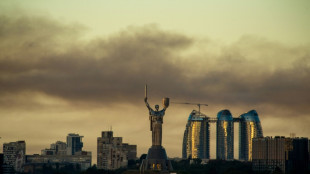 Russia-Ukraine talks possible this month, Zelensky says, as Moscow pounds Kyiv
-
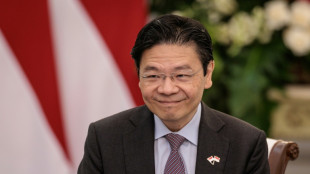
Singapore to bump cabinet wages, already world's highest
-
 Turkish Airlines will be new Liverpool shirt sponsor in £300 mn deal
-
Saudi vows response as Houthis hit oil sites in worst attack in years

-
 On London's Brick Lane, a data centre sparks local battle
-
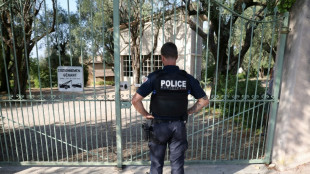
Thieves steal Renoir paintings from France museum
-
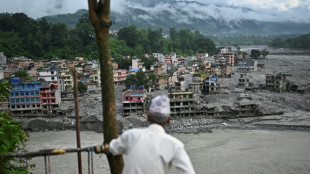 Nepal flood death toll rises as rescuers scour tunnels
-
Nicaragua accuses Germany of multiple violations of law in Gaza genocide case
-
 France's Mistral sees value soar with 3 bn euro cash infusion
-
Dutch peanut butter artwork proves a sticky attraction
-
 Nepal glacier saw exceptional heat before collapse caused deadly floods: researcher
-
Forex Expo Dubai to Take Place as Scheduled on 22–23 September 2026
-
 Ethiopia boosts drone production to fight rebels
-
Russia pounds Kyiv, ending three-day halt for US talks
-
 Yemen rebels hit Saudi Arabia with wave of strikes, wounding 73
-
Flights resume gradually in Indonesia after volcanic eruption
-
 Nepalis mark a year since deadly protests that toppled government
-
French AI firm Mistral valued at 21 bn euros after latest funding
-
 Rubio launches Latin America tour to cement US influence
-
Sweden heads to the polls in close election race
-
 France tries 14 over deadliest Channel migrant crossing disaster
-
Australia's Big Bash T20 teams face sale to private investors
-
 Australia threatens hefty fines if big tech fails 'duty of care'
-
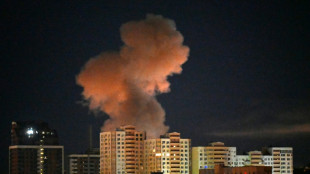
Russia resumes strikes on Kyiv after three-day halt
-
 Zverev romps into quarter-finals as Darderi downed
-
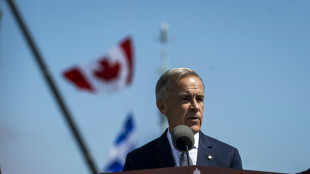
Canada's counter-tariffs take effect on various US goods
-
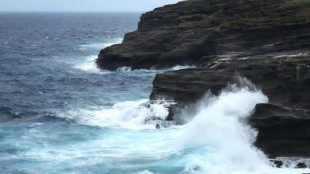 Kauai on tornado watch as Hurricane Lowell nears Hawaiian islands
-
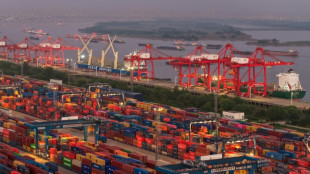
China's trade booms as focus turns to expected Trump-Xi summit
-
 Pakistan roll the dice in search of consolation win over England
-
Is Champions League three-peat really possible for PSG?

-
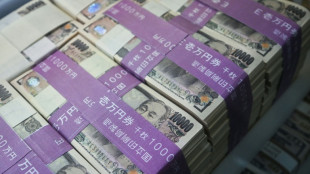 Yen extends gains as traders eye rate hike, tech rallies again
-
Russia pummels Kyiv after three-day halt
-
 'The ber months': Christmas arrives early in the Philippines
-
Mongolians wait hours for fuel as reliance on Russia bites
-
 N. Korea calls Russia bridge a sign of tighter ties
-
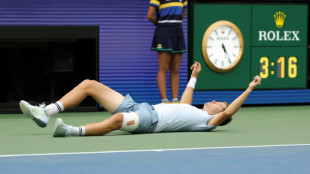
Blockx first Belgian man to reach US Open quarter-finals
-
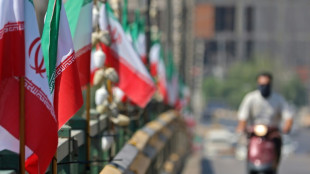 US sanctions threaten to crush Iranian students' dreams
-
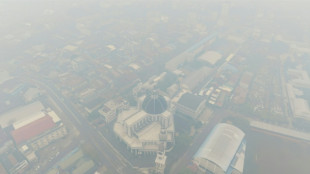
Praying for rain as fires, haze plague Indonesian Borneo
-
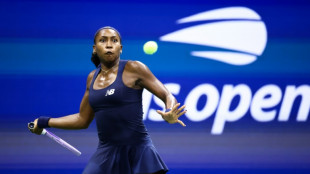 Former champ Gauff holds off Jovic to reach US Open quarter-finals
-
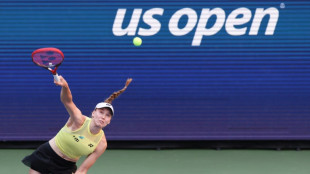
Rybakina tops Osaka, sets US Open quarter-final clash with Zheng
-
 A New Force in the Surf Park Economy
-
OMP Asia Conferences to Showcase How Industry Leaders Kraft Heinz, Mars, Medac, And Nestlé Approach AI-Powered Supply Chain Planning At "Decision Velocity"

Osaka Expo 'Grand Ring' a symbol of unity: architect
A towering wooden "Grand Ring" built for Expo 2025 in Osaka pays homage to Japan's architectural history and is a symbol of unity despite criticism over costs, its creator says.
The two-kilometre (1.2-mile) circumference of Sou Fujimoto's striking structure will surround dozens of national pavilions at the six-month-long event from April.
World Expo, held every five years in different locations, allows participating countries to show off their technological and cultural strengths.
Organisers have struggled to rouse enthusiasm for the 2025 event, facing slow ticket sales and public concern over the ballooning construction budget.
But Fujimoto, one of Japan's top architects, told AFP there is a deeper value to the 34.4 billion yen ($220 million) Grand Ring than just its price tag.
The Expo is a "really beautiful, precious opportunity where so many different cultures... and countries come together in one place to create diversity and unity", the 53-year-old said under the Ring's imposing latticed beams.
Such an event facilitates international exchange, even as conflicts rage in Ukraine, Gaza and elsewhere, and to illustrate this concept "the simplest shape is a circle."
Traditional techniques for joining wooden pillars inspired by the famous raised platform at Kiyomizu Temple in nearby Kyoto were used to construct the Grand Ring.
So the Expo is also a "wonderful occasion to show that Japan has a long history" of wooden buildings, Fujimoto said.
- Skywalk -
Japanese cedar and hinoki wood, as well as stronger European red cedar, were reinforced with metal to make them quake-resistant.
The wooden beams hold up a sloping roof, 20 metres (65 feet) tall at its highest point, to protect visitors from the elements as they wander through at ground level.
The roof doubles as a "skywalk" with views of the surrounding area.
Despite that, only 7.4 million tickets had been sold by December -- half the organisers' target.
Inflation and labour shortages have meanwhile driven the total construction budget up 27 percent from 2020 estimates to hit 235 billion yen ($1.5 billion).
Fujimoto has argued that the budget increase was partly because of rising prices linked to the Ukraine war, "which no one could have predicted".
"The Ring was created with ingenuity, to have the maximum impact within a limited budget by consolidating various functions," he wrote on social media platform X.
Fujimoto told AFP that using wood for the Grand Ring was a sustainable choice, referring to the "beautiful cycle" of trees absorbing carbon dioxide.
However, how renewable the Ring really is has been questioned.
Japan's Yomiuri Shimbun daily reported in December that just 12.5 percent of the temporary structure will be reused after the Expo -- down from the original plan of 25 percent.
- 'Beyond your imagination' -
Fujimoto's previous work includes "L'Arbre Blanc", a multipurpose tower in France's Montpellier, and a spindly white lattice for the 2013 Serpentine Pavilion in London.
As a child in northern Hokkaido where he used to play in the forest, Fujimoto realised the importance of "the wonderful relationship between nature, architecture and people".
He enjoyed making things, influenced by his doctor father who used to paint and make sculptures.
But he discovered architecture aged 14 when he read the only book on the topic at his home, about Spain's Antonio Gaudi.
"At that time, Gaudi seemed too extreme to me. So I couldn't imagine I could be something like that," he laughed.
The young Fujimoto, who admired Albert Einstein, first studied physics at the prestigious University of Tokyo.
But he "couldn't understand anything" and so switched to architecture, setting up his own company in 2000, six years after graduation.
Fujimoto said he does not know where his passion for architecture comes from but, when a design like the Grand Ring comes to life, it is "beyond your imagination".
"And that is amazing."
D.Schaer--VB