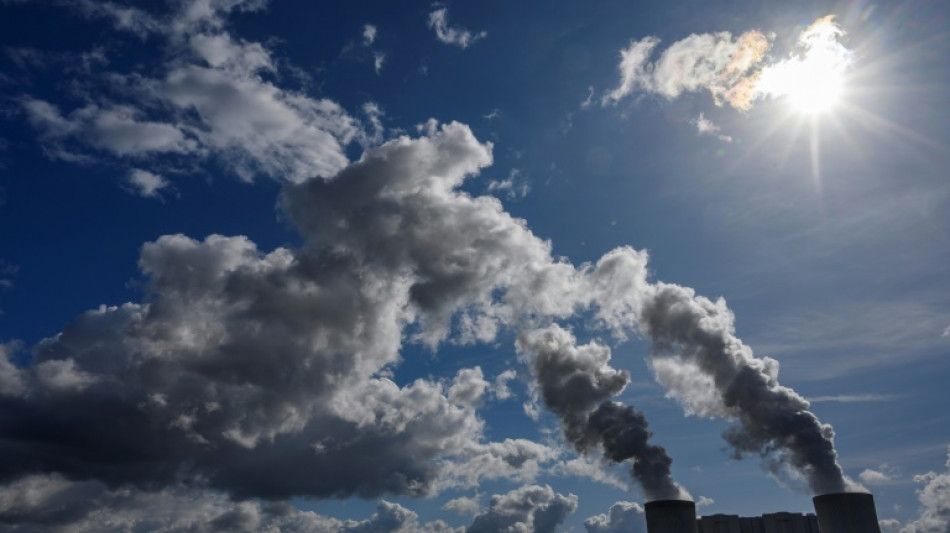
Coal phase-out fuels far right in rural eastern Germany / Photo: © AFP/File

 Typhoon Dujuan leaves four dead in Japan, 45,000 houses without power

 G7 leaders condemn Houthi strikes on Saudi Arabia

 Google data centre sparks protests in Austria

 Shin Ohashi: Junk food-loving teen and Japan's next big swimming hope

 Stocks rise on AI buzz, drop in oil prices

 China's robot dancers limber up for America's Got Talent final

 Despite military might, Saudi struggles to crush the Houthis
 Trump to tout deals, defend Iran war in UN speech

 Sri Lanka to issue verdict in landmark Easter attack trial

 Macron says talks with Trump on Red Sea, Ukraine 'constructive'

 Green policies just good politics, says UK minister
 Bardot auction in Paris fetches nearly one million euros
 No timeline on Daniels injury return, says Commanders coach

 British Columbia sues OpenAI in US court over Canada school shooting

 French star Batum retires after 18-year NBA career

 Zidane leads first France training session
 Man shot by ICE agent in Texas detained with bullet inside him: lawyer
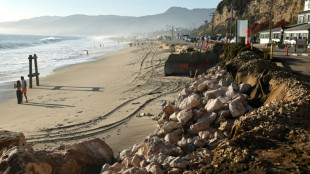 California declares state of emergency ahead of El Nino

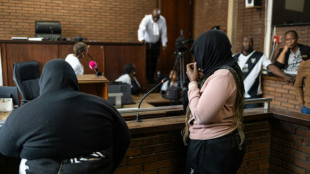 South Africa arrests three more suspects, after nine women murdered

 Carse needs time away from England, says captain Brook

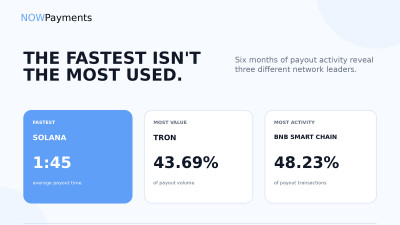 NOWPayments Releases Cross-Chain Payout Data Revealing Key Performance Benchmarks Across TRON, BNB Chain, and Solana

 British Museum bans photos of Bayeux Tapestry as crowds linger
 COP31 host says AI climate footprint to be a summit priority

 Berlin's far-left vote winners reject anti-semitism charges

 Mancini eager for 'new adventure' on Italy return

White clouds still billow from the cooling towers of a coal plant near Spremberg in Germany's ex-communist east but the end is in sight as Berlin phases out the dirty fossil fuel.
Thousands of jobs have already been lost in the region, where wind farms now rise near abandoned open-pit mines and many people look with dread towards 2038, the deadline for the "coal exit".
Their fears help explain the strong local support for the far-right Alternative for Germany (AfD), which does not just rail against migrants but also rejects the green energy push and questions man-made climate change.
At local elections held in Spremberg in June, the AfD scored 39.3 percent -- an omen ahead of regional elections next Sunday in the state of Brandenburg, which polls suggest it could win.
Lignite, or brown coal, may be a climate killer, but since the 19th century it has been key to the identity of the Lusatia industrial region on the Polish border, known as the Lausitz in German.
"Thousands of people here have been linked to coal their whole working lives," said the town's mayor, Christine Herntier, an independent who has held the post for a decade.
"We are proud of our tradition," said Herntier, 67, pointing to a huge map on her office wall of the Schwarze Pumpe plant and its surrounding industrial complex.
Most people in Spremberg, population 25,000, have grudgingly accepted the coal phase-out plan, under which the government has earmarked billions for structural transition plans, she said.
But, she added, ahead of the state election the winding down of coal "is still a big issue".
- Anger over wind farm -
Michael Hanko, the AfD's top representative in Spremberg, said he is certain that the looming demise of the lignite industry is "one of the main reasons" residents are voting for his party.
"I don't think the government has really got them on board with this whole prescribed transformation, saying that we now have to do everything with renewable energies," Hanko said.
The AfD, founded about a decade ago, scored a triumph earlier this month when it won an election in the eastern state of Thuringia and came a close second in Saxony.
It now also has a good chance of winning in Brandenburg, the state that surrounds Berlin, where it is polling narrowly in first place at around 27 percent.
When the German government decided five years ago to phase out coal, it pledged around 40 billion euros ($44 billion) to help coal regions adapt, with 17 billion euros for the Lausitz alone.
Much of the money is intended to flow into developing the renewables and hydrogen sectors, helping the region maintain its identity as an energy hub.
But residents complain the investment has been too slow to materialise and is flowing into the wrong places.
In Spremberg, plans to extend a nearby wind park have caused outrage among some locals, who fear it will be a threat to 150-year-old trees, a protected swallow species and drinking water.
- 'Something different' -
Coal has long been synonymous with the Lausitz region, which takes in parts of Brandenburg and Saxony and a small strip of Poland, and where lignite was discovered in the late 18th century.
But the industry all but collapsed after German reunification in 1990, when most of the region's open pit mines were shut down and thousands of jobs vanished.
Today, only around 8,000 people are employed in the lignite industry across the Lausitz, with 4,500 of them in Brandenburg, though the industry is still one of the largest private employers in the state and coal remains a strong part of the region's identity.
Already weary from the problems caused by reunification, people in the region have felt "overwhelmed" by recent global challenges, said Lars Katzmarek, a board member of the Pro-Lausitz campaign group.
"The coronavirus, the energy crisis, the Ukraine war -- these are all very difficult things that people still haven't fully digested... and perhaps at some point they just close their ears," he said.
On a rainy morning in Spremberg, Joachim Paschke, 81, who used to work in mechanical engineering and welding, was buying bread rolls in the bakery opposite the town hall.
"I'm definitely not an AfD supporter but I can understand people who are," he said.
"The established parties have nothing concrete and the AfD is offering something different. People want change."
S.Spengler--VB