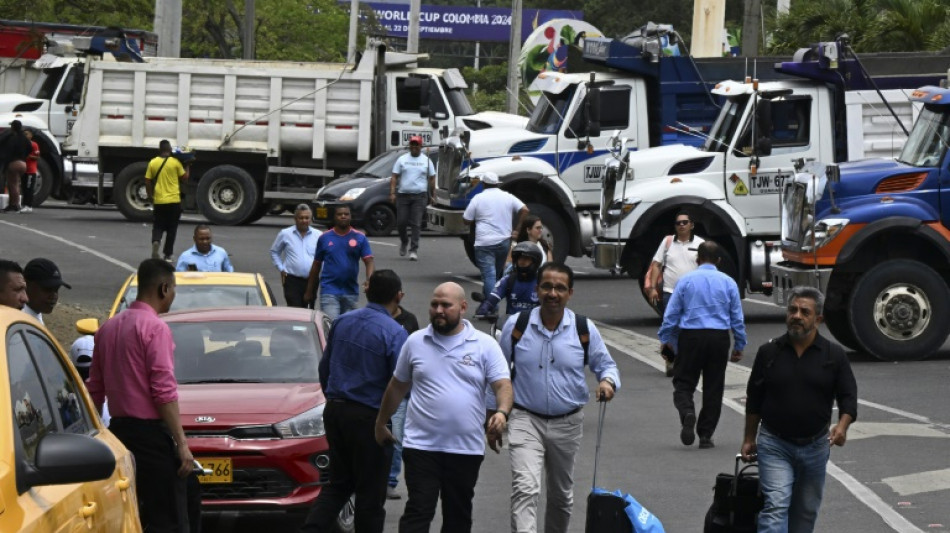
Colombian police break up road blockades against diesel price hikes / Photo: © AFP

 Saudi PIF Retains Top Sovereign Wealth Fund Brand Title for Third Year

 Phoenix Weekend Guide: Sangria Socials, Pie Markets, and New Brunch Spots

 Trent Perry’s Late Heroics Lift No. 7 UCLA Past Cal State Fullerton

 2027 Hyundai Elantra Review: Brutalist Design and Expanded Dimensions

 Malta Maritime Forum Study Reveals €1 Billion Economic Contribution Amid Growth Concerns

 China Condemns Chile-Belgium Joint Bid for High Seas Treaty Headquarters

Colombian police moved in Thursday to break up road blockades in and around the capital on the fourth day of protests against a rise in diesel prices.
Hundreds of trucks have barred roads since Monday around Bogota and other cities in a show of anger against a 20-percent increase in the price of a gallon of diesel to $2.70.
Bogota Mayor Carlos Fernando Galan said on X that anti-riot police had intervened with national government approval "to lift blockades" in five critical points in and around the capital of some eight million people.
In its last report, the police said there had been 120 permanent blockades and 82 other associated disturbances countrywide, forcing many people to walk or cycle to work, and disrupting deliveries and businesses.
The government had made an appeal Wednesday for truckers to create safe corridors for food supplies amid warnings of looming shortages.
The main wholesale food market in Bogota had registered a 40-percent reduction in deliveries received, and the Colombian pharma association said 30 percent of all medicine deliveries have been held up.
State oil company Ecopetrol suspended activities at five oil fields as blockades interrupted operations.
Colombia's left-wing President Gustavo Petro is on a drive to phase out subsidies that have kept fuel prices frozen since the Covid-19 pandemic.
The diesel price hike, which came into effect on Saturday, affects the cost of shipping most goods in a country where 90 percent of commodities are transported by road.
The government argues that the new diesel price is still one of the cheapest in the region.
Petro, the country's first-ever leftist president, has accused "powerful" figures in the business community of being behind the protests and insisted the fuel subsidies were fiscally unsustainable.
H.Gerber--VB

