
Pope, plugging for books, reveals his love for tragedies / Photo: © AFP

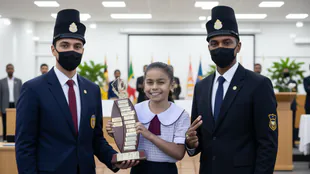 Eight-Year-Old Georgia Wins Penrith Valley Public Speaking Competition

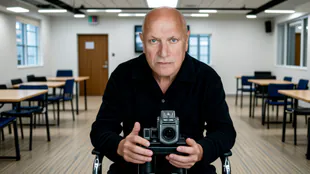 Steven Berkoff on Memory and His New Autobiography 'Shouting At Night'
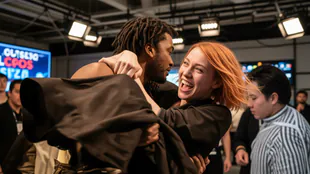
 Jimmy Carr Confirms 25-Year Estrangement From Father Amid Podcast Reflections

 Arizona Superintendent Tom Horne to Leave Office, Plans Law Practice and Charter School

 Japan and Peru Mark 150 Years of Diplomatic Ties Amidst Trade and Investment Talks

 Ian Jackson Scores Game-High 22 Points After Rick Pitino's Prank Suspension

Pope Francis's bookish side emerged Sunday, after the Vatican published a letter in which the pontiff encourages young priests to read --- while revealing that he himself likes the great tragedies.
"How can we speak to the hearts of men and women if we ignore, set aside or fail to appreciate the 'stories' by which they sought to express and lay bare the drama of their lived experience in novels and poems," asked the pontiff in his July 17 letter to priests-to-be, published by the Vatican on Sunday.
In the lengthy text -- peppered with references to literary greats like C.S. Lewis, Marcel Proust, T. S. Eliot and Jorge Luis Borges -- Francis argued that reading was "part of one's path to personal maturity" and therefore crucial not just for those joining the priesthood but all Christians in general.
Noting that Paul the Apostle was a reader, Francis plugged for time spent reading, noting that a good book can "(keep) us from other choices that are less wholesome" and open up minds "trapped by a few obsessive thoughts".
"In moments of weariness, anger, disappointment or failure, when prayer itself does not help us find inner serenity, a good book can help us weather the storm until we find peace of mind," wrote the 87-year-old Argentine Jesuit.
Reading -- which he noted requires greater personal engagement than watching films or television -- improves one's vocabulary, develops intellectual capacity and reduces stress and anxiety, Francis argued, adding that he regretted that literature was considered non-essential in the training of priests.
- An 'open mind' -
"We desperately need to counterbalance this inevitable temptation to a frenetic and uncritical lifestyle by stepping back, slowing down, taking time to look and listen. This can happen when a person simply stops to read a book," he wrote.
In a personal aside, Francis recalled teaching high school literature at a Jesuit school at the age of 28, encountering resistence from students who did not want to read certain selections.
Arguing that even difficult or boring texts had value, the pope said people should approach reading with "an open mind" and "a willingness to be surprised."
"I, for my part, love the tragedians, because we can all embrace their works as our own, as expressions of our own personal drama," he said.
"In weeping for the fate of their characters, we are essentially weeping for ourselves, for our own emptiness, shortcomings and loneliness."
Seeing life through the eyes of others through literature leads to greater perspective and greater humanity as readers step out of their own lives to enter that of others, Francis wrote.
"We are caught up in the lives of the fruit seller, the prostitute, the orphaned child, the bricklayer’s wife, the old crone who still believes she will some day find her prince charming," he said.
Immersing oneself in the thoughts and fears of characters facing daunting challenges has hidden benefits, wrote Francis.
"Perhaps too, in following a story to the end, we gain insights that will later prove helpful in our own lives."
R.Kloeti--VB


