Russia loses a million people in historic population fall / Photo: ©

 Multi-Asset Trading Venue Monochrome Exchange Announces IEO of Its Native Token, $MCR
 South Korea break Japan hearts to win Asian Games basketball gold

 Acosta takes first victory at Austrian MotoGP
 PSG president Nasser al-Khelaifi under investigation in France for conflict of interest

 China swim sensation, 13, sets Games record after Japan win early

 Drones hit Moscow as Russians go to the polls

 New England boss Fleming says 'wrong' to ask Stokes to end retirement

 Germans vote in elections threatening fresh blow to Merz
 US fears rapid escalation in Mideast after Houthis attack Riyadh

 Japan triathlete Hojo wins first gold of Asian Games
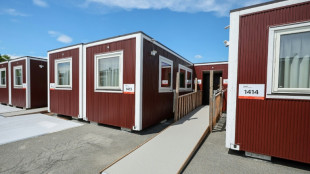 IOC president impressed by 'beautiful' Asian Games wooden huts

 First Asian Games gold goes to Japan as China's 13-year-old Yu lights up pool
 Data centre command hub keeps AI up and running
 Pope Leo in France: the issues on the table
 Packing for a pope: behind the scenes on foreign trips

 Republicans find transgender issues a powerful political weapon in midterm campaigning

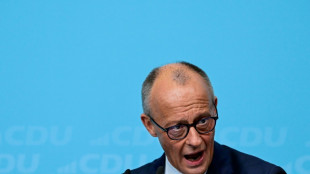 German state elections threaten new shock waves for Merz

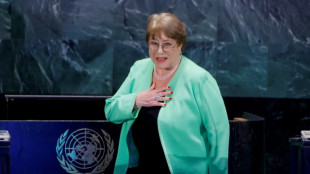 Chile's Bachelet quits race to be next UN chief

 Raphinha treble fires perfect Barca to win at Sevilla

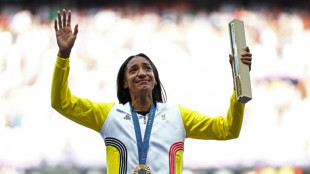 Thiam makes winning heptathlon return at Decastar meet

 Czechs beat USA to qualify for Davis Cup finals
 Dortmund sink Stuttgart to climb to Bundesliga summit

 Trump says will not tolerate attempts to slow AI growth

 'It has to stop': runners protest women's murders in S.Africa district

 Fire erupts near Riyadh airport as Houthis claim strikes

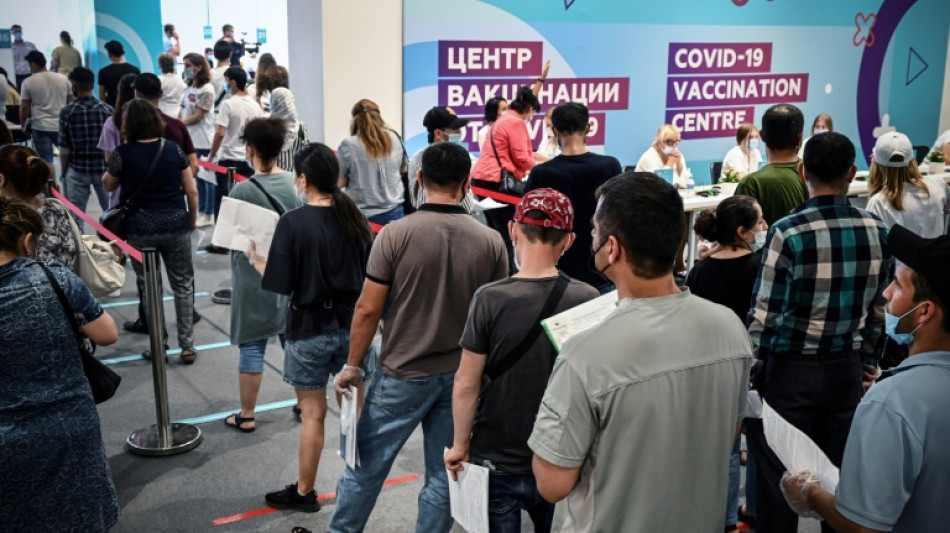
Russia's population declined by more than one million people in 2021, the statistics agency Rosstat reported Friday, a historic drop not seen since the collapse of the Soviet Union.
Ongoing demographic woes have been exacerbated by the pandemic with Rosstat figures showing more than 660,000 had died with coronavirus since health officials recorded the first case in the country.
The new figures continue a downward trend from the previous year when Russia's population fell by more than half a million.
The Covid-related fatalities figures published monthly by Rosstat are far higher than death figures released by a separate government website, which is dedicated to tracking the pandemic in the country.
Those government website figures only take into account fatalities where the virus was established as the primary cause of death after an autopsy and shows just 329,443 total fatalities.
The discrepancy has fed into criticism that the Russian government has been downplaying the severity of the pandemic in one of the worst-hit countries by cases in the world.
Russia has struggled to curb the pandemic due to a slow vaccination drive coupled with limited restrictive measures and rampant non-compliance with mask-wearing in public places.
The pandemic death toll exacerbates the demographic crisis, linked to low birth rates and a short life expectancy, that Russia has faced for the past 30 years.
Birth rates have been falling because the generation now becoming parents were born in the 1990s, when the birth rate plunged due to economic uncertainties after the collapse of the Soviet Union.
The number of births per woman stands at around 1.5, well short of the minimum of 2.1 necessary to renew the population.
- Economic concerns -
Russia's shrinking population has been at the top of President Vladimir Putin's domestic agenda since he came to power over two decades ago.
In addresses to the nation, Putin frequently encourages Russians to have more children and live a healthier lifestyle to improve life expectancy.
The government has introduced a number of financial incentives for parents with more than one child, such as cash bonuses and favourable mortgage rates.
During his annual press conference last December, Putin stressed that 146 million people are not enough for the country from a "geopolitical standpoint" and leave labour shortages.
He added that it is important to show that it is a "joy to have children" and that there is "no greater happiness in life and in the world".
"The demographic crisis is definitely a failure of the state's policies," said Sergei Zakharov, a demography expert at the Higher School of Economics based in Moscow.
He told AFP that measures to increase the birth rate encourage families to have children earlier but do not change how many children they want in total.
He said the government's influence on birth rates is "limited" and shifting births to an earlier period will result in a "demographic gap" in the future.
For Stepan Goncharov of the independent Levada Centre pollster, the low birth rate is connected to widespread "uncertainty about the future".
Living standards in Russia have continuously deteriorated since 2014, with the economy strained by repeated Western sanctions, dependence on the oil and gas sector and widespread corruption.
"People haven't stopped buying and their income and savings have reduced," Goncharov said.
According to last year's survey by recruitment website SuperJob, 43 percent of Russians do not have any savings.
"People are not setting money aside and are not planning the future of the family," Goncharov added.
M.Furrer--BTB