China's leaders to meet, with all eyes on struggling economy / Photo: © AFP

 Brazil football clubs face massive sponsorship blow from betting ban

 ChatGPT maker wants to be the App Store for AI as safety concerns grow

 Women fight fires and sexism in Indonesian Borneo

 Forsling's OT blast lifts Florida over Carolina in NHL opener

 Hurricane Polo sweeps over Mexico's Pacific coast, heads inland

 Grynspan pulls ahead in race to lead UN: diplomat

 Trump touts AI boss pledge to self-regulate
 Oil down, but stocks lower as bond yields rise

 England break down stubborn Czechs to claim first Nations League win

 UN Security Council extends Haiti anti-gang force by 6 months

 Manchester City guilty of Premier League charges: What comes next?

 Man City chief Soriano slams Premier League 'conspiracy theory'

 Hurricane Polo sweeps over Mexico's Pacific coast

 Man City must be relegated after guilty verdict says club's former chairman

 German far-right aims to lead Saxony-Anhalt govt in December

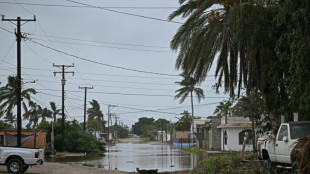 Little damage as Hurricane Polo sweeps over Mexico's Pacific coast
 Manchester City guilty of breaking financial rules - Premier League

 FIFA boss Infantino blasted as would-be 'emperor' by UEFA's Ceferin

 Stocks move lower despite oil prices dropping

 AI driving up innovation investment: UN

 UN Security Council extends Haiti mission by 6 months

 Man Utd do not deserve medals if Man City stripped of titles: Rooney

 Vana Completes Expanded Staking as Part of the Vega Upgrade, Publishes Expanded VANA Token Economics

 Spain to cap gas price hikes, extend fuel discounts
 'We just need rain': Germany's Rhine river hits new low

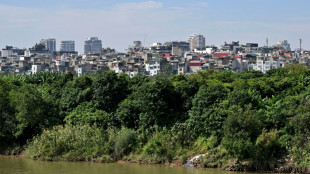
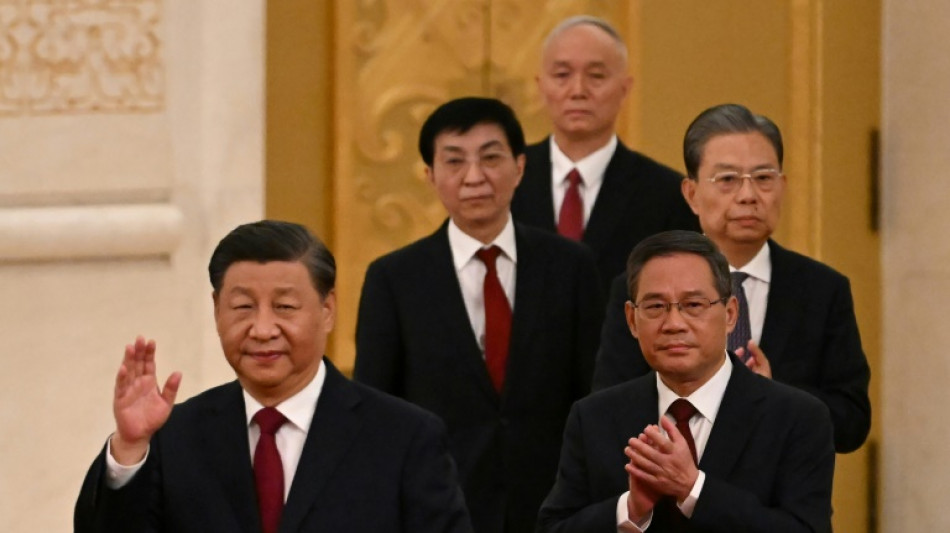
Top Chinese officials gather in Beijing on Monday, with all eyes on how they might kickstart lacklustre growth at a key political meeting that has historically seen officials unveil big-picture economic policy changes.
The world's second-largest economy is grappling with a real estate debt crisis, weakening consumption, an ageing population and geopolitical tensions.
President Xi Jinping will oversee the ruling Communist Party's secretive Third Plenum, which usually takes place every five years in October, though Beijing has offered few hints about what might be on the table.
State media in June said the delayed four-day gathering would "primarily examine issues related to further comprehensively deepening reform and advancing Chinese modernisation", and Xi has said the party is planning "major" reforms.
Analysts are hoping those pledges will result in badly needed support for the economy.
"The upcoming plenum can't come soon enough," Sarah Tan and Harry Murphy Cruise wrote in a note for Moody's Analytics last week.
Beijing should take decisive action to reform the property sector, loosen restrictions on internal migration, boost high-skilled jobs for graduates and modify the tax system to ease local government debt, they said.
But they added that leaders would "probably not" make sweeping reforms, instead choosing "a modest policy tweak that expands high-tech manufacturing and a sprinkling of supports to housing".
The People's Daily, the Communist Party's official newspaper, appeared to confirm those lower expectations when it warned last week that "reform is not about changing direction and transformation is not about changing colour".
Ting Lu, chief China economist at Nomura, said the meeting was "intended to generate and discuss big, long-term ideas and structural reforms instead of making short-term policy adjustments".
The Third Plenum has previously been an occasion for the party's top leadership to unveil major economic policy shifts.
In 1978, then-leader Deng Xiaoping used the meeting to announce market reforms that would put China on the path to dazzling economic growth by opening it to the world.
And more recently following the closed-door meeting in 2013, the leadership pledged to give the free market a "decisive" role in resource allocation, as well as other sweeping changes to economic and social policy.
- Growth figures expected -
This year's conclave will begin the same day China is due to release its growth figures for the second quarter, although authorities have in the recent past delayed the publication of GDP results if they coincide with big events -- as they did during the CCP's 20th National Congress in mid-October 2022.
Experts polled by AFP expect China's economy to have grown, on average, 5.3 percent year-on-year between April and June.
Beijing has said it is aiming for five percent growth this year -- enviable for many Western countries but a far cry from the double-digit expansion that for years drove the Chinese economy.
Authorities have been clear they want to reorient the economy away from state-funded investment and instead base growth around high-tech innovation and domestic consumption.
But economic uncertainty is fuelling a vicious cycle that has kept consumption stubbornly low.
Among the most urgent issues facing the economy is the beleaguered property sector, which long served as a key engine for growth but is now mired in debt, with several top firms facing liquidation.
Authorities have moved in recent months to ease pressure on developers and restore confidence, including by encouraging local governments to buy up unsold homes.
Analysts say much more is required for a full rebound, as the country's economy has yet to bounce back more than 18 months after damaging Covid-19 restrictions ended.
"The case for reform is obvious," wrote Tan and Murphy Cruise of Moody's.
But, they said, "big policy shifts can be taken as an admission of failure".
D.Bachmann--VB