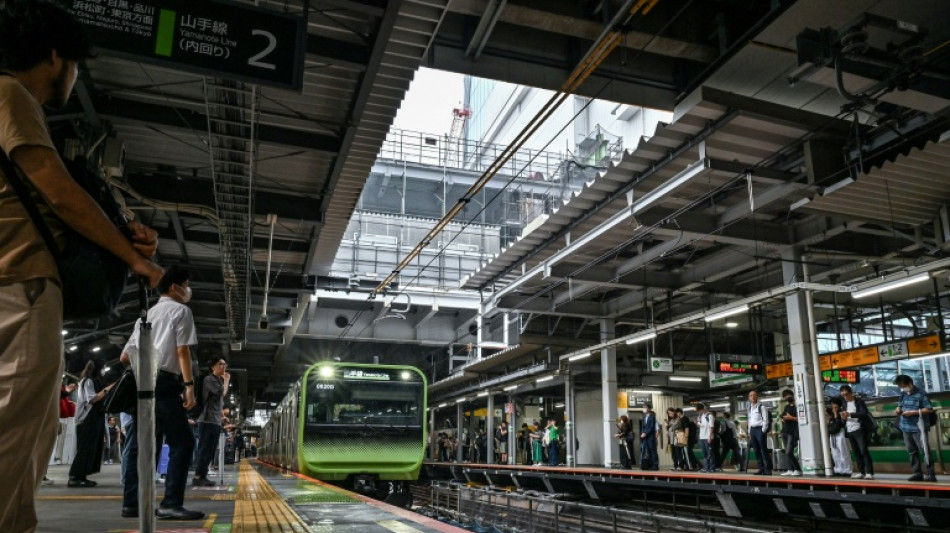
A station a day on Tokyo's teeming Yamanote Line / Photo: © AFP

 Pura Cyber Week Sale: 20% Off Fragrances and 30% Off Diffusers

 ALIX LASERS shareholders remove Michael Sobitsch as managing director in view of the circumstances

 Progressive Vision Wins Irish Healthcare Awards 2026 Innovation Prize for Office-Based Cataract Surgery

 Eight-Year-Old Georgia Wins Penrith Valley Public Speaking Competition

 Steven Berkoff on Memory and His New Autobiography 'Shouting At Night'

 Jimmy Carr Confirms 25-Year Estrangement From Father Amid Podcast Reflections
In service since 1885, the Yamanote is Tokyo's most important and most famous train line, with millions cramming into the 35-kilometre (22-mile) route's distinctive green carriages every day.
AFP photographer Richard A. Brooks photographed the Yamanote's 30 stations in June -- a different one every day -- capturing the hustle and bustle at the heart of the world's biggest urban area.
The elevated tracks loop around the centre of the Japanese metropolis in 60 minutes, connecting the main commercial, transport and tourist areas including the stations of Shinjuku, Shibuya and Tokyo.
Trains depart every two to four minutes, trundling clockwise and counter-clockwise -- "sotomawari" and "uchi-mawari" -- taking "salarymen" to offices, kids to baseball practice and lonely pensioners nowhere in particular.
Twenty-eight of the stations have safety platform doors, the first ones installed in 2011 after a visually impaired traveller fell onto the tracks.
T.Suter--VB


