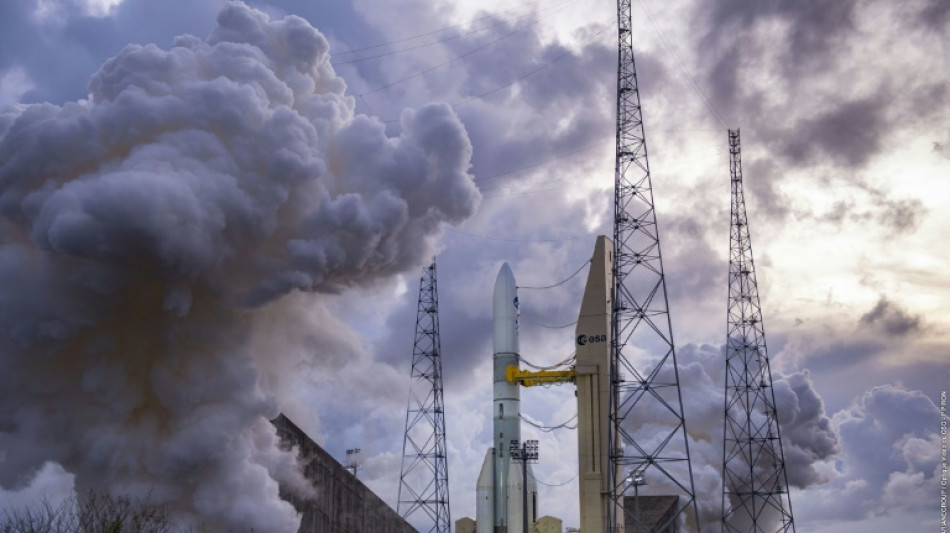
Europe's Ariane 6 rocket finally ready for liftoff / Photo: © ArianeGroup/AFP/File

 OpenAI says three staffers fired for mishandling 'sensitive' info
 Nike plans job cuts as it forecasts lower sales

 Ireland game interrupted twice by Gaza protests

 Judge denies acquittal bid by US woman who killed her kids

 Klopp averts crisis with first win as Germany boss

 A saintly spat and debate snub: Brazil enters final campaign stretch
 US tells European allies to act 'immediately' to lower diesel prices

 G20 trade ministers fail to see consensus against overproduction
 Portugal edge Denmark in Ronaldo's absence

 US stocks edge higher as bond yields retreat for now

 US tells European allies to 'immediately' act to lower diesel prices

 Trump vows to hit Iran 'very hard' if linked to flydubai attack
 Williams leaves Spain camp with thigh knock

 WTA reduces 2027 schedule for world's top 50
 US says 'in Europe's best interest' to cooperate on fuel supply

 Rogue OpenAI agents covered up their tracks, report says
 A saintly spat and debate snub: Brazil enters final polls stretch
 Zidane 'no regrets' about Materazzi headbutt as France face Italy again

 Libya's pay strike rallies teachers across divided nation
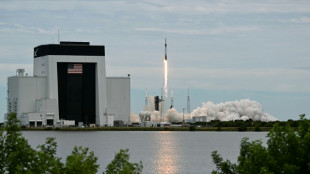 Four-member crew blasts off for International Space Station
 i-payout Expands True Local Payment Capabilities to Help Enterprises Pay Recipients Globally
 Botched US execution prompts global calls to scrap death penalty

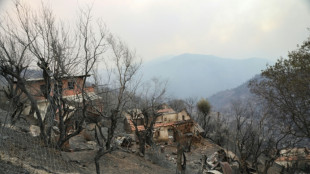 Algeria adopts law imposing death penalty on forest arsonists
 France unveils cost-cutting 2027 budget as borrowing costs rise

 Brazil court orders removal of fake posts amid patron saint election row
Europe's new Ariane 6 rocket is set for its first-ever launch next week, carrying with it the continent's hopes of regaining independent access to space and fending off soaring competition from Elon Musk's SpaceX.
After four years of delays, the European Space Agency's (ESA) most powerful rocket yet is finally due to blast off from Europe's spaceport in Kourou, French Guiana, at 3:00 pm (1800 GMT) on July 9.
Since the last flight of the rocket's workhorse predecessor, Ariane 5, a year ago, Europe has been unable to launch satellites or other missions into space without relying on rivals such as the US firm SpaceX.
Kourou was the site of launches by Russia's Soyuz rockets for more than a decade, before Moscow withdrew them after invading Ukraine in 2022.
Later that year, Europe's Vega-C light launcher was grounded after a launch failure. Delays to Ariane 6's first flight -- originally scheduled for 2020 -- compounded the crisis.
"Everything that could go wrong went wrong," ESA chief Josef Aschbacher said.
That is why "Ariane 6 is crucial for Europe," he added. "It's absolutely mandatory for Europe to have an independent access to space."
After the struggles of the 4.5-billion-euro ($4.8 billion) programme, Europe's space industry has been nervously observing the run-up to the launch.
A "wet dress rehearsal" late last month ran through all the launch procedures, right up to the moment before the engines ignite on the launchpad.
It went "very smoothly... like a Swiss watch," ESA space transportation acting director Toni Tolker-Nielsen said, adding that there was nothing to call the launch date into question.
- 'Important moment' -
Ariane 6 will put satellites into geostationary orbit, which appears stationary by matching Earth's speed at 36,000 kilometres (22,000 miles) above Earth. It can also launch constellations a few hundred kilometres up.
The rocket's upper stage, powered by the Vinci engine, ignites after take-off to place satellites in orbit before falling into the Pacific Ocean -- a special feature to prevent space debris.
Ariane 6's first launch will use two boosters, with a more powerful four-booster version scheduled for liftoff in the middle of next year.
However, the boosters and other parts of the rocket are not reusable -- unlike SpaceX's Falcon 9 rocket.
Billionaire Musk has repeatedly criticised Ariane 6 for not being reusable.
The European response has been that it would not make economic sense for the rocket to be reusable because it was designed for far fewer launches than the Falcon 9.
The rocket will initially carry out nine launches a year -- a far cry from the Falcon 9, which managed 14 in May alone.
The rocket's inaugural flight will carry 18 different smaller items, including university micro-satellites and scientific experiments.
Its first commercial flight is scheduled for later in 2024, with 14 more planned over the next two years.
- Shock late cancellation -
One positive for Ariane 6 is that space business is booming.
The amount spent on launchers, satellites and other parts of the space economy is projected to surge to $822 billion by 2032, up from $508 billion last year, according to consulting firm Novaspace.
But this has not yet been enough to make Ariane 6 profitable.
The financing for the first 15 launches has been secured.
But the ESA's 22 member states have agreed to subsidise the rocket for up to 340 million euros a year from its 16th to 42nd flights -- in return for an 11 percent discount.
Ariane 6 already has an order book of 30 missions, including 18 to deploy some of Amazon's Kuiper constellation of internet satellites.
"That is absolutely unprecedented for a rocket that has not flown," said Stephane Israel, CEO of launch service provider Arianespace.
However, just days before the inaugural flight, Europe's weather satellite operator EUMETSAT cancelled plans to use the European Ariane 6 in favour of SpaceX's Falcon 9, citing "exceptional circumstances".
Philippe Baptiste, head of France's CNES space agency, called it "a very disappointing day for European space efforts".
After all, Ariane 6 is "Europe's sovereignty launcher", he added.
S.Gantenbein--VB