
-
 Latvian partial election results suggest pro-European choice
-
Without lawyers, migrant children face deportation from the US
-
 In Egypt's Sinai, Gazan builds school for children displaced by war
-
Three-peat seeking Dodgers open playoffs with a win, Rays hold off Yankees
-
 Trump tariffs a mixed bag for US auto industry
-
Brazil votes in nail-biter polls closely watched by Trump
-
 Yemen government forces say struck Houthi targets
-
'Just be you': Kim reveals Tiger text that inspired him to gold

-
 Music links past, present for Pedro Pascal's cellist in 'Behemoth!'
-
Myanmar migrants returned to war-torn nation from Malaysia

-
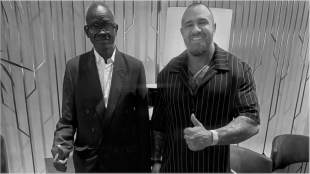 ALEX BODI ȘI AMBASADORUL REPUBLICII SUDANUL DE SUD, GUM DOMINIC MATIOK, DISCUTĂ LA BERLIN DESPRE POSIBILITATEA ÎNFIINȚĂRII UNUI CONSULAT ONORIFIC LA BUCUREȘTI
-
ALEX BODI AND AMBASSADOR GUM DOMINIC MATIOK OF THE REPUBLIC OF SOUTH SUDAN MEET IN BERLIN TO DISCUSS THE POSSIBILITY OF AN HONORARY CONSULATE IN BUCHAREST
-
 Dodgers step up World Series three-peat bid with 5-3 win over Braves
-
Lula, Bolsonaro wrap up campaigns ahead of Brazil's knife-edge vote

-
 Spain break down Czechs as England outclass Croatia in Nations League
-
Toulouse edge Castres in Top 14 derby

-
 Yamal on target as Spain hold off Czech Republic
-
Murakami homer propels White Sox to MLB playoff win over Guardians
-
 Latvian exit polls suggest pro-European choice
-
Israel targets top Hamas leader in deadly Gaza strike on anniversary
-
 Lula, Bolsonaro wrap up campaigns ahead of knife-edge election
-
Houthis say struck oil facility near Riyadh, as Saudis hit Sanaa
-
 Tuchel hails 'complete' England after Croatia demolition
-
AI needs safety layers like nuclear plants: ex-OpenAI engineer

-
 Fury to invite Trump to lead ring walk before Joshua showdown
-
MVP Judge will miss Yankees' MLB playoff series against Rays
-
 Fashion industry in 'precarious moment', says Vivienne Westwood supremo
-
New lizard species discovered in Peru
-
 Seventh heaven for England in Nations League rout of Croatia
-
Fernandes hails Portugal's 'greatest symbol' Ronaldo, calls for unity
-
 Storms, flooding cause chaos on Greek holiday island of Crete
-
Grandidier-Nkanang double takes Pau to Top 14 summit despite Vannes fightback

-
 #IAmJaneDoe: online support campaign in US university rape case
-
Trainer Scott gets perfect Arc boost with top notch double

-
 Brazil shine on Selecao's first visit to India
-
Ex-PM says Putin cannot admit 'mistake' over Ukraine
-
 Zverev sets up Djokovic quarter-final at China Open, Rybakina out
-
Houthis say Saudi Arabia launches dozens of strikes on Yemen capital
-
 Happier at home, Bordeaux hammer Lyon in Top 14
-
Qatar and Abu Dhabi F1 Grand Prix to go ahead - F1 boss
-
 Lula, Bolsonaro in final push for votes ahead of knife-edge election
-
South Korea lift gloom with smash-and-grab Games football gold

-
 Boisterous fashion week barnstorms 'sleepy' Nigerian capital
-
Ireland news conference before Israel game cut short amid tensions
-
 UAE investigators say flydubai co-pilot was planning 'terrorist act'
-
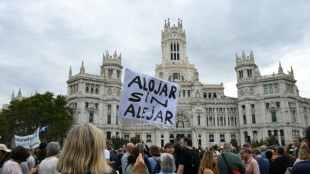
Protests over housing flare in Spain after relief measures rejected
-
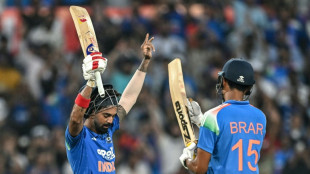 Rahul smacks century in India v Windies ODI
-
Zverev thrashes Shang to set up Djokovic quarter-final at China Open

-
 Daryz seeks to join exclusive club of dual Arc winners
-
Turkey football ref chief jailed pending trial for graft
Assange's long fight against extradition to US
Jailed WikiLeaks founder Julian Assange has been fighting for years to avoid extradition from Britain in connection with the 2010 publication of thousands of US classified documents.
Here is a timeline of his legal troubles after he agreed to plead guilty to revealing military secrets in exchange for his release from prison, ending his years-long legal drama:
- 2010: Assault charges -
In July 2010, Assange's WikiLeaks whistleblowing website begins publishing hundreds of thousands of leaked US military documents about the wars in Iraq and Afghanistan, some of which detail US abuses.
It later follows up with a huge batch of secret US diplomatic cables, which show that Washington spied on the leadership of the United Nations and that Saudi Arabia pressured the US to attack Iran, among other revelations.
In November that year, a Swedish prosecutor issues an arrest warrant for Assange over sexual assault allegations involving two women.
Assange denies the claims, saying they had consensual sex, but is arrested after he reports to police in London. A week later he is released on bail.
- 2012: Embassy refuge -
In February 2011, a British judge rules Assange can be extradited to Sweden.
He appeals, claiming the Swedish allegations are a pretext to transfer him to the US to face charges over Wikileaks.
In June 2012, he takes refuge in Ecuador's embassy in London. Ecuador, then ruled by left-wing president Rafael Correa, grants him asylum.
In May 2017, Swedish prosecutors drop the sex assault investigation after failing to obtain Assange's transfer.
In December, Ecuador grants Assange nationality but is blocked by Britain from according him diplomatic status.
- 2019: Arrest, prison -
In January 2018, Ecuador, now ruled by conservative President Lenin Moreno, says hosting Assange has become "untenable".
Tensions peak in April 2019 when Moreno says Assange has "repeatedly violated" the conditions of his asylum and revokes his citizenship.
The next day, British police drag Assange from the embassy and arrest him on a US extradition request.
In May, he is sentenced to 50 weeks in jail for having breached bail in 2010.
The legal process for his extradition to the US begins.
Meanwhile, Swedish prosecutors reopen the rape investigation.
- US charges -
In May 2019, the US Justice Department charges Assange with violating the US Espionage Act by publishing military and diplomatic files in 2010. If convicted, he faces jail terms of up to 175 years.
Assange makes his first court appearance since being jailed via video-link.
- Swedish charge dropped -
In November 2019, Swedish prosecutors drop the rape investigation because "the evidence is not strong enough" despite "credible" claims from Assange's alleged victim.
- 2020: Trump claim -
In February 2020 court hearings, Assange's lawyers claim then US president Donald Trump had promised him a pardon if he denied Russia had leaked him damaging emails about Hillary Clinton ahead of the 2016 presidential election.
The White House denies the claim.
- 2021: Victory, then setback -
Assange's supporters celebrate after a London court blocks his extradition in January 2021, on the grounds he would be a suicide risk if sent to the US.
But a High Court appeal overturns the verdict and sends the case back to the original court after a US promise he would not be held in isolation in jail and would receive proper medical treatment.
- 2022: Permission to appeal -
Judges in January 2022 grant Assange permission to appeal. But in March, the Supreme Court refuses to hear the challenge.
On June 17, 2022, the British government approves his extradition in what Wikileaks calls a "dark day for press freedom and for British democracy".
Assange appeals the government's decision.
- 'He will die' if extradited -
Assange's wife Stella tells a news conference in February 2024 that her husband "will die" if sent to the US, saying his physical and mental health are "in decline".
In May, Assange wins permission to appeal against the 2022 court ruling that approved his extradition, with a two-day hearing in London later scheduled for July 9.
- 2024: Plea deal and release -
Assange agrees to plead guilty to a single count of conspiracy to obtain and disseminate national defence information, according to US court documents released on Monday night.
WikiLeaks says "Julian Assange is free," writing on X that he has left prison and flown out of Britain after being granted bail by a high court judge.
Assange is scheduled to appear Wednesday morning local time at a court in the Northern Mariana Islands, a US territory in the Pacific, close to his native Australia.
He is expected to be sentenced to 62 months in prison, with credit for the five years he has already served behind bars in Britain, meaning he can go free.
F.Wagner--VB