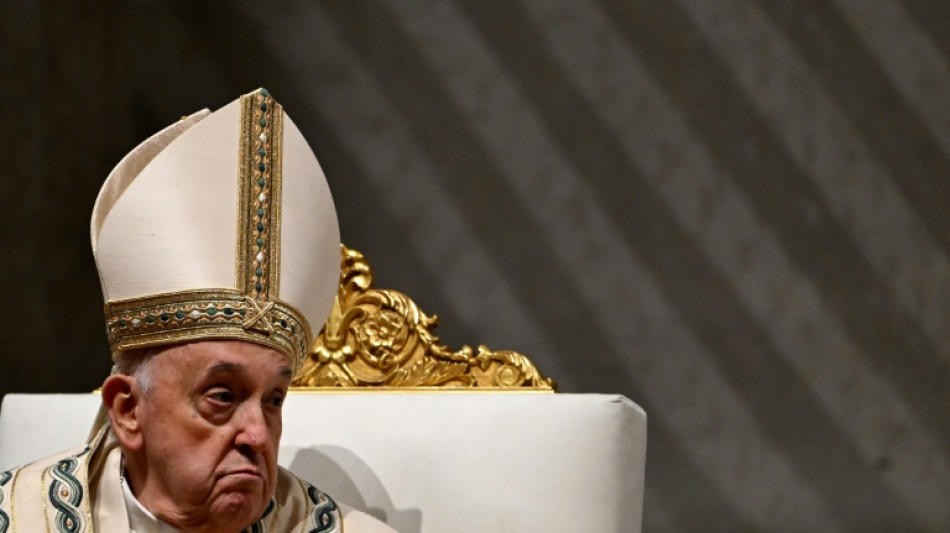
Pope Francis to weigh in on 'ethical' AI at G7 summit / Photo: © AFP

 Swiatek, Zheng survive three-set tests in China Open third round
 Hasan says Test cricket momentum turning for Bangladesh
 Intense heat puts births in jeopardy, UN tells Fiji talks
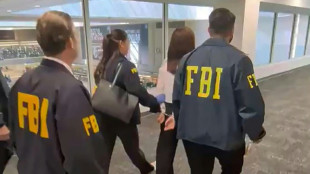 US arrests woman accused of spying for China on Taiwan leader's family
 Yemen military announces broad strikes against Houthis
 Zuckerberg skewered again on screen in 'The Social Reckoning'
 Fiji urges 'just' climate transition, financing at pre-COP gathering
 Thailand's Jeeno overcomes late wobble to win Lotte Championship
 Brazil heads to run-off as Bolsonaro pulls off shock first place finish over Lula
 EU, China to hold Beijing talks to avert trade war
 Bolsonaro edges past Lula as nail-biter Brazil vote goes to a run-off
 Rubio visits Iceland as US boosts Arctic presence
 Bolsonaro leads Lula as nail-biter Brazil vote goes to a run-off
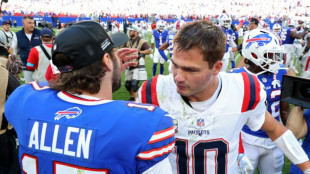
 Patriots inflict first Bills defeat as Chiefs keep winning
 Pacific nations take centre stage at 'pre-COP' climate summit
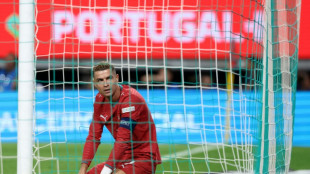 Ronaldo can return to Portugal team if he wants: coach Jesus
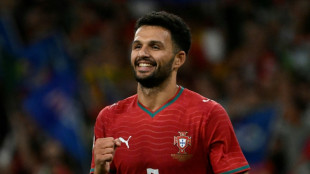 Portugal move into Nations League knockout stage, Germany held
 Ronaldo-less Portugal beat Norway to reach Nations League quarters
 Bosnian Serb strongman claims election win, thanks Trump and Putin
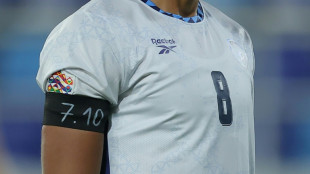 Israel wear black armbands in Ireland tie over Hamas attack
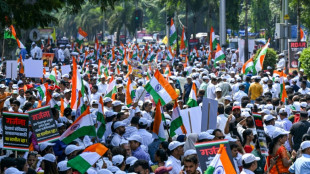
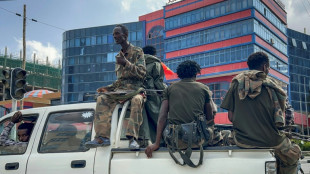 'I fear it could drag on': anxiety takes hold in Ethiopian city wrested from rebels
 Brazil's Lula and Flavio Bolsonaro face off in knife-edge election
 UK Green party adopts 'Zionism is racism' policy
 Rio favela residents vote with little hope

 Evenepoel puts worlds 'disappointment' to bed with European crown
Pope Francis will address G7 leaders on Friday on artificial intelligence, an unprecedented appearance that reflects the Vatican's growing interest in the new technology, its risks and rewards.
The 87-year-old will become the first head of the Catholic Church to address a G7 summit when he speaks on the second day of the Puglia meeting, to an audience including US President Joe Biden and France's Emmanuel Macron.
The ageing head of a 2,000-year-old institution is not perhaps the most obvious candidate to make a presentation on cutting-edge technology, but the pontiff sees AI as a key challenge for humanity.
"The Church always looks to humans as the centre of its mission," said Paolo Benanti, a Franciscan university professor and member of the UN's AI advisory body, who directly advises the pope.
"From this perspective it is clear that the AI that interests the Church is not the technical tool, but how the tool can impact on the life of man," he told AFP.
AI was the theme of the Church's World Day of Peace on January 1, for which the pontiff published a six-page document.
In it, he welcomed advances in science and technology that have reduced human suffering -- and Benanti said AI could act as a "multiplier", boosting everything from medical research to economic and social wellbeing.
But the pope also warned of risks including disinformation and interference in elections, and that unequal access could increase social and economic inequalities.
Francis -- who has himself been the subject of several AI-generated images, including a viral imagine showing him wearing a huge white puffer coat and a large crucifix -- called for a binding international treaty to regulate the development and use of AI.
The goal would be to prevent harm and share good practice.
- 'Human-centred approach' -
Since the launch of OpenAI's ChatGPT chatbot, whose capabilities range from digesting complex text to writing poems and computer code, governments have been scrambling to respond to the rapid growth of AI.
The European Union -- which attends G7 summits as an unofficial eighth member -- earlier this year approved the world's first comprehensive rules to govern AI.
At a global level, G7 leaders in Japan last year announced a working group on AI's "responsible" use, tackling issues from copyright to disinformation.
Hosts Italy have made AI a key issue of this year's summit, which will focus on a "human-centred approach", particularly its potential impact on jobs, according to a government source.
Italian Prime Minister Giorgia Meloni said in April that the pope's presence would "make a decisive contribution to defining a regulatory, ethical and cultural framework".
The Vatican has brought in a range of experts to help its understanding, including Demis Hassabis, head of Google DeepMind, whom it named to its scientific academy in March.
In 2020, it also initiated the Call for AI Ethics, backed by tech firms Microsoft and IBM and later Cisco as well as numerous universities and the UN, designed to promote an ethical approach.
The pope's address on Friday is likely to call for "attention to be paid to the most vulnerable", said Eric Salobir, a French priest and head of the executive committee of the Human Technology Foundation.
It would be a call to G7 leaders to take "into account the risks and (draw up) regulation without being alarmist", he told AFP.
- No Vatican tech -
Francis, who has championed the poorest and most marginalised people in society since taking office in 2013, has cautioned that AI offers new freedoms but also the risk of a "technological dictatorship".
He warned about the dangers of using AI to make important decisions -- from social security payments to where to aim autonomous weapons -- for which responsibility becomes blurred.
"The pope seems to have a sort of antenna that allows him to perceive where humanity experiences the situations of greatest challenge to itself," Benanti said.
But will the G7 leaders listen to the pope?
Salobir, author of a book "God and Silicon Valley", says that besides his influence as a spiritual leader, the pope has power as a neutral observer.
"The fact that there is no 'Vatican Tech' is an asset in terms of neutrality -- the Church has no hidden agenda, no digital economy, no 'start-up nation' to launch, or investments to attract," he said.
As a result, when the Vatican talks about AI, "it is for the technology itself, what it can do for humans", he said.
"It may be one of the only states in this situation."
H.Gerber--VB