Energy transition risks critical mineral shortage: IEA / Photo: © AFP/File

 Ready, set, snooze: Sleep-deprived Japanese compete for best-rested

 Falcons thump Saints 45-24 as New Orleans marks Katrina anniversary

 Tuvalu govt adviser says Australia overstepped in pre-COP visit

 Asian stocks mixed despite tech-led Wall St record

 Tens of thousands expected in Paris for high school protests

 AI borrowing binge rattles US markets

 Young Canadians sue government over alleged climate failures

 White Sox down Guardians to take 2-0 series lead
 NHL record-breaker Ovechkin says current season will be his last
 France roar back in Nations League as Italy beat Turkey

 Messi readies for final farewell in Argentina send-off
 Esposito seals Italy win over Turkey in Nations League

 Russia downplays plague reports as Trump offers US help

 Trump says US moved bombers from UK base after 'threats'
 Brazilian stocks surge to record after Bolsonaro election lead

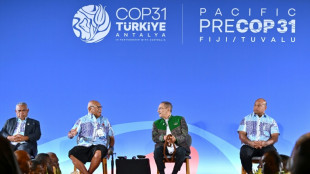 Leaders to visit Pacific atoll at frontline of climate change

 ICC gives more details about arrest warrants for Taliban ministers
 Nigeria's Tinubu confirms 32 dead after military plane crash

 'Reckless' AI firms can't control models, says whistleblower

 Switching on brain cells: the Nobel-winning science of optogenetics

 Quebec votes as separatist surge poses test for Canada PM

 Euro slides as concerns about French debt mount

 Former Trump press secretary Leavitt joins Fox News

 Djokovic advances to China Open final as Medvedev out for hitting fan with ball

 Disgraced former US House speaker dies at 84

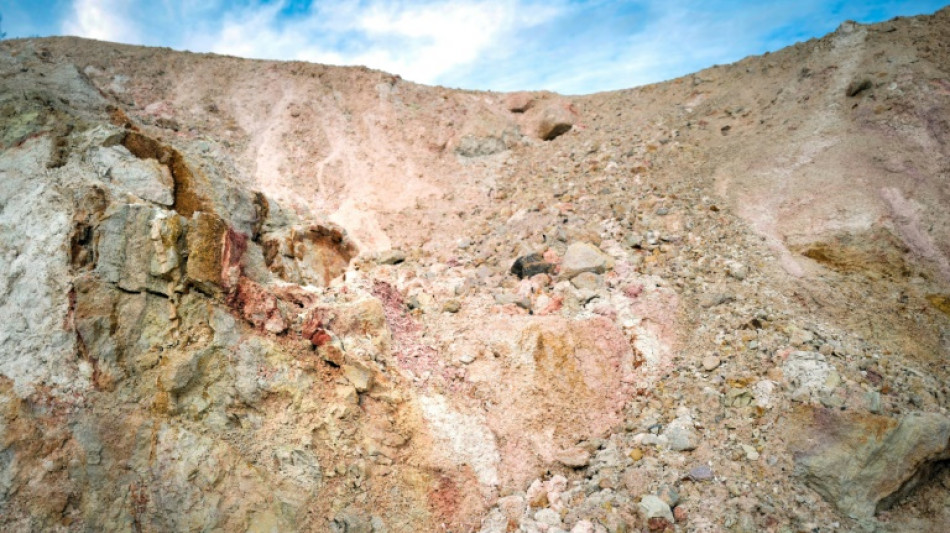
The sharp drop in prices for minerals critical to the green energy transition is masking a looming shortage due to inadequate investment, the International Energy Agency said Friday.
In its second annual review of the market for such critical materials, the IEA noted prices for minerals key for electric vehicles, wind turbines and solar panels fell back to pre-pandemic levels as supplies caught up with and surpassed demand.
While the price drops are good news for consumers, the Paris-based agency expressed concern it will deter investment needed to meet demand, which is set to soar as many nations try to phase out sales of new internal combustion engine cars in the next decade.
The IEA, which advises advanced economies on energy policy, calculated that announced projects will be able to meet only 70 percent of copper and 50 percent of lithium requirements in 2035, in a scenario in which countries worldwide meet their national climate goals.
Both metals are key for manufacturing electric vehicles.
"Secure and sustainable access to critical minerals is essential for smooth and affordable clean energy transitions," IEA Executive Director Fatih Birol said in a statement.
"The world's appetite for technologies such as solar panels, electric cars and batteries is growing fast –- but we cannot satisfy it without reliable and expanding supplies of critical minerals," he added.
The IEA forecasts the combined market size of key energy transition minerals is set to more than double to $770 billion by 2040 as countries target net zero emissions by mid-century.
It found only limited progress has been made in diversifying supplies, a key issue given the recent experience with the pandemic snarling supply chains and geopolitical tensions creating risks to access.
The IEA called for stepping up efforts to recycle materials, innovate and encourage behavioural changes in order to ease potential supply strains.
It also said some $800 billion of investment in mining is required by 2040 to put the world on track to limit global warming to 1.5 degrees Celsius from pre-industrial levels.
It warned, however, that "without the strong uptake of recycling and reuse, mining capital requirements would need to be one-third higher."
- Environmental fears -
The report analysed supply and geopolitical risks, as well as barriers to responding to supply disruptions, and exposure to environmental, social and governance (ESG) risks.
The IEA said it found a "mixed picture" regarding ESG risks.
While progress has been made in terms of involving local communities and using renewable energy, it flagged a different picture for reducing waste, emissions and water consumption.
But representatives of local communities warned the rush for critical minerals was already inflicting "serious costs" on indigenous people and their traditional lands, said Galina Angarova of the Buryat ethnic group from Siberia.
"If we continue down the current path, we risk building the destruction of nature, biodiversity, and human rights" into the economy-wide shift away fossil fuels, she told reporters.
"We are on the cusp of the next industrial revolution and we have to do this right," said Angarova, who leads a coalition fighting for indigenous rights in the green transition.
Adam Anthony, from financial transparency group Publish What You Pay, said companies were rushing to Africa to dig up critical minerals but there was little to show for that on the ground.
Tanzania, for example, was extracting manganese and graphite, but producing none of the higher-value green tech items like electric cars or batteries that need these minerals, he added.
"When we talk about critical minerals, it is also very important to ask -- who are they critical for?" said Anthony.
"We don't receive any value from the extraction at the moment."
H.Kuenzler--VB